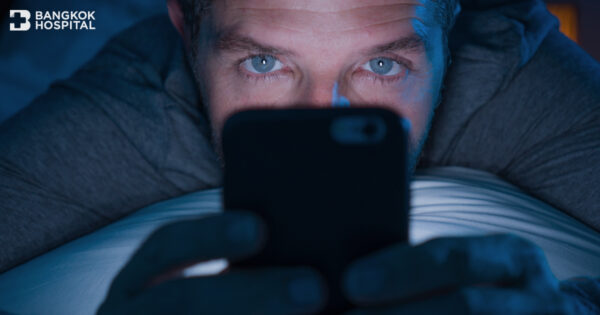

In the era of COVID-19, it’s undeniable that people of all ages spend almost their entire day online. Whether it’s online learning, online meetings, online shopping, or chatting through computers, smartphones, tablets, all of which emit blue light from their screens. Therefore, knowing about blue light and protecting against it in the right way will help keep unexpected eye diseases at bay.
Understanding Blue Light
The light that humans can see is in the range of white light, which is divided into 7 colors: violet, indigo, blue, green, yellow, orange, and red. Each color has different wavelengths and energies. The light we can see is in the range of about 400 – 700 nm, with blue light being in the range of about 400 – 500 nm, which is high energy light close to ultraviolet (UV) radiation.
Sources of Blue Light
Avoiding blue light in everyday life may be difficult, as blue light comes from both natural sources and human-made objects, but the intensity of blue light varies. Including:
- Natural sources such as the sun (sunlight), which is the most intense natural source of light.
- Human-made devices such as LED lights in homes, car headlights and taillights, digital devices like TV screens, computers, smartphones, or tablets.
Effects of Blue Light
Every day we can encounter blue light at all times, both from natural sunlight and from various human-made light sources. The reality is that the effects of blue light on the body have both positive and negative consequences if electronic devices are used improperly.
- Changes to biological clock Naturally, blue light affects the Circadian Rhythm or biological clock that keeps the body functioning normally, helping the body to secrete hormones, making it energetic, time to sleep, time to wake up. But receiving blue light from screens at night for a period of time can disrupt this system, resulting in insomnia, difficulty waking up, feeling unrested, and it may affect work or daily life.
- Penetrates organs Because blue light has high energy compared to wavelengths of light from other ranges, it can penetrate organs such as the eyes, from the cornea, lens, to the retina which is deep inside and is an important part for sight leading to dangers of blue light (Blue Light Hazard).
- Eye strain, eye pain, stinging, irritation, watery eyes, blurred vision often in people working or using screens for a long period, also collectively called Computer Vision Syndrome which may be due to continuous exposure to blue light from screens, high-energy light waves can damage corneal cells and conjunctiva, combined with flickering screens, resulting in the eye muscles working harder in focusing on the image, leading to dry eyes.
- Retinal damage Blue light can penetrate and damage the light-receptive cells of the retina, potentially worsening central vision. However, this has been observed mainly in animal experiments and laboratory settings and there has not been definite proof that it causes age-related macular degeneration in the elderly.

Proper Eye Care
- Rest your eyes while using screens, applying the “20-20-20” rule: every 20 minutes, look away to a distance of 20 feet for 20 seconds to help relax eye strain.
- Adjust the distance between your eyes and the screen to approximately 25 inches.
- Apply a blue light filter or screen protector.
- Adjust the room’s and screen’s brightness level appropriately.
- Avoid using eyes in areas directly hit by wind, leading to dry and tired eyes.
- Use artificial tears at intervals when eyes feel dry.
- Consult an ophthalmologist for vision measurement and eye health check.
Are Blue Light Filtering Glasses Necessary?
Blue light filtering glasses can reduce the amount of blue light reaching the eyes, but they may not be ultimately necessary as all light wavelengths pose a risk to the eyes. Testing blue light filtering glasses is quite challenging; it’s not easy to see and verify that they truly filter blue light, as proving so would require specific tools and equipment that aren’t widely available. Thus, simply arranging the environment and adjusting the behavior of using vision properly can help to prevent hazards and maintain our eye health.
Is Blue Light from Screens Dangerously Blindness-Inducing?
Even though numerous research reports have confirmed the hazard that blue light (Blue Light Hazard) poses to different parts of the eye, the severity may depend on various factors such as the amount or intensity of blue light received, the distance from the source, or the duration of exposure. However, currently, there is no academic evidence to support that normal use of blue light in daily life causes severe and permanent eye damage or blindness.