
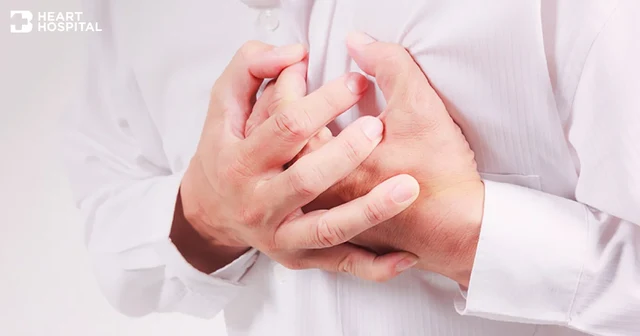

Ischemic heart disease is among the leading causes of death in Thailand, especially when it occurs acutely, which can be life-threatening. Detecting warning signs and receiving prompt treatment is a decisive factor for survival. Understanding the disease mechanism and indicative symptoms is therefore important and should not be overlooked, in order to reduce the risk of loss and severe long-term complications.
What is ischemic heart disease?
Ischemic heart disease (Ischemic Heart Disease) is a condition in which blood cannot circulate to supply the heart muscle sufficiently to meet its needs due to narrowing or blockage of the arteries that supply blood to the heart. This results in the heart being deprived of oxygen and nutrients. If a complete blockage occurs, it can lead to acute myocardial ischemia, causing heart muscle cells to begin dying within a short period of time and potentially resulting in cardiac arrest.
What causes acute myocardial ischemia?
Many patients mistakenly believe that chest tightness is caused by acid reflux or indigestion, leading them to underestimate the situation and arrive at the hospital late. In fact, the main causes of acute myocardial ischemia are as follows:
- Plaque buildup: Caused by the long-term accumulation of fat and cholesterol on vessel walls until the arteries become narrowed.
- Plaque rupture: When fatty plaque ruptures, the body triggers platelets to clump together, forming a blood clot.
- Acute clot occlusion: The clot completely blocks blood flow in the coronary artery, preventing blood from passing through.
- Myocardial infarction: When severe lack of blood supply lasts more than 20–40 minutes, the heart muscle begins to sustain permanent damage.
Risk factors for ischemic heart disease
Factors that trigger ischemic heart disease include both uncontrollable factors and behavioral factors, which cause blood vessels to deteriorate faster than normal, as follows:
- Unavoidable factors: Such as increasing age (men 45 years and older, women 55 years and older), sex (men are at higher risk), and genetics with a direct family history of heart disease at a young age.
- Factors that can be controlled and modified
- Chronic diseases: High blood pressure, diabetes, and high blood lipids, which are key causes of inflammation and hardening of blood vessel walls.
- Health-damaging behaviors: Smoking causes blood vessels to constrict; lack of exercise, consuming foods high in saturated fat and being overweight.
- Emotional factors: Chronic stress affects metabolism and blood lipid levels, increasing the risk of myocardial ischemia.
Warning signs and symptoms of myocardial ischemia that require immediate medical attention
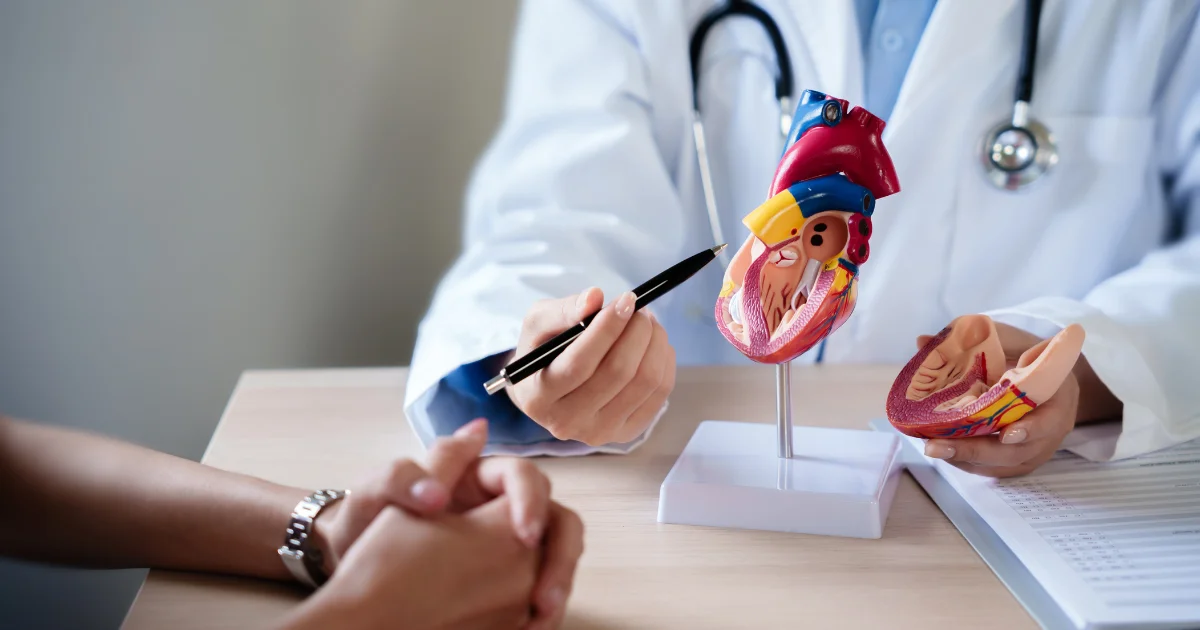
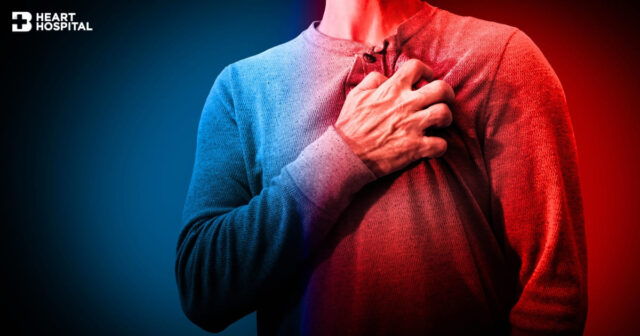
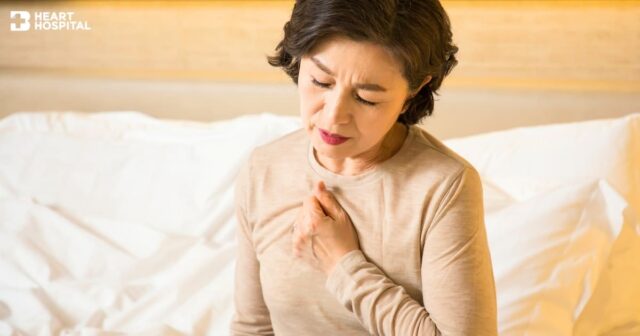
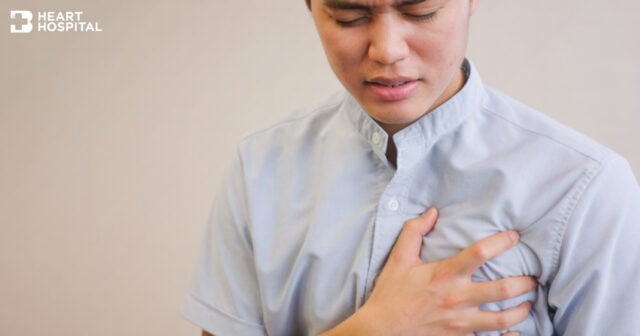
If you have left-sided chest pain radiating to the shoulder, or chest tightness with shortness of breath, do not wait and see. Call an emergency ambulance to get evaluated immediately. Common symptoms of myocardial ischemia include:
- Severe chest tightness/pain: A heavy pressure, as if something heavy is pressing down or squeezing the center or left side of the chest, lasting more than 20 minutes.
- Radiating pain: Pain spreading to the jaw, jawline, neck, shoulder, or left arm.
- Shortness of breath: Feeling breathless or having difficulty breathing, even while sitting at rest or lying flat.
- Cold sweats: Sweating along with palpitations, nausea, or vomiting.
- Faintness, dizziness: A sudden drop in blood pressure causing a feeling of impending fainting or loss of consciousness.
Why speed is the key to treating acute myocardial ischemia
In treating acute myocardial ischemia, the most important factor is the duration of reduced blood supply, because every second that passes means more heart muscle cells die.
- The golden window for treatment: Opening the coronary artery within 90–120 minutes after the patient arrives at the hospital is the key to saving life and preserving heart muscle function as much as possible.
- Reducing complications: Rapid treatment helps reduce the chance of heart failure arrhythmias and lowers the risk of sudden death.
- Recovery: Those who receive medication or procedures early recover faster and are more likely to return to normal life than those who receive delayed treatment.
How is ischemic heart disease diagnosed?
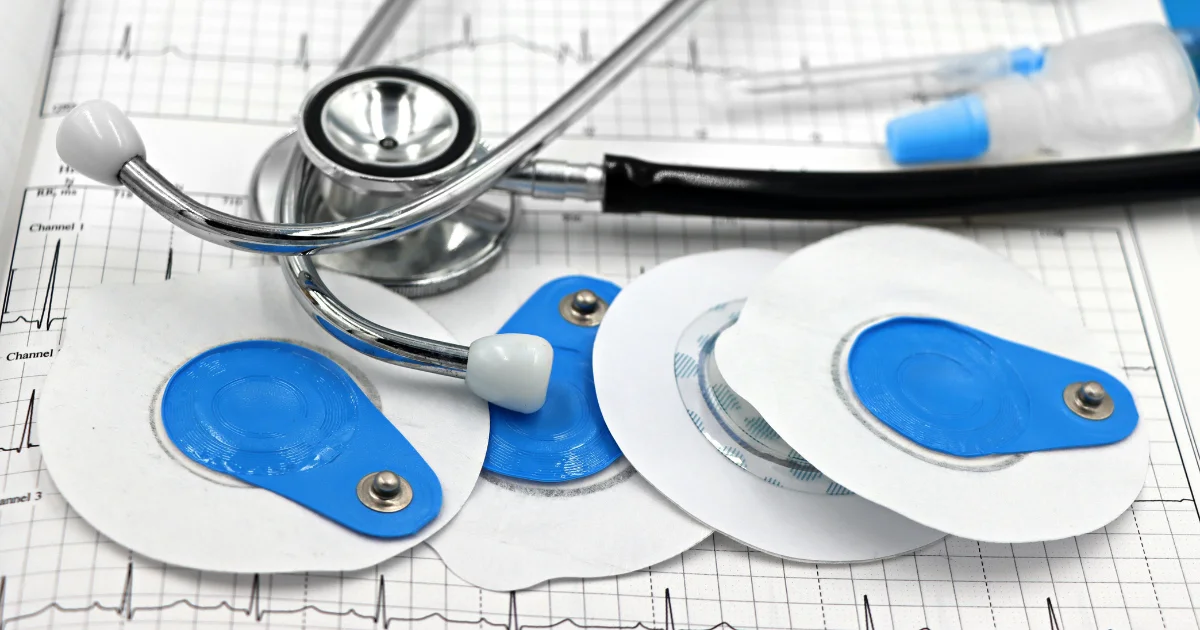
When a patient arrives with symptoms of myocardial ischemia, the doctor will use modern technology to determine the severity and location of the lesion as follows:
1. Electrocardiogram (EKG / ECG)
This is the most important initial test to assess the heart rhythm and detect abnormalities in the ECG waveform that indicate myocardial ischemia.
2. Blood test for cardiac enzyme levels
When the heart muscle is damaged, certain specific proteins or enzymes are released into the bloodstream. A blood test helps clearly confirm myocardial infarction.
3. Coronary angiography
The doctor inserts a small catheter through an artery to inject contrast material and uses X-ray imaging to visualize the location of narrowing or blockage in all coronary arteries.
Current treatments for acute ischemic heart disease
The main goal of treatment is to restore blood flow to the heart as quickly as possible. The doctor will consider the severity and the patient’s condition as follows:
1. Balloon angioplasty and stent placement (PCI)
This is the current standard and most effective approach. A catheter is inserted to deliver a balloon to widen the blocked area and place a stent to support the artery so blood can flow normally.
2. Thrombolytic (clot-dissolving) medication
Used when the patient cannot undergo an angioplasty procedure in time within the required window, to help dissolve the obstructing clot.
3. Coronary artery bypass surgery (Bypass)
Surgery to create a new blood pathway that bypasses the blockage, using the patient’s own blood vessel from another part of the body. It is often used when there are multiple blockages or complex coronary anatomy.
Self-care and prevention of this risk condition
Preventing recurrent severe episodes of myocardial ischemia is the best way to preserve life in the long term. Patients can do the following:
- Adjust eating habits: Avoid foods high in saturated fat, fried foods, greasy foods, and foods that are very sweet or very salty.
- Exercise regularly: Brisk walking or aerobic exercise at least 150 minutes per week to strengthen the heart.
- Stop smoking: Significantly reduces the risk of arterial narrowing.
- Lose weight: In those who are overweight, weight loss helps reduce the chance of high blood pressure, diabetes, and high cholesterol, and also reduces inflammation in the body.
- Control underlying conditions: Take medications and follow up strictly as scheduled for diabetes, blood pressure, and lipids.
- Have regular heart checkups: Annual health checkups, including Echo or EKG, help detect risk before symptoms occur.
Entrust your care to Bangkok Heart Hospital with comprehensive care
The Cardiology (Internal Medicine) Clinic at Bangkok Heart Hospital has the highest level of expertise in managing acute myocardial ischemia. We are ready to provide services with the most advanced treatment technology in accordance with international standards, supported by a highly experienced team of physicians and a multidisciplinary team available 24 hours a day, to increase survival chances and restore patients’ heart health to full strength once again.
- Find a doctor: https://www.bangkokhospital.com/th/bangkok/doctor
- Make an appointment: https://www.bangkokhospital.com/th/bangkok/appointment/step1
- Contact us: https://www.bangkokhospital.com/th/bangkok/contact
Physician specialized in ischemic heart disease
For more information, contact
Cardiology (Internal Medicine) Clinic
1st Floor, Bangkok Heart Hospital
Open daily
Hours: 07:00 – 16:00
0 2310 3370
0 2755 1371
@hearthospital
Frequently asked questions about ischemic heart disease
How can chest pain from heart disease be distinguished from acid reflux?
Myocardial ischemia often feels like tightness or pressure as if something heavy is pressing down and may radiate to the jaw or arm, whereas acid reflux causes a burning sensation in the upper abdomen after eating. If chest tightness is severe, seek medical attention immediately.
If narrowing of the arteries is found but there are no symptoms yet, what should be done?
Risk factors must be strictly controlled, take medications as prescribed by the doctor, and adjust lifestyle to prevent acute myocardial ischemia. Even without symptoms, you should not be complacent because plaque can rupture at any time.
Does balloon angioplasty hurt a lot, and how long is the recovery?
There is only mild pain during local anesthesia injection and insertion of the small catheter. After the procedure, recovery in the hospital is about 1–2 days. If there are no complications, you can return to normal work within one week.
Can healthy young people develop ischemic heart disease?
Yes, if they have genetic risk factors, heavy smoking, or underlying conditions such as high blood pressure, diabetes, or high blood lipids, etc. Currently, cases of myocardial ischemia are increasingly found among working-age people.
Can sublingual medication cure heart disease completely?
Sublingual medication only helps dilate blood vessels and temporarily relieve chest pain; it does not treat the root cause. If there is no improvement within 5 minutes after taking it, the patient must be rushed to the hospital immediately to save their life.