

Each person’s physical readiness differs. For those who train seriously or need to prepare for sports competitions, measuring fitness and cardiopulmonary capacity, or CPET before exercising, helps you exercise appropriately, safely, and reach the finish line with confidence.
CPET What is it
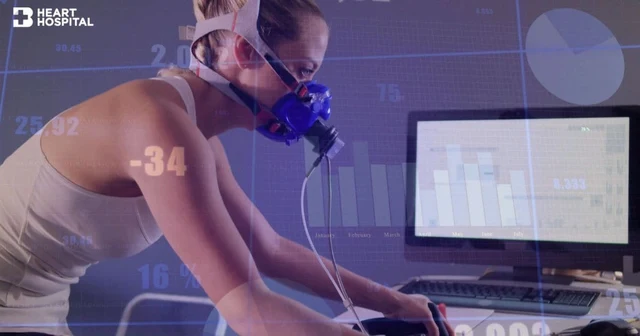
Cardiopulmonary Exercise Test (CPET) is an assessment of heart and lung performance during exercise to evaluate the strength and effective coordination of the heart, lungs, circulatory system, and muscles during exercise, including the body’s oxygen utilization, to obtain in-depth information about each individual’s exercise capacity. It uses treadmill running and cycling to monitor the body’s responses.
During the test, various data can be assessed, such as:
- Electrocardiogram (ECG)
- Heart rate (Heart Rate)
- Blood pressure (Blood Pressure)
- Amount of oxygen the body uses (VO₂)
- Amount of carbon dioxide the body produces (VCO₂)
- Breathing and ventilation (Pulmonary Ventilation)
- Exercise capacity (Exercise Capacity)
CPET What does it test
- Assessment of cardiac performance (Exercise Stress Test) During exercise, the heart must increase blood pumping. CPET can use data on the heart’s response to exertion to assess cardiac performance.
- Assessment of lung function (Pulmonary Function Test) As exercise intensity increases, the body must breathe more. CPET evaluates breathing and the efficiency of the respiratory system during exertion.
- Assessment of oxygen utilization (Oxygenation Assessment) used by the body during exercise. A key CPET parameter is VO₂, which indicates the body’s oxygen consumption.
- Assessment of Anaerobic Threshold (AnT) the point at which the body begins changing energy production and carbon dioxide elimination during exercise, which helps determine the appropriate exercise intensity level.
- Assessment of the body’s response to exertion (Physiological Response to Exercise) to consider changes in various body systems during exercise, assessed by vital signs and medical devices (Objective Measurement) and by the test subject’s perceived exertion.
Why you should have CPET
- Check physical readiness before exercising
- Evaluate abnormal shortness of breath during exertion, which may relate to the cardiac system, respiratory system, or other factors
- Create an individualized exercise plan and determine an appropriate exercise intensity level
- Monitor capacity in certain patient groups, such as those with heart or lung disease in rehabilitation programs

Who should undergo CPET
- Those who want a detailed evaluation of cardiopulmonary capacity before starting an exercise program
- Those who exercise regularly and want to assess their fitness level
- Athletes and those training for various sports competitions
- Those who want to enhance exercise performance
- Those who tire easily or have difficulty breathing during exercise
- Those whose exercise capacity has decreased without a known cause
- Patients with heart disease or lung disease, as indicated by a physician for capacity evaluation
- Those undergoing cardiac or pulmonary rehabilitation who must be tested as ordered by a physician
- Those with underlying diseases or abnormal symptoms can consult a physician for testing before exercising
What are the steps of CPET testing
- Pre-test evaluation by a specialist physician, including history taking and an initial physical examination: health history, underlying diseases, medications, shortness of breath, chest pain, and other abnormal symptoms, to select the most appropriate testing method.
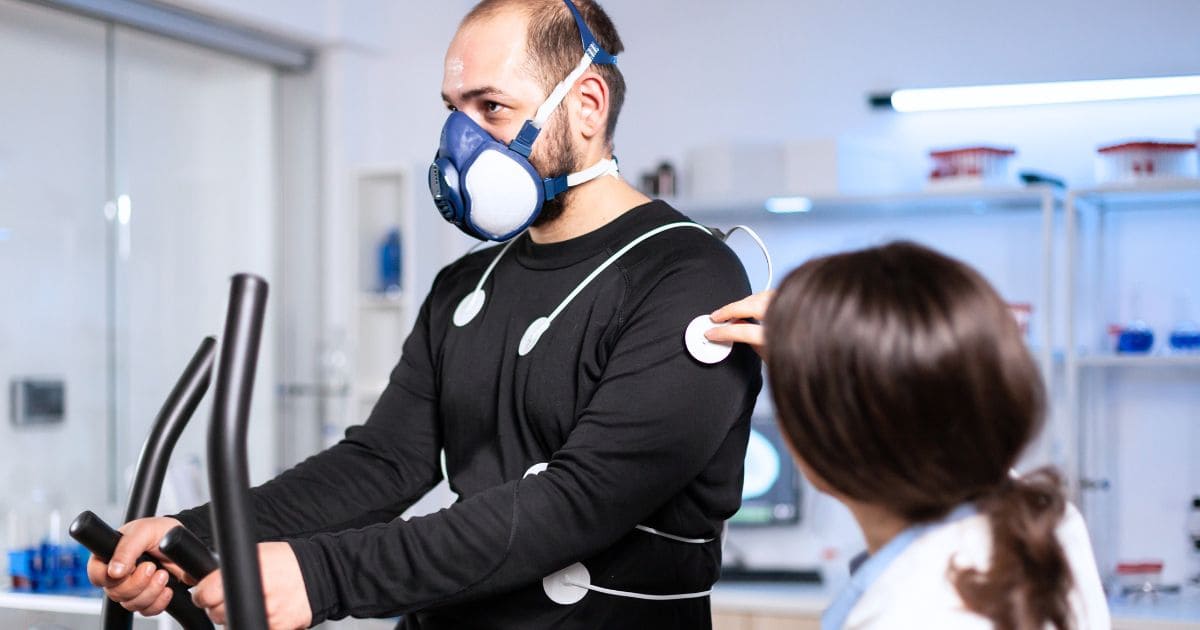
- Attach monitoring equipment, including ECG leads, a blood pressure monitor, and a mask connected to a gas analyzer to measure inhaled and exhaled oxygen; fingertip pulse oximetry may be used to measure blood oxygen level.
- Exercise testing on a treadmill (Treadmill) or an ergometer bicycle (Ergometer) starting at a light level and gradually increasing intensity according to the specified protocol, with close monitoring of heart function, lung function, and blood pressure.
- The test ends when the participant reaches maximal exertion or when the physician deems appropriate. The system records the heart’s response, breathing, oxygen use, and related variables. After stopping exercise, there is a cool-down period with continuous monitoring of heart and lung recovery.
- Detailed analysis of cardiopulmonary performance from all obtained data to plan appropriate exercise, plan effective treatment, or assess preoperative risk.
How to prepare before CPET testing
- Drink water and get sufficient sleep and rest
- Avoid exercise for at least 1 day before the test
- Avoid a large meal before the test
- Wear clothing and shoes suitable for exercise
- Inform the physician about underlying diseases and medications; do not stop medications on your own
- Avoid smoking and avoid caffeinated and alcoholic beverages before the test
- Follow the physician’s instructions strictly
Does CPET testing carry risks
Cardiopulmonary exercise testing (CPET) should be closely supervised by a specialist physician and a multidisciplinary team because the test requires progressively increasing exertion, which can cause fatigue, rapid breathing, sweating, and muscle tiredness, and may reveal abnormal symptoms such as chest pain, dizziness, or difficulty breathing. Assessment together with a specialist physician therefore helps increase safety and reduce risks.

How is CPET suitable for athletes or people who exercise
Many athletes or people who exercise regularly may never realize that hidden abnormalities in the lungs or heart are present. Therefore, knowing your own physical capacity helps you exercise more effectively, and assess and plan exercise correctly according to each individual’s abilities—especially for athletes or exercisers who require endurance and cardiopulmonary stamina, such as running, cycling, triathlons that combine swimming, cycling, and running in a single event, HYROX competitions, CrossFit, and more.
How does CPET help plan exercise
The key value of CPET goes beyond simply knowing physical fitness capacity; it is using the data to tailor it to each individual’s exercise goals, determine an appropriate exertion level, and design a higher-quality training program—especially for those with underlying diseases or undergoing rehabilitation. Physicians can use the results to support assessment and define safe exercise guidelines, and this information can also help sports scientists plan exercise for higher performance as well.
Frequently asked questions (FAQ)
Q: How is VO₂ Max related to CPET
A: VO₂ Max (Maximum Oxygen Consumption) is a value indicating the body’s maximum ability to take in oxygen for use and deliver oxygen to the muscles during intense exercise. It is therefore one of the key indicators of physical fitness and endurance. CPET or cardiopulmonary exercise testing can measure VO₂ Max or VO₂ Peak directly through analysis of inhaled and exhaled gases during exercise, while simultaneously monitoring cardiac and respiratory function, showing how well the body can use oxygen at the limits of intense exertion.
Q: How is CPET different from Exercise Stress Test (EST)
A: Although CPET and Exercise Stress Test (EST) are both performed during exercise, their purposes and the data obtained differ. EST focuses on monitoring the heart’s response to exertion, while CPET focuses on detailed assessment of oxygen utilization, carbon dioxide production, and the integrated efficiency of heart and lung function. A specialist physician will determine which test is appropriate based on each individual’s goals, symptoms, and health risks.
Q: How is CPET different from other cardiac performance tests
A: Cardiopulmonary exercise testing (CPET) differs from other cardiac performance tests in that it evaluates the coordinated function of the heart, lungs, circulatory system, and muscles to assess oxygen utilization during exercise. Therefore, it cannot replace other types of tests such as electrocardiography (ECG) or assessment of heart structure and function such as an echocardiogram, etc.
Hospital specialized in Cardiopulmonary Exercise Test (CPET)
Cardiology Internal Medicine Clinic, Bangkok Heart Hospital is ready to provide Cardiopulmonary Exercise Test (CPET) services to assess heart health and exercise performance, with a team of specialist physicians in Sports Cardiologist care who are ready to look after heart health while considering sport type, exercise level, competition goals, and individual health—from beginners, recreational runners, to athletes training intensely—to screen and monitor for various abnormalities and recommend exercise that is truly appropriate for heart health.
Physician specialized in Cardiopulmonary Exercise Test (CPET)
Dr..Jeeraphat Plub-in Cardiologist, Bangkok Heart Hospital
You can click here to make an appointment yourself.