




Coronary artery disease is not only common, but it also affects quality of life and can be life-threatening. It is caused by chronic inflammation of the arteries, leading to the accumulation of fatty plaques, fibrous tissue, and calcium, which narrow the inner space of the arteries, resulting in a lack of blood supply to the heart muscle. If it occurs suddenly, it can cause heart failure, low blood pressure, and arrhythmias. If it is chronic, it may lead to heart weakening if not treated properly and promptly. Therefore, it is important to correctly understand coronary artery disease.
What is coronary artery disease?
Coronary artery disease is caused by chronic inflammation and deterioration of the arteries with the inner artery walls transforming into fatty plaques and fibrous tissue (Atherosclerotic Plaque) causing the inner artery walls to thicken, leading to ischemic heart disease.
What are the symptoms of ischemic heart disease?
The symptoms of ischemic heart disease are divided into 2 groups, namely:
- Chronic and gradual lack of blood supply (Chronic Coronary Syndrome / Stable Angina) occurs when the arteries gradually narrow, reducing blood supply to the heart muscle. Capillaries expand to reduce vascular resistance and increase collateral circulation. If the body adjusts, patients may not experience symptoms or only mild symptoms. However, when exerting more or being ill, the heart demands more blood than can be supplied by the narrowed arteries and adaptive mechanisms, resulting in symptoms such as chest pain during exercise, heavy exertion or lifting heavy objects. Rest helps alleviate these symptoms . As the disease progresses, symptoms become more frequent, severe, and longer-lasting. Patients need longer rest to recover and daily activities are disrupted. Patients with limited activity may experience subtle chest pain and easy fatigue, due to decreased heart pumping strength resulting from chronic blood supply deficiency.
- Sudden lack of blood supply (Acute Coronary Syndrome / Heart Attack) results from a tear in the fatty plaque within the arterial wall, followed by clot obstruction narrowing the vessel or its cross-sectional area significantly. The heart muscle lacks blood supply without adaptation. Patients in this group exhibit severe symptoms. Besides chest pain, they may experience low blood pressure, pulmonary edema, and arrhythmias, as the heart muscle loses its function rapidly over a large area
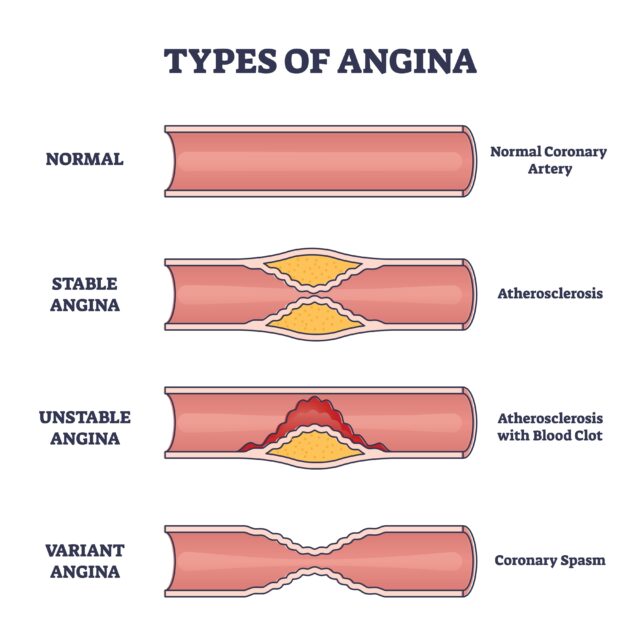
Comparison of gradual ischemia (stable angina) andsudden ischemia (acute coronary syndrome) (right)
How is ischemic heart disease diagnosed?
The guidelines for diagnosing and treating acute ischemic heart disease are quite clear and not complex. It includes ECG, blood tests, coronary angiography, CT scan, as it is an emergency situation. For chronic or stable ischemic heart disease diagnosis, it requires consistency between symptoms and test results. Chest tightness and fatigue may come from other causes than ischemia, such as pericardium, aorta, or other organs like lungs, stomach. Moreover, moderate or ambiguous coronary abnormalities may not cause symptoms and do not always require angioplasty.
What is non-invasive coronary artery assessment?
Non-invasive coronary artery assessment (Non Invasive) is increasingly popular, including Stress Echocardiography, Stress Cardiac Magnetic Resonance Imaging (Stress MRI), and Coronary Computed Tomographic Angiography (CCTA), which can screen patients with normal or minor abnormalities without necessarily going through invasive Coronary Angiography (CAG) with more complications. However, if there is clear abnormal detection, it usually leads to coronary angiography, the standard for diagnosing coronary artery disease.
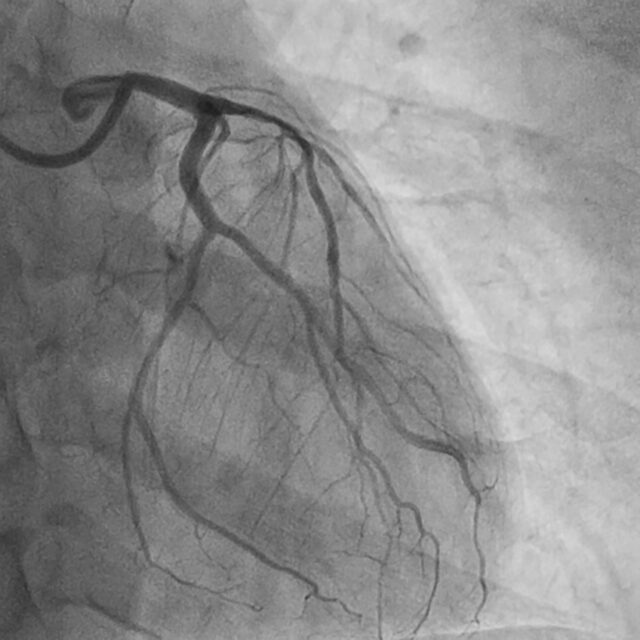
Coronary angiography image (Coronary Angiography: CAG)
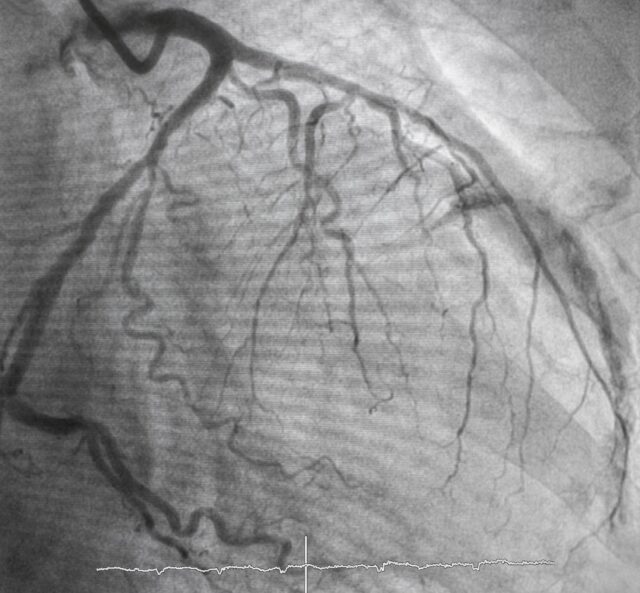
Coronary angiography image (Coronary Angiography: CAG)
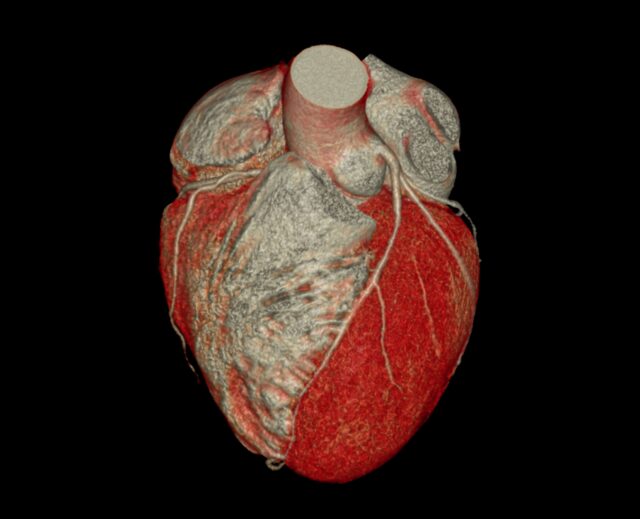
CT scan (Coronary Computed Tomographic Angiography: CCTA)
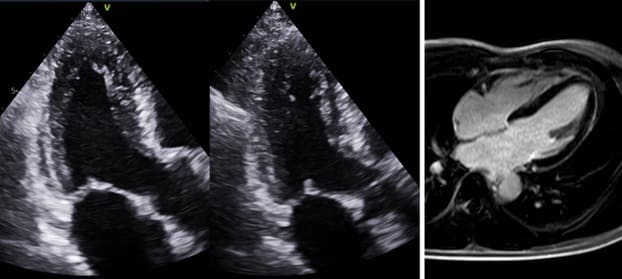
Image from stress echocardiograpphy (left) and cardiac magnetic resonance imaging (cardiac magnetic resonance imaging: MRI) (right)
If coronary angiography reveals clear abnormalities (such as more than 75% narrowing) consistent with previous non-invasive tests, there will be an indication for coronary angioplasty. However, there are times when coronary angiography results are inconclusive. In such cases, additional testing by inserting devices into the coronary arteries will help provide more detailed information, enhancing treatment efficiency. These tests include intravascular imaging using sound waves (Intravascular Ultrasound: IVUS) or light waves Near Infrared (Optical Coherence Tomography: OCT) and pressure/flow rate studies above and below the stenosis (Functional Assessment) such as measuring Functional Flow Reserve (FFR) or Instantaneous wave-Free Ratio (iFR)
What is intravascular imaging?
Although coronary angiography is the standard for diagnosing coronary artery disease, it has limitations for assessment, such as at the root of the vessels or where vessels are tortuous or overlapping, despite multiple-angle imaging. Angiography shows shadows within the vessels and cannot directly reveal the arterial wall’s pathology. Intravascular imaging (Intravascular imaging/IVUS/OCT) by inserting a camera to capture 360 degrees along the vessel’s length provides detailed imaging, measuring the narrowest part of the vessel (Minimal Lumen Area) and understanding the vascular pathology in that area, which in some cases may not require angioplasty.
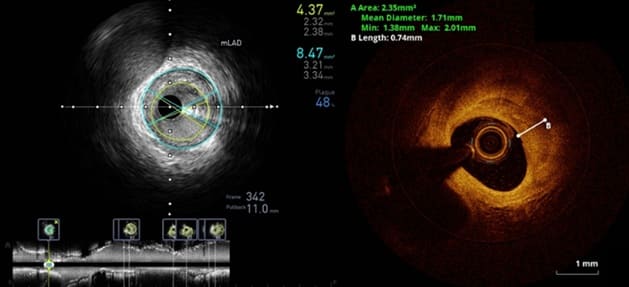
Image of Intravascular ultrasound: IVUS (left) and Optical coherence tomography: OCT (right)
How does pressure or blood flow rate enhance confidence in coronary angioplasty?
In assessing ischemic heart disease, factors other than stenosis severity, such as the location and significance of the stenosis point, are crucial in treatment decisions. For example, severe stenosis in small branches or end vessels may not pose as much of a problem as moderate stenosis at larger vessel origins responsible for larger heart muscle regions. If there are more than 1 stenosis points in the same vessel, not every point necessitates angioplasty. Functional assessment/flow study by measuring blood flow rates at various stenosis points enhance confidence in deciding on angioplasty, ensuring the benefits outweigh the risks and avoiding unnecessary angioplasty in areas that may not yet need it.
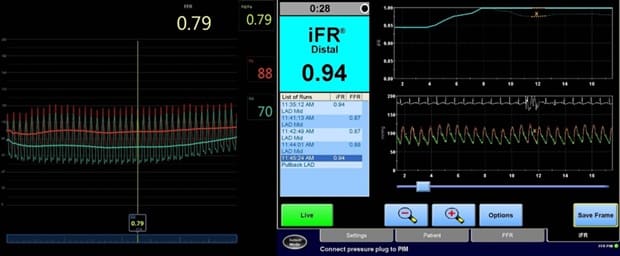
Image Fractional Flow Reserve (FFR) and instantaneous wave Free Ratio (iFR)
Coronary artery disease may seem easily diagnosable from CT scans or coronary angiography, but deciding on coronary angioplasty for each patient, each vessel, and each lesion requires considering many factors, like symptoms and abnormalities found, akin to tailoring clothes to an individual’s size (Tailored Approach). Today, more detailed investigation, backed by scientifically accepted and internationally recognized standards, aids in clearer decisions for coronary angioplasty, including device use and reducing unnecessary stent implantations.
Why choose coronary disease treatment at Bangkok Heart Hospital?
- The first private heart specialty hospital in Thailand
- A highly experienced cardiac team in treatment
- Modern technology, equipment, and operating rooms
- Personalized cardiac treatment plans designed by the cardiac team
- Internationally accepted standards and treatment outcomes
A hospital specializing in coronary disease treatment
Bangkok Heart Hospital has a team of heart specialists proficient in treating all aspects of coronary artery disease, with expertise and experience, supported by advanced medical technology, ready to take care of every heart problem in every generation with care, to restore quality of life.
Tailored Heart Treatment = Especially for you
Not the same treatment for everyone but suitable treatment for “your heart”
Doctors specializing in coronary artery disease treatment
Dr. Vira Luvira Cardiologist specializing in coronary artery disease treatment via catheterization, Bangkok Heart Hospital
You can click here to schedule an appointment yourself