



Coronary artery disease is dangerous and can be severe to the point of death. Patients often experience tightness or pain in the left chest or the middle of the chest, and nausea. If symptoms occur, you should see a cardiology specialist as soon as possible. Today, coronary artery disease can be treated with cardiac catheterization using a wrist access technique, which helps reduce complications, causes less pain, and enables faster recovery. In addition, doctors may choose other appropriate treatment methods so that heart patients can return to normal life as soon as possible.
Current Treatment Approaches for Coronary Artery Disease
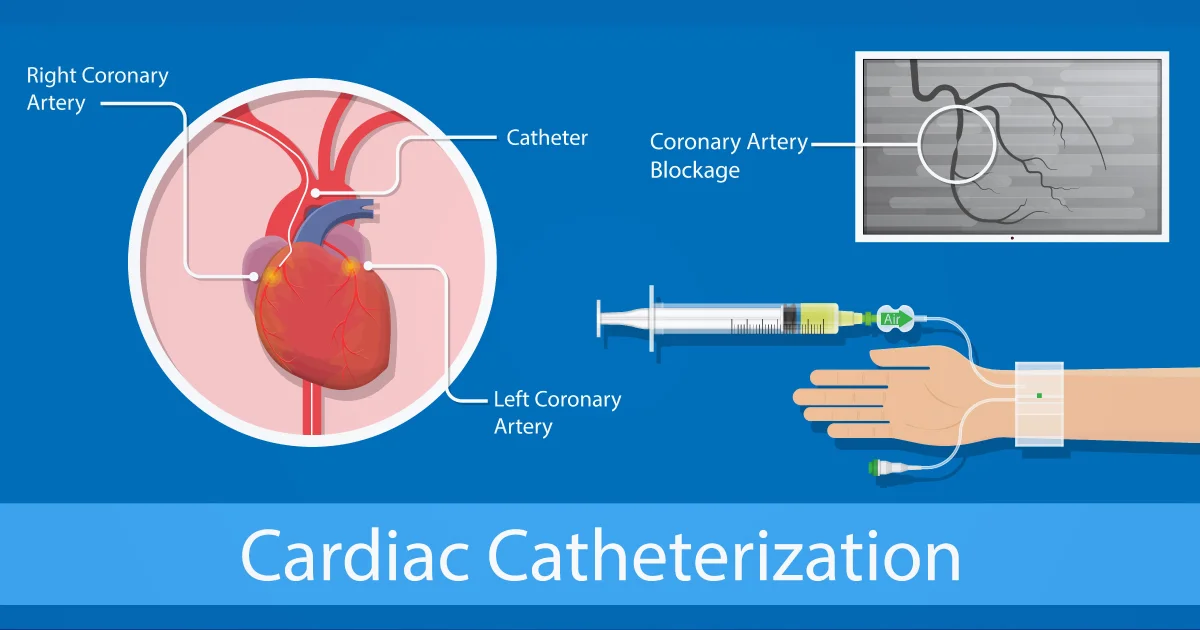
When a patient comes to see a doctor with suspicious symptoms, the doctor will perform a thorough evaluation to make a differential diagnosis, assess severity, and choose the most appropriate treatment approach. The methods are as follows:
- Cardiac Catheterization and Contrast Injection (Cardiac Catheterization & Coronary Angiography): This is an important diagnostic step. The doctor inserts a small catheter through an artery, guided by X-ray imaging, into the opening of the coronary arteries. Contrast dye is then injected into the coronary arteries, allowing assessment of the condition of the vessels, the location, and the percentage of coronary artery narrowing or blockage.
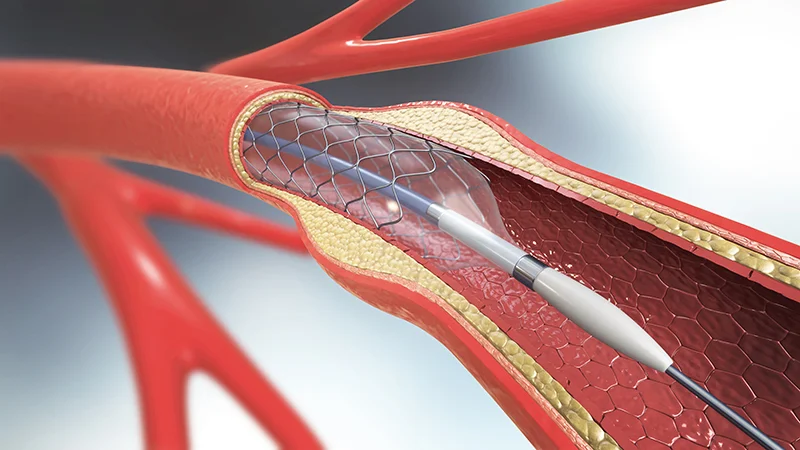
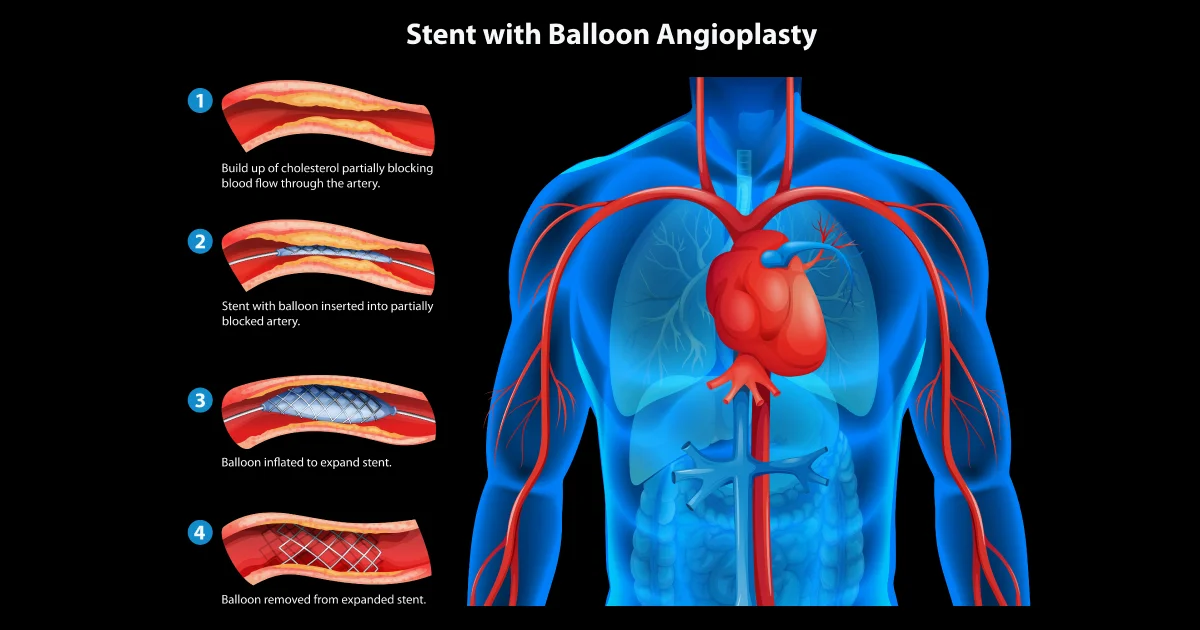
- Balloon Angioplasty & Stenting: This is a catheter-based treatment without major surgery. The doctor advances a tiny balloon to the narrowed area and inflates it to widen the blood flow pathway. A supporting stent is then placed to prevent the artery from collapsing.
- Coronary Artery Bypass Surgery (CABG): Used in cases of severe narrowing or multiple blockages, which may not be successfully treated with balloon angioplasty or carry high risk. A cardiothoracic surgeon will consider grafting a blood vessel from another part of the body to bypass the narrowed segment, creating a detour so blood can flow to nourish the heart muscle normally.
Advantages of the Wrist Access Catheter Technique That Helps Patients Recover Faster
Choosing the wrist access catheter technique to treat coronary artery disease is a good option in terms of safety and directly benefits patient recovery as follows:
- Reduces serious complications: Because the wrist artery is smaller and more superficial than the groin area, compression to stop bleeding after the procedure is much easier, reducing the risk of blood loss to the point of requiring a blood transfusion.
- Less pain and more comfortable: After the procedure, patients can sit up and walk; they do not need to lie still in bed for a long time.
Comparison Between Wrist Access Cardiac Catheterization and Groin Access
For diagnostic and therapeutic cardiac catheterization procedures, a cardiologist will puncture to insert a small catheter into an artery. In the past, it was commonly performed through the femoral artery in the groin because it is a large blood vessel. With the development of smaller devices, catheter insertion through the radial artery at the wrist has become possible and more successful.
|
Comparison Point |
Groin (Femoral) Access Cardiac Catheterization |
Wrist (Radial) Access Cardiac Catheterization |
|
Blood vessel size |
The blood vessel is large, making the procedure easier. |
The blood vessel is smaller and more tortuous. |
|
Post-procedure care |
The patient must lie flat and must not bend the groin for 6 hours. |
The patient does not need to lie flat and can walk or go to the restroom immediately. |
|
Risk of complications |
There is a higher chance of severe bleeding, and an aneurysm may occur. |
The blood vessel is close to the skin, making compression to stop bleeding easier and safer. |
In-depth Analysis to Select the Most Appropriate Individualized Treatment

Considering treatment for coronary artery stenosis not only differs from one patient to another; even within the same patient, each artery can differ. Each lesion may require a different treatment, ranging from medication alone to balloon dilation, stent placement, special devices, or bypass surgery. Finding the most appropriate treatment for each individual patient is a key point to balance benefits and risks. The basic principles and methods are as follows:
1) Assessment of stenosis using coronary angiography (coronary angiogram) can classify severity into 3 levels: mild stenosis or normal, clearly severe stenosis or occlusion, and intermediate stenosis. In the group with mild stenosis, dilation provides no benefit. In the group with severe stenosis, together with symptoms and other supporting test results, dilation may be considered. However, if moderate, intermediate stenosis is found (e.g., in the range between 30–40% up to 70–80%, depending on studies), deciding whether to perform dilation based on only a single view may cause more harm than benefit.
2) For intermediate lesions, it has been found that using tools to measure coronary blood flow (FFR: Fractional Flow Reserve / iFR: Instantaneous wave-Free Ratio) by inserting a pressure wire and assessing the pressure difference between upstream and downstream beyond the stenosis helps demonstrate the physiologic severity of the lesion (physiologic study). Using the obtained values to decide on a treatment approach has been found to reduce unnecessary coronary ballooning and stenting. It also provides confidence to the treating team and the patient when deciding not to dilate the artery at that time (defer PCI).
3) Another method used to assess coronary stenosis is intravascular imaging (intravascular imaging), whether using ultrasound (IVUS: IntraVascular UltraSound) or light (OCT: Optical Coherence Tomography). This provides 360-degree imaging inside the vessel. Assessment of stenosis expands from luminal diameter stenosis to luminal area, and it can also calculate plaque volume in the vessels. Similar to FFR/iFR, using luminal area has data showing increased resolution and accuracy in deciding between medical therapy and revascularization. In addition, intravascular imaging provides information about plaque composition, which is necessary for selecting special devices, particularly for lesions with heavy calcification, and it also helps determine the size of devices to be used.
How to Treat Highly Complex Coronary Artery Disease
Bangkok Heart Hospital is committed to diagnosing highly complex coronary artery disease such as patients with chronic total occlusion, stenosis at the coronary ostium, coronary stenosis with extensive calcification on the vessel wall, and bifurcation lesions, which involve complex treatment. Therefore, safety and treatment outcomes are key goals. In addition to intravascular imaging, there are many other devices that help increase success and create good treatment outcomes, including the use of rotational atherectomy together with balloon dilation and coronary stenting (Rotational Atherectomy and Coronary Stenting), and the use of shock waves to break up calcified plaque (Coronary Intravascular Lithotripsy or Coronary IVL) in cases with thick calcified plaque. Diagnosis and treatment follow processes and treatment approaches based on American standards from the American College of Cardiology (ACC) and the Society of Cardiac Angiography and Coronary Intervention (SCAI).
A Hospital Specialized in Treating Coronary Artery Disease
The Cardiac Catheterization Clinic, Bangkok Heart Hospital, is ready to care for and treat all heart abnormalities in every dimension, especially coronary artery disease. We have a team of expert physicians, standardized and modern equipment, and a ready nursing team and specialist teams in various fields to provide effective cardiac treatment, reducing risks and complications from procedures, with a focus on service and attentive care for satisfaction with services and long-lasting heart health.
Physicians Specialized in Treating Coronary Artery Disease
Dr. Kriengkrai Hengrussamee Director, Bangkok Heart Hospital
Dr. Vira Luvira Cardiologist, Bangkok Heart Hospital
You canclick here to make an appointment yourself.
Article Summary
Coronary artery disease is a silent threat that can be life-threatening. Current treatment with the “wrist access catheter technique” helps increase treatment safety, reduce the chance of complications, and helps patients recover faster without needing to lie flat for many hours. When combined with accurate blood flow measurement technology (FFR/QFR) and complex calcium modification techniques, it enables doctors to plan targeted treatment according to each individual’s disease condition so patients can return to normal life with confidence and as quickly as possible. However, the choice of technique and treatment outcomes depend on the doctor’s judgment and each patient’s differing physical condition, with maximum safety as the priority.
Frequently Asked Questions (FAQ) About Coronary Artery Disease Treatment
1. How is wrist access cardiac catheterization different from groin access?
Wrist access helps reduce local complications better. The wound is smaller and bleeding is easier to control, so patients do not need to lie flat for many hours and can walk immediately after the procedure.
2. How are patients treated when there is very thick calcified plaque on the artery wall?
Doctors will use rotational atherectomy (Rotational Atherectomy) or intravascular lithotripsy shock waves (IVL) to enable full balloon expansion and stent placement.
3. What criteria do doctors use to decide between balloon angioplasty and bypass surgery?
When multiple stenoses or highly complex lesions are found, doctors will assess the number and locations of narrowed vessels using scoring criteria (such as the SYNTAX score) together with age-based risk scores and the patient’s comorbidities, in order to consider referral to a cardiothoracic surgeon for bypass surgery to achieve better success.
4. After wrist access catheter-based treatment, how long is the recovery period?
Patients typically stay in the hospital for only 1–2 days for observation.
5. Can this wrist access cardiac catheterization technique be used to treat all patients?
There are limitations in patients whose radial artery at the wrist is too small, or in very highly complex procedures. Doctors will always evaluate suitability on a case-by-case basis.