


An abdominal aortic aneurysm is like a ticking time bomb in the body that is always ready to burst. Many patients live on the edge without realizing it, often found only when it ruptures. By that time, surgery is required to correct it. The better option for survival is to have an early health checkup before the abdominal aorta becomes enlarged and ruptures.
Historically, Thailand does not have statistics on the prevalence of abdominal aortic aneurysms, but it is globally acknowledged from studies abroad that men aged between 65 – 75 years, and who have a history of smoking or a family history of abdominal aortic aneurysm, screening in this group will show that more than 10% have an abdominal aortic aneurysm. Meaning, with Thailand’s current elderly population over 60 years of age accounting for about 15% of the population, it is estimated that we have over 10 million people over 60 years old out of a population of 60 – 70 million in Thailand
Risk Factors for Abdominal Aortic Aneurysm
The risk factors that cause an abdominal aortic aneurysm include:
- Diabetes
- High blood pressure
- High blood cholesterol from dietary intake
- High-stress, fast-paced lifestyle
Even though the current statistics show a significant decrease in smoking among young men and women, the Western dietary culture, which includes high fat intake, increases the risk of developing an abdominal aortic aneurysm. Meanwhile, genetic factors such as Marfan Syndrome, which involves multiple systemic abnormalities, are:
- Tall and slender body shape
- Long arms, legs, and fingers
- High arched palate
- Eye abnormalities
- Heart valve abnormalities
- And several other tissue disorders
Patients in this group will start showing symptoms from the age of 15, often affecting the entire family. Therefore, it is recommended to see a doctor for diagnosis, to inquire about history and symptoms, physical examination combined with CT scans to address the problem before the abdominal aortic ruptures or tears. Sometimes, it may be necessary to operate before a rupture, as currently, there is no medication that can prevent the disease. Although there are global efforts to address genetic (gene) issues, there is no conclusion that can be applied to treat patients yet.
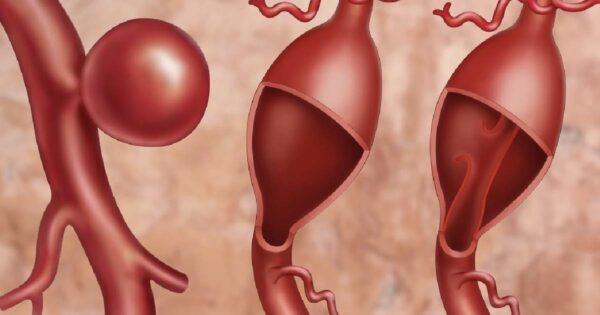
Treatment Approaches for Abdominal Aortic Aneurysm
The treatment approach for an abdominal aortic aneurysm is to detect abnormalities of the disease for early treatment. Although there are no medications that can directly slow the rate of aneurysm expansion, some medications may be prescribed by doctors that can help reduce the mortality rate from coronary artery disease, which affects half of the patients with abdominal aortic aneurysms, especially those with aneurysms due to degeneration of the arterial wall, due to several shared risk factors such as:
- Old age
- Being male
- Having diabetes
- High blood pressure
- High cholesterol
However, patients with genetic conditions such as Marfan Syndrome should be screened for disease abnormalities from an early age, starting at 15 years old, with whole-body CT scans annually for life. For those with aneurysms due to arterial wall degeneration, studies in the United States, Canada, and Europe agree that the group that should be screened for abnormalities are men aged between 65 – 75 years who have smoked at least once in their life or have a family history of abdominal aortic aneurysms through ultrasound examination.
Patients with abdominal aortic aneurysms should quit smoking immediately as it can reduce the risk of rupture by four times. Moreover, they should engage in moderate exercise, such as gentle jogging, cycling, swimming, but avoid heavy exercise or weightlifting. Importantly, high-speed CT scan screenings, like the 256 Slice CT Scan, for those at risk of abdominal aortic aneurysms are now available. This technology allows for minimal radiation exposure and more detailed results.