


A stroke does not occur only in the elderly. The modern working-age population should not be complacent, as high stress, lack of rest, lack of exercise, and neglect of health increase the risk of stroke, which can be deadly if prevention, care, and regular annual health check-ups are not promptly addressed.
What is a stroke?
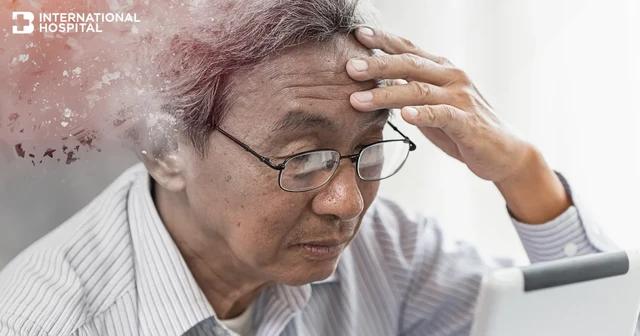
Stroke (Stroke) is a condition where the brain is deprived of blood supply due to narrowing, bursting, or blockage of brain blood vessels. It usually occurs suddenly and therefore requires immediate treatment before brain tissue is destroyed, causing brain dysfunction and potentially life-threatening conditions. Although it is mostly found in the elderly, currently, the working-age population is a high-risk group for strokes due to accumulated stress from various life problems and improper health care.

What causes stroke in the working-age population?
Stroke in the working-age population is often caused by main factors such as stress and underlying diseases.
- Stress is related to stroke because when the body is stressed, the brain and heart work harder as stress hormones are released in large amounts. Prolonged stress causes various stress hormones to cause irregular heartbeats, high blood pressure, increasing the risk of clogged or burst blood vessels
- Underlying diseases in working-age people with underlying diseases such as heart disease, high blood pressure, diabetes, obesity, etc., further increase the risk of stroke, including lifestyle behaviors such as stress, lack of exercise, smoking, alcohol consumption, which increase the risk of stroke.
Stroke risk factors in the working-age population
- High blood pressure
- Obesity, high cholesterol
- Diabetes
- Insufficient rest
- Smoking, alcohol consumption

What are the symptoms of stroke in the working-age population?
The symptoms of stroke in the working-age population are similar to those in the elderly. If symptoms occur, they should promptly see a doctor. They can be observed as follows:
- Incomprehensible communication, difficulty recalling words
- Unclear speech, tongue stiffness
- Dizziness, unsteady walking
- Double vision
- Weakness on one side of the body
- Numbness on one side of the body
B.E.F.A.S.T Danger signals require immediate medical attention
B.E.F.A.S.T is a warning sign indicating that the patient must be immediately taken to the hospital to reduce the risk of disability or death by just having one of the following symptoms:
- B – Balance Dizziness, unsteady walking, inability to maintain balance
- E – Eyes Sudden blurred vision, inability to see
- F – Face Distorted mouth, drooping corner of the mouth, numbness or weakness in the face
- A – Arm Weakness in one arm or leg, inability to grip
- S – Speech Unclear speech, inability to speak, difficulty speaking, inability to communicate
- T – Time Go to the hospital as quickly as possible

How is stroke diagnosed in the working-age population?
The diagnosis of stroke depends primarily on the specialist physician, including:
- Medical history and physical examination The doctor will inquire about symptoms, family history, risk factors, underlying diseases, and conduct a physical examination to accurately assess abnormalities.
- Blood test (Blood Test) to check blood sugar levels, blood lipids, blood cell completeness, and assess the risk of stroke.
- Chest X-ray (Chest X-Ray) to consider abnormalities of the heart and lungs.
- Electrocardiogram (Electrocardiogram – EKG) High-frequency cardiac wave examination to check heart rhythm, heart structure, and heart function to find the cause of stroke.
- Brain CT scan (CT Scan) to check for abnormalities in the skull, bleeding in the brain, brain tumors.
- Magnetic resonance imaging of the brain (MRI Scan) for detailed examination of the brain and internal structure. Check for narrowed brain blood vessels, allowing doctors to clearly identify abnormalities and causes of brain disorders.
- Carotid Doppler ultrasound of neck vessels supplying the brain (Carotid Doppler Ultrasound) to check for abnormalities of the brain blood vessels and neck vessels.
How is stroke treated in the working-age population?
The treatment of stroke in the working-age population depends on the cause and severity of the disease. To treat a stroke, doctors will give thrombolytic drugs within 4.5 hours after symptoms occur to allow blood to circulate normally. If there are indications or large vessel blockages, doctors will use Biplane Digital Subtraction Angiography – Biplane DSA technology to locate where the large vessel is blocked and treat it by inserting a catheter into the main artery in the groin and then suctioning or using a wire or mesh to catch the blood clot blocking it to open the brain vessel, without open skull surgery. This treatment must be conducted by a specialized medical team to reduce the death rate.

How to prevent stroke in the working-age population
- Regularly measure and control blood pressure to normal levels
- Maintain weight within normal ranges
- Avoid very sweet, salty, fatty foods, fast food, and processed foods
- Exercise regularly, focusing on cardio to maintain good heart function
- Avoid smoking and alcohol consumption
- Get an annual health check-up
- Get a heart health check-up as recommended by a doctor
Regardless of age, one can develop a stroke; therefore, do not neglect brain health by taking care of oneself properly, regularly observing abnormalities, and having an annual health check to stay away from strokes.
Doctors specializing in stroke treatment
Dr..Rabwas Munjit is a specialist in stroke treatment and brain vascular examinations using high-frequency sound waves at Bangkok International Hospital, a hospital specializing in brains and bones.
You can click here to make your appointment.
Hospitals specializing in stroke treatment
The Brain and Nervous System Center at Bangkok International Hospital is a hospital specializing in brains and bones, ready to provide diagnosis and stroke treatment with a team of specialized doctors, including multidisciplinary practitioners with expertise and modern treatment technology to ensure patients live with quality every day.