



Anti-Amyloid Therapy is an innovative treatment for early-stage Alzheimer’s disease classified as a Disease-Modifying Therapy (DMT), or a treatment that aims to modify the course of the disease—not merely relieve symptoms—but to preserve brain function and the patient’s quality of life for as long as possible. For Anti-Amyloid Therapy currently available in Thailand, it is administered as an intravenous injection. Treatment must be under the supervision of highly experienced specialist physicians for optimal effectiveness.
What is Alzheimer’s disease?
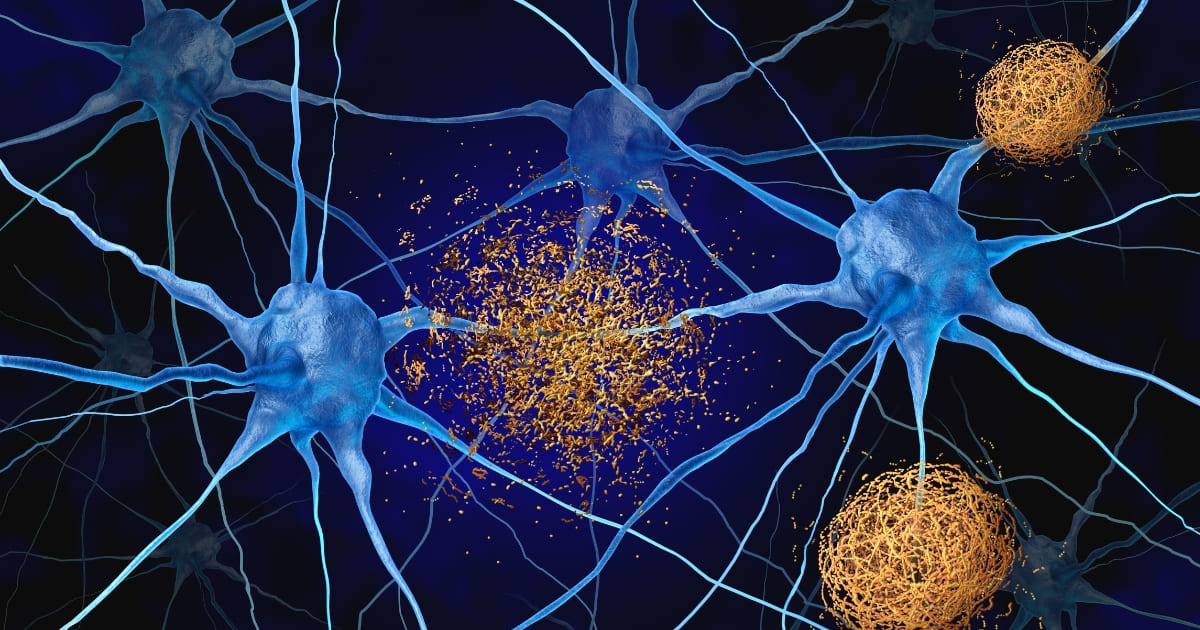
Alzheimer’s disease (Alzheimer’s Disease) is a brain disorder caused by the accumulation of beta–amyloid (Beta-Amyloid) protein until it forms plaques (Plaques) that damage nerve cells, resulting in impaired communication between cells and, ultimately, degeneration of brain cells. This process often occurs many years before patients begin to show clear symptoms.

Stages of Alzheimer’s disease
Alzheimer’s disease is divided into stages according to severity as follows:
- Preclinical stage (Preclinical Alzheimer’s Disease) At this stage, patients have no memory loss symptoms and can live normally, but beta–amyloid protein has already begun to accumulate in the brain.
Doctors cannot detect patients in this stage through general memory tests; it requires testing amyloid protein levels in blood or cerebrospinal fluid, or performing an Amyloid PET Scan. - Early-stage Alzheimer’s (Mild Alzheimer’s Disease) Patients begin to have short-term memory impairment. Common symptoms include:
- Forgetting recent events
- Asking the same questions repeatedly
- Misplacing items
- Beginning to be confused when handling numbers and financial plans
- Moderate Alzheimer’s (Moderate Alzheimer’s Disease) Brain function declines to the point that it clearly affects daily life.
- Beginning to forget personal information such as address or phone number
- Misunderstanding speech, repeating the same words over and over
- May show unusual behaviors, such as wandering away from home without a destination
- May have mood swings, irritability, difficulty sleeping, confusion, hallucinations
- Severe Alzheimer’s (Severe Alzheimer’s Disease) This is the final stage in which most brain tissue has been damaged. Symptoms include:
- Loss of almost all memories
- Loss of the ability to communicate and control the body
- Unable to perform basic daily activities independently
- Requires close supervision at all times
Current diagnosis of Alzheimer’s disease
To maximize the effectiveness of treatment with Anti-Amyloid Therapy, doctors diagnose Alzheimer’s disease using the following methods:
- Medical history taking, physical examination, and cognitive function testing by a specialist physician
- Blood tests to assess Alzheimer’s disease risk and to screen for other diseases
- MRI to evaluate brain atrophy and screen for other diseases
- Amyloid PET Scan to confirm amyloid plaque accumulation in brain tissue, which is an important standard for considering initiation of medication
Anti-Amyloid Therapy How does it help slow Alzheimer’s?
Anti-Amyloid Therapy is an antibody that binds directly to beta–amyloid protein accumulated in the brain and stimulates the body’s immune system to eliminate these amyloid plaques. It helps reduce damage to brain cells, enabling early-stage Alzheimer’s patients or those with mild cognitive impairment (Mild Cognitive Impairment – MCI) to maintain quality of life and preserve brain function for longer.
Anti-Amyloid Therapy Who is it suitable for?
- Patients with early-stage Alzheimer’s (Mild Alzheimer’s Disease)
- Patients with mild cognitive impairment (Mild Cognitive Impairment)

Treatment format with Anti-Amyloid Therapy
Anti-Amyloid Therapy is administered via intravenous infusion (IV infusion) continuously according to the physician’s treatment plan (typically every 2 weeks) and may need to be continued indefinitely because beta–amyloid in the brain can be produced again over time. Periodic brain MRI follow-up is required to monitor for a side effect called ARIA (Amyloid-Related Imaging Abnormalities), or brain swelling and small spots of bleeding, which are uncommon and mostly manageable if detected early.
Side effects of Anti-Amyloid Therapy
Although the chances are low, side effects of Anti-Amyloid Therapy can occur, including:
- General side effects such as headache, dizziness, nausea, diarrhea, or other side effects that may occur with intravenous administration
- Side effects requiring close monitoring: brain swelling or bleeding spots in the brain, which can be monitored with periodic brain MRI, especially during the early phase of treatment
How to prevent Alzheimer’s
- Eat brain-nourishing foods such as deep-sea fish, green leafy vegetables, berries, etc.
- Exercise regularly, at least 30 minutes a day, 5 days per week
- Manage stress; meditate and relax the mind
- Keep the brain active, such as reading, doing crafts, playing word games, playing music, etc.
- Get enough sleep—7 – 8 hours—and maintain good sleep quality
- If someone in the family has Alzheimer’s, brain screening should be done from age 40 and above
Physician specializing in Alzheimer’s treatment
Dr.Chakorn Chansakul Neurologist Brain and Bone Hospital
You can click here to make an appointment yourself.
Hospital specializing in Alzheimer’s treatment
Bangkok Hospital International, Brain and Bone Hospital is ready to care for and treat Alzheimer’s disease from the earliest stage with a team of brain specialists, nursing staff, a multidisciplinary team, and modern treatment technology to slow disease progression in the long term.