






Cerebral aneurysm is a common condition. It often has no warning signs. By the time you realize it, symptoms are often so severe that it catches you off guard. The key is to seek treatment as quickly as possible before it is too late, because the dangers can be severe—leading to weakness, paralysis, and death.
What is a cerebral aneurysm?
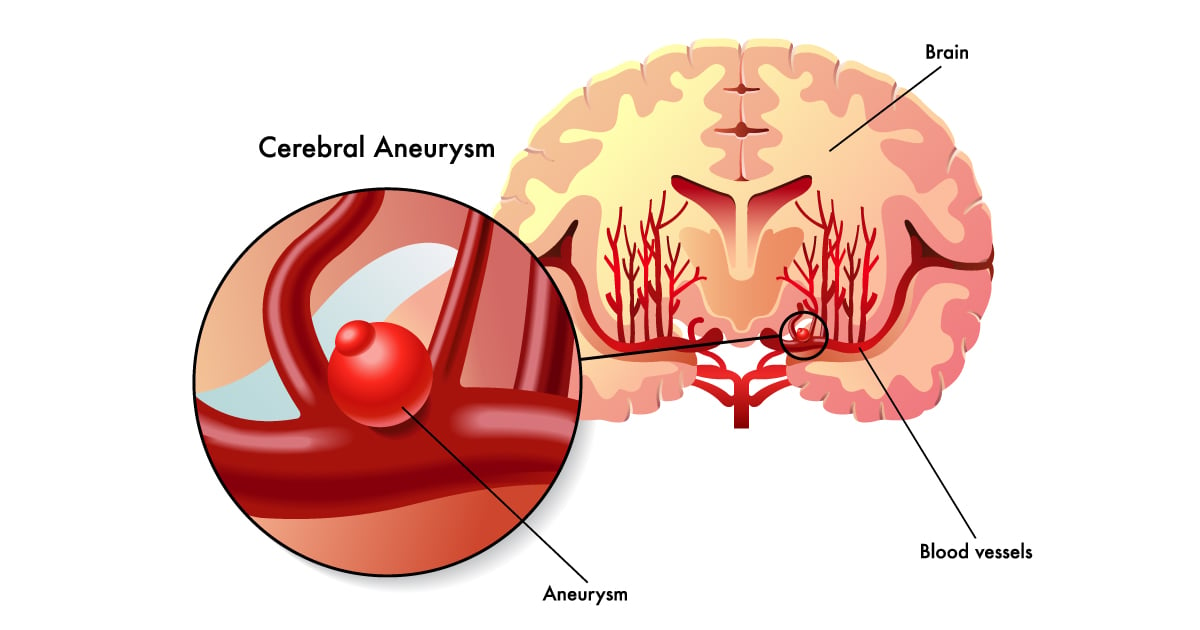
Cerebral aneurysm (Cerebral Aneurysm or Brain Aneurysm) is a condition in which the wall of an artery in the brain degenerates, causing the arterial wall in that area to become thinner. If there is pressure from blood flow in that area, the vessel wall bulges. As it enlarges due to pressure within the blood vessel, it can rupture and cause bleeding beneath the meninges (subarachnoid hemorrhage). If a blood vessel ruptures, about half of patients have a chance of death when symptoms occur, and the remaining patients must be diagnosed rapidly. If left untreated and not managed promptly, it may be fatal.
What causes a cerebral aneurysm?
Brain aneurysms can result from multiple contributing factors, including physical factors, behaviors, and environmental conditions as follows:
- Genetics or a family history of cerebral aneurysm
- Age-related vascular degeneration
- High blood pressure
- Diabetes
- History of brain injury
- Smoking, use of certain illicit drugs
What are the symptoms of a cerebral aneurysm?
The frightening aspect of a cerebral aneurysm is that in the early stage, there may be no warning symptoms, or there may be non-specific headaches, until the aneurysm becomes large enough to compress brain tissue, block blood vessels, rupture, and cause bleeding beneath the meninges, resulting in the following symptoms:
A cerebral aneurysm becomes large and compresses brain tissue or cranial nerves
Compression symptoms depend on the area of brain tissue near the aneurysm location.
- Headache
- Drooping eyelid
- Double vision
A cerebral aneurysm blocks distal blood vessels
Caused by a large cerebral aneurysm with an internal blood clot that breaks off and blocks distal cerebral blood vessels
- Numbness
- Weakness in the arms and legs
- Slurred speech
- Facial droop
A cerebral aneurysm ruptures and causes bleeding beneath the meninges
This group of symptoms is often an emergency that brings patients to see a doctor.
- Sudden, severe headache
- Sudden neck pain
- Nausea, vomiting
- Seizures, loss of consciousness
How is a cerebral aneurysm diagnosed?
Rapid diagnosis is important. The physician will assess and select the most appropriate examinations, including:
- Computed tomography (CT scan) to examine details of abnormal bleeding in the meninges and in brain tissue
- Magnetic resonance imaging (MRI – Magnetic Resonance Imaging) to assess the risk of cerebral aneurysm, cerebral artery stenosis, and rupture
- Evaluation of abnormal blood vessels for preliminary diagnosis. The treating physician will consider the patient’s symptoms and signs and choose appropriate tests, including CT angiogram, MRI angiogram, and contrast dye injection (angiography).
- Cerebral angiogram is the current standard test, which can identify the location, size, and shape of the abnormally bulging artery. At present, this test can be used to analyze characteristics and abnormal blood-flow patterns in the artery and can also be used as one method to treat an aneurysm without brain surgery, depending primarily on the patient’s symptoms and the location of the vascular abnormality.
Treatment of cerebral aneurysm
Treatment of a cerebral aneurysm depends on the patient’s clinical presentation.
- If an aneurysm is found incidentally, the patient can consult a specialist physician to plan treatment while the aneurysm is present but has not yet ruptured, for better outcomes and to maintain the same level of quality of life.
- If a patient arrives at the hospital with signs of a ruptured cerebral aneurysm, this is a critical neurological emergency and requires urgent treatment.
- Admission as an inpatient in a neurocritical care unit
- Diagnostic evaluation to locate the aneurysm and rupture site in order to plan treatment
- Management of brain damage caused by the bleeding, including acute hydrocephalus, seizures, cerebral ischemia due to cerebral vasospasm following hemorrhage, and unconsciousness, all of which can be life-threatening
How is a cerebral aneurysm treated?
Treatment for cerebral aneurysm depends on the aneurysm location, the patient’s symptoms, age, the amount of bleeding in the brain, the patient’s overall strength, and comorbidities. Currently, there are 2 treatment methods.
Surgical clipping of a cerebral aneurysm (Clipping Aneurysm)
A neurosurgical team performs surgery to clip the aneurysm. The difficulty depends on the size, shape, location, and neck width of the aneurysm. This method can remove blood that has leaked into the brain and drain fluid accumulated in the ventricles at the same time. Using specialized instruments to clip the abnormal vessel area can prevent recurrence.
Endovascular treatment (Endovascular treatment)
An endovascular specialist will inject radiopaque contrast for X-ray imaging before occluding the aneurysm with coils (Endovascular Coiling). A catheter is inserted through a blood vessel in the groin. Once the cerebral aneurysm is located, the doctor inserts a coil (Platinum Coil) through the catheter to stimulate clot formation to occlude the aneurysm site.
Preventing cerebral aneurysm
- Screen for cerebral aneurysm with magnetic resonance angiography (MR-angiography), because this disease has no symptoms if the aneurysm has not ruptured
- Avoid sweet, fatty, and salty foods
- Control blood pressure within the normal range
- Exercise regularly
- Stop smoking, drink alcohol and do not use illicit drugs
- Have an annual health check-up
- If you have underlying diseases, take medications and keep all scheduled doctor appointments
Doctors specializing in cerebral aneurysm treatment
- Dr. Yodruk Prasert Neurosurgeon, Bone and Brain Hospital
- Dr. Nanthasak Tisavipat Neurosurgeon, Bone and Brain Hospital
- Dr. Siraruj Sakoolnamarka Neurosurgeon, Bone and Brain Hospital
- Dr. Surachet Srikaew Neurosurgeon, Bone and Brain Hospital
Hospital specializing in cerebral aneurysm treatment
Bone and Brain Hospital is fully equipped to care for and treat patients with cerebral aneurysms in all critical conditions, with a highly experienced team of specialist physicians and modern technology to restore a good quality of life once again.
Article summary
Cerebral aneurysm is a silent threat that requires close observation of symptoms and regular health check-ups. If you experience a sudden, severe headache, you should see a doctor immediately. Timely diagnosis and treatment by a specialist medical team will help reduce the risk of complications and increase the chance of recovery to return to normal life.
Frequently Asked Questions (FAQ) about cerebral aneurysm
1. Can a cerebral aneurysm be cured?
It can be treated to prevent rupture if detected early and treated with clipping or coiling. Patients can return to normal life. However, patients still need to take care of their health and control blood pressure to prevent aneurysms from developing in
other locations subsequently.
2. Is brain aneurysm surgery dangerous?
All types of brain surgery carry risks. However, with advances in medicine, experienced neurosurgical teams, and modern instruments, surgical safety is much higher today. This is considered a safer option than leaving an aneurysm to rupture on its own.
3. What is an A Com aneurysm?
A Com Aneurysm is short for Anterior Communicating Artery Aneurysm, meaning a cerebral aneurysm that occurs in the area of the artery that connects the anterior blood vessels on both sides of the brain, which is one of the most commonly found locations for aneurysms.
4. What is a ruptured aneurysm?
A ruptured aneurysm is a condition in which the bulging blood vessel can no longer withstand blood pressure and tears open, causing bleeding in the middle layer of the meninges. This is a critical neurological emergency that requires urgent life-saving treatment.