


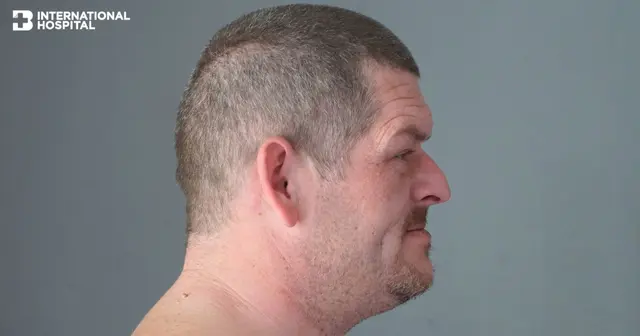

Acromegaly or acromegaly is a disease caused by abnormally high levels of growth hormone in the body over a long period of time, resulting in enlargement of bones, tissues, and some organs. Many people often do not notice it in time, leading to a lack of timely care and treatment, which increases the risk of diabetes, high blood pressure, heart disease, and sleep apnea.
What is Acromegaly ?
Acromegaly (acromegaly) is a condition of abnormally high growth hormone due to the pituitary gland releasing too much hormone, affecting the body and becoming a chronic disease that impacts the body, including cartilage, organs, and various tissues. It is commonly found in adults, both men and women.
What causes Acromegaly ?
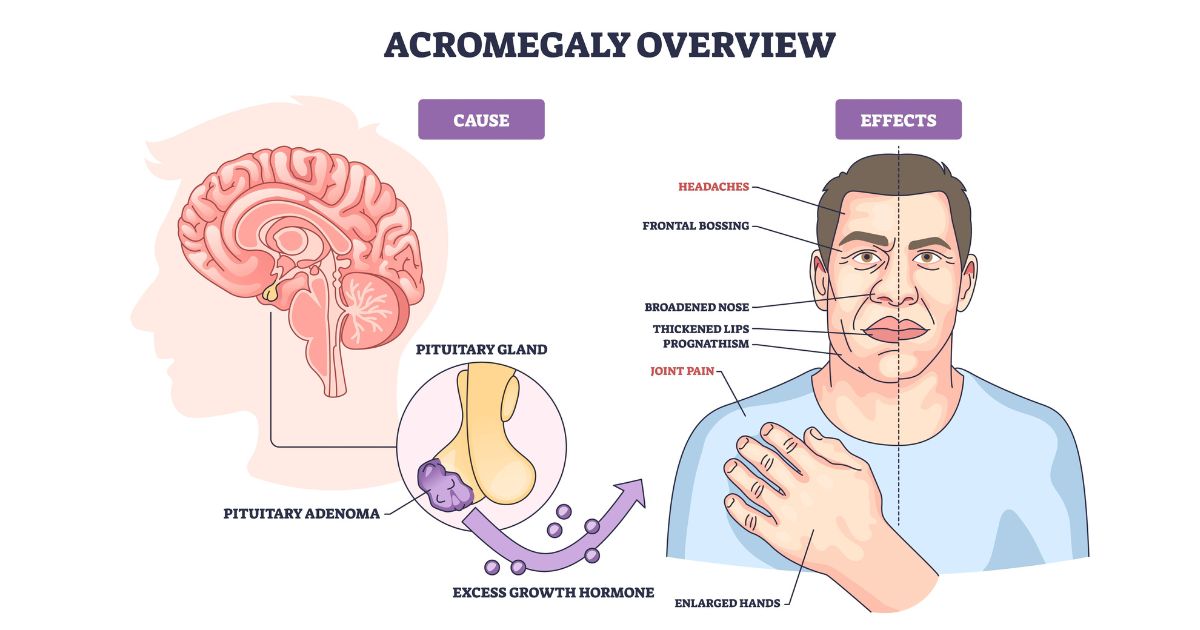
The cause of Acromegaly is a noncancerous tumor in the pituitary gland (Pituitary Adenoma) that causes the pituitary gland to secrete excessive growth hormone (Growth Hormone) , stimulating the liver and tissues to produce more IGF-1 (Insulin-like Growth Factor-1) . This results in abnormal growth of some bones and tissues, gradually enlarging in size. If not treated promptly, it may cause long-term effects.
What are the symptoms of Acromegaly ?
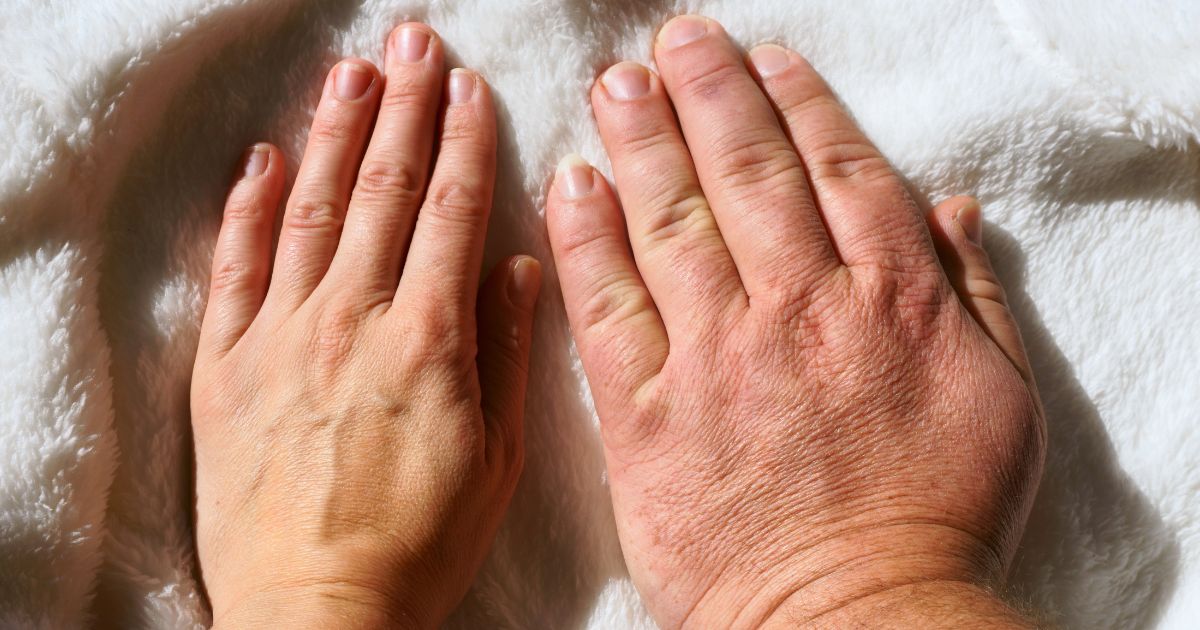
- Large hands and feet; rings that used to fit become tight; needing larger shoe sizes
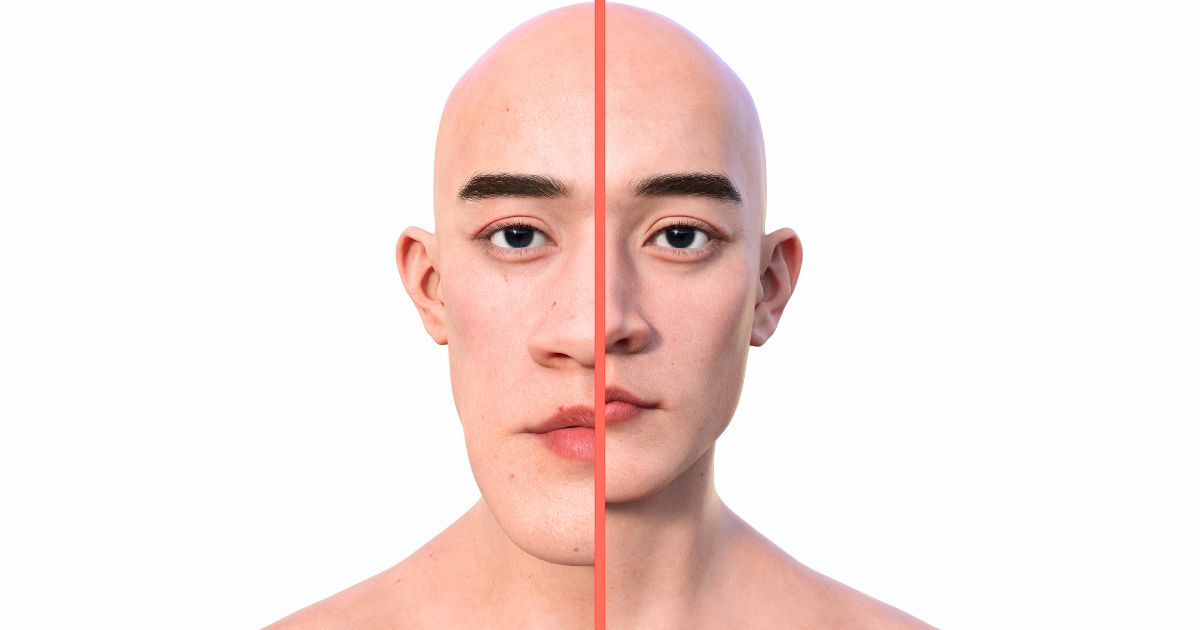
- Facial changes: protruding jaw, larger nose and thicker lips, increased spacing between teeth
- Headache, narrowed visual field, abnormal vision
- Thickened, coarse, oilier skin
- Loud snoring with sleep apnea
- Joint pain, muscle pain, hand numbness due to compression of the wrist nerve
- Other hormonal abnormalities such as irregular menstruation and reduced sexual function
These symptoms of Acromegaly often develop gradually. Patients and those close to them can observe changes from old photos or by comparing body appearance over the past several years.
How is Acromegaly diagnosed?
- Hormone level testing
- Blood test for IGF-1
- Growth hormone (Growth Hormone) level testing
- Magnetic resonance imaging (MRI) of the pituitary gland
How is Acromegaly treated?
Treatment for Acromegaly depends on the cause and severity of the diseaseas follows:
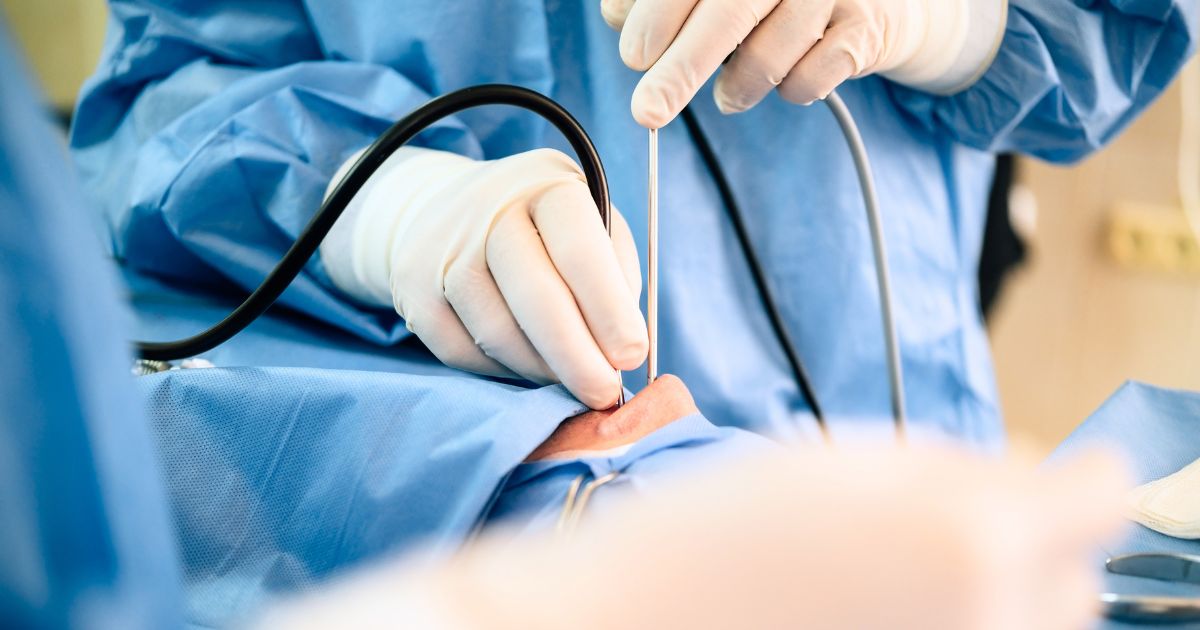
- Tumor removal surgery is the best treatment method. If the patient seeks treatment when the tumor is no larger than 1 centimeter, the chance of complete cure is higher. This includes endoscopic transnasal surgery, which is popular because it allows the doctor to see every detail, operate precisely at the site, and enables faster recovery, as well as open craniotomy in cases where the tumor is very large, around 4 – 5 centimeters.
- Medications to control hormone levels and to reduce tumor size and lower hormone levels before surgery
- Radiation therapy for some patients who have undergone surgery but still have residual tumor, or for patients who cannot undergo surgery. Although the advantage is no wound, the disadvantage is the possibility that nearby organs may be affected by radiation.
How should you take care of yourself after Acromegaly treatment?
- During the first week after surgery, avoid coughing, sneezing, and straining; avoid spicy and hot foods because the nasal lining will swell more, making breathing difficult. Nasal irrigation should be done frequently.
- Follow up on GH and IGF-1 levels at every scheduled appointment.
- Follow up with pituitary imaging as appropriate.
- Assess comorbidities such as diabetes, high blood pressure, and sleep apnea.
- Take medications and undergo continuous checkups.
Severity of Acromegaly
If Acromegaly is not treated promptly, in addition to changes in the body, it may lead to complicationsincluding:
- Cardiovascular disease
- High blood pressure
- Diabetes
- Sleep apnea
- Colon cancer
Can Acromegaly be completely cured?
Acromegaly can be completely cured, depending on the size of the tumor found. The smaller the tumor, the higher the chance of complete cure.
Can Acromegaly be prevented?
Acromegaly cannot be prevented. Once it occurs, you should promptly see a specialist for a thorough examination and treatment. Leaving it untreated for a long time may increase severity and reduce the chance of complete cure.
Frequently Asked Questions (FAQ)
Q: How is Acromegaly different from Gigantism ?
A: Gigantism and Acromegaly are caused by the body producing too much growth hormone, but the difference is that gigantism occurs in childhood or adolescence before the bones have fully grown; the hormone stimulates the bones to lengthen and grow rapidly, making the child taller with longer limbs than peers of the same age. In contrast, Acromegaly occurs in adulthood between the ages of 30 – 50 years, when the bones have fully matured; excess hormone causes bones to expand sideways and tissues to enlarge—large hands, large feet, a thickened forehead, protruding chin, prominent cheekbones, thicker nose and lips, and enlarged internal organs.
Q: Can Acromegaly be inherited?
A: Most cases of Acromegaly are not inherited, but are usually caused by a pituitary tumor that secretes abnormally high levels of growth hormone (Growth Hormone) . However, in some patients, genetic abnormalities can increase the risk of developing a pituitary tumor or hormonal abnormalities.
Q: Can Acromegaly recur?
A: Acromegaly can recur, so follow-up with a specialist at every scheduled appointment is necessary.
Hospitals specializing in the care and treatment of Acromegaly
Neuroscience Center, Bangkok Hospital International is ready to provide care and treatment for Acromegaly by specialized physicians with expertise, modern tools and equipment, and an experienced multidisciplinary team, to help you return to good health and live a quality life every day.
Medical team specializing in the care and treatment of Acromegaly
Pol.Lt.Col.Dr..Siraruj Sakoolnamarka Specialist physician treating brain tumors, cerebrovascular diseases, hydrocephalus, surgery for epilepsy and Parkinson’s disease, pediatric brain surgery, and surgery for cervical herniated discs compressing nerves, Neuroscience Center, Bangkok Hospital International
Dr.Rungsak Siwanuwatn Specialist physician in neurosurgery, Neuroscience Center, Bangkok Hospital International