



GFAP disease or GFAP Astrocytopathy is a neurological disease involving inflammation of the central nervous system and immune mechanisms, affecting the brain, meninges, and spinal cord Symptoms are diverse, but it often presents with fever of unknown cause, which may be prolonged. This is followed by neurological symptoms such as weakness, numbness, or urinary retention, and can progress to drowsiness and confusion. Diagnosis requires history taking and neurological examination, together with cerebrospinal fluid testing, testing for GFAP-IgG in both blood and cerebrospinal fluid, and MRI of the brain and spinal cord as appropriate for each patient.
What is GFAP disease
GFAP (Glial Fibrillary Acidic Protein Astrocytopathy) is a central nervous system disorder caused by immune system abnormalities that damage brain and spinal cord tissue. The immune system attacks the GFAP (Glial Fibrillary Acidic Protein) protein, which is a protein in central nervous system cells called astrocytes. These cells help maintain the strength of brain cells and repair brain tissue when damage occurs, leading to inflammation in the central nervous system, especially in the brain, meninges, and spinal cord. The average age of onset is 40 – 50 years, but cases have been reported in older children and the elderly.

GFAP-IgG what is it
GFAP-IgG is an antibody (Antibody) of the Immunoglobulin G type that is specific to the GFAP (Glial Fibrillary Acidic Protein) protein, a structural protein in astrocytes. Detecting this antibody in cerebrospinal fluid can indicate GFAP Astrocytopathy.
What causes GFAP disease
Currently, the exact cause of GFAP Astrocytopathy is still unknown because the disease has only been identified since 2016. However, it is thought to be a type of autoimmune disease. There are many conditions that can lead to autoimmunity in the nervous system, especially in the meninges the brain, and the spinal cord. Some patients have been reported to already have genes that predispose them to autoimmune disease. Patients may have abnormal immune regulation, causing white blood cells to disseminate into the bloodstream. Patients may have a history of infection, vaccination, or environmental factors such as vitamin D deficiency, severe obesity, and smoking. Some may also be found to have cancer or other types of neurological antibodies. Therefore, the cause often differs among individuals, and a definite cause cannot be identified.
What are the symptoms of GFAP disease
Symptoms of GFAP Astrocytopathy vary depending on the area of the nervous system affected. They may occur acutely or develop gradually over several days to several weeks.
- Brain and meninges
- Fever
- Headache
- Nausea or vomiting
- Neck stiffness
- Confusion, changes in level of consciousness
- Abnormal memory or thinking
- Seizures in some cases
- Spinal cord
- Weakness and numbness of the limbs
- Unsteady gait and impaired balance
- Abnormal bowel or bladder control
- Movement
- Tremor
- Abnormal movements
- Muscle jerks
- Vision
- Visual disturbances

Warning signs: see a doctor
If multiple neurological symptoms occur and affect daily life, you should see a doctor immediately.
- Severe headache with fever
- Confusion or behavioral changes
- Seizures, decreased level of consciousness
- Weakness of the limbs, abnormal numbness
- Unsteady gait, impaired balance, abnormal movements
- Visual disturbances
- Abnormal speech or swallowing
How is GFAP disease diagnosed
Diagnosing GFAP disease requires assessing multiple types of information together to identify the true cause including:
- Medical history The physician will assess the initial characteristics of symptoms, duration, neurological symptoms, history of infection, underlying diseases, medications used, and other related factors.
- Neurological examination (Neurological Examination) to assess brain function, movement, sensation, balance, vision, and other nervous system functions.
- Cerebrospinal fluid examination (Cerebrospinal Fluid Examination – CSF) lumbar puncture to evaluate patients suspected of inflammatory or immune-mediated neurological disease and to analyze various components of the cerebrospinal fluid.
- Detection of GFAP – IgG (Glial Fibrillary Acidic Protein Immunoglobulin G) in cerebrospinal fluid by testing for antibodies or immune substances of the IgG type that are specific to the GFAP (Glial Fibrillary Acidic Protein) protein. This is an important marker for diagnosing autoimmune inflammatory neurological disease related to GFAP, which is a rare group of encephalitis and myelitis. It remains uncommon today because it is not widely recognized and requires complex testing.
- Brain and spinal cord MRI to diagnose patients with symptoms indicating inflammation of the brain or spinal cord, and abnormalities may be found in the spinal cord, meninges, or other areas of the nervous system. There are characteristic lesions that help raise suspicion for this group of diseases Having a radiology team and neurological specialists helps speed up diagnosis
How is GFAP disease treated
Treatment approaches for GFAP aim to reduce inflammation and control immune system abnormalities. The physician will choose a treatment method based on the severity and each individual patient’s response. Most patients respond well to treatment; the earlier the treatment, the more the severity is reduced, the faster recovery occurs, and the greater the chance of complete recovery. However, if treatment is delayed, the nervous system may be damaged for a prolonged period.
- Steroid therapy to suppress abnormal immune activity, especially in patients with clear evidence of nervous system inflammation. Specialists will determine the dosage, treatment duration, and tapering as appropriate.
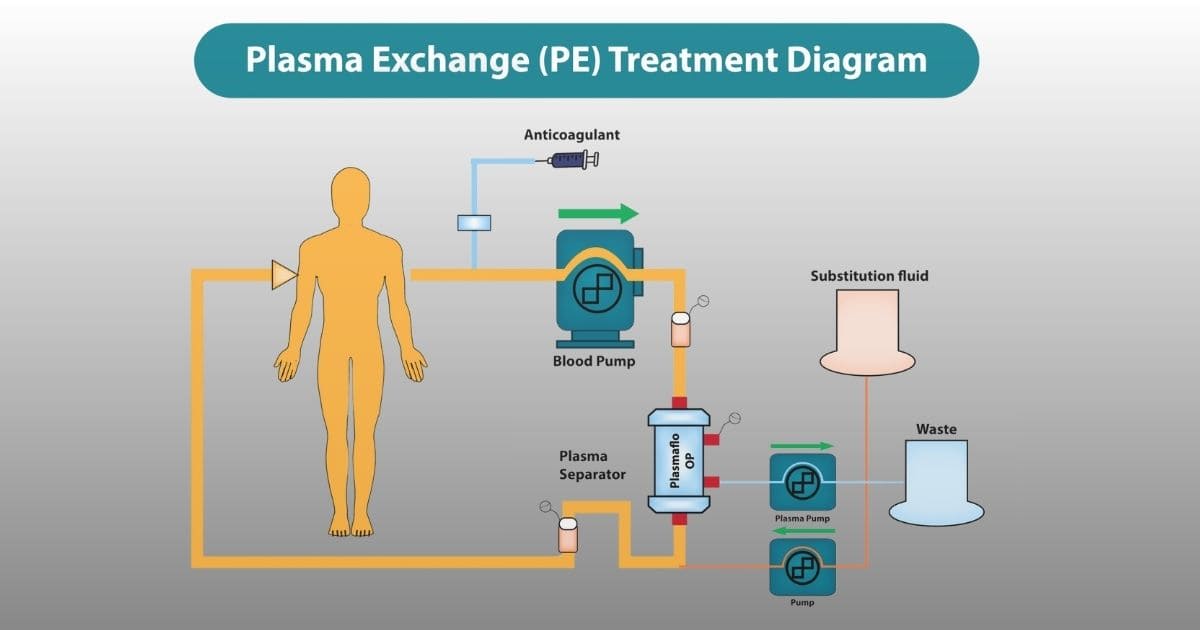
- Plasmapheresis (Plasmapheresis) or blood cleansing, to remove antibodies or abnormal immune factors in the blood that damage brain cells from the bloodstream, and replace them with healthy plasma or other replacement fluids, to rapidly reduce or eliminate abnormal immune factors and stop inflammation in the nervous system. Currently, advanced blood filtration technology DFPP (Double Filtration Plasmapheresis) is used to separate plasma from blood cells and then filter out toxins such as antibodies and plasma lipids, while returning beneficial proteins such as albumin to the body. With this method, patients lose little blood and only the unwanted components are removed. It can be performed daily, allows fast recovery, does not require a long hospital stay, and increases the chance of faster recovery.
- Immunotherapy in patients with severe symptoms, insufficient response to initial treatment, or relapse. The physician may consider other treatments such as Intravenous Immunoglobulin (IVIG), immunosuppressants, or certain immunomodulatory agents.
Limitations in treating GFAP disease
- Patients who are allergic to or cannot be given steroids
- Patients who do not respond to steroids may need additional immunosuppressants
- Infection or complications occur during treatment

How to care for patients with GFAP disease
Follow-up and rehabilitation after treatment for patients with GFAP disease are important, including:
- Take medications as advised by the physician
- Do not stop medications on your own; physicians usually prescribe a gradual taper
- Attend regular follow-ups as scheduled
- The physician may monitor neurological symptoms, laboratory results, and perform brain or spinal imaging
- Watch for relapse: patients and families should observe changes in memory, behavior, movement, balance, vision, and other neurological symptoms
- Rehabilitation: if there are impacts on movement, balance, activities of daily living, or work, rehabilitation by a multidisciplinary team may be required
Severity of GFAP disease
The severity of GFAP Astrocytopathy varies among individuals. Symptoms may progressively worsen, from meningitis and encephalitis to inflammation of the spinal cord. Some may develop severe neurological complications, become drowsy, and be unable to care for themselves. Some patients respond well to treatment, while others may have severe inflammation of the brain or
spinal cord requiring close monitoring Therefore, if neurological symptoms such as confusion, seizures, limb weakness, visual disturbances, or changes in level of consciousness occur, they should be evaluated by a neurologist as soon as possible, because many patients who do not receive timely treatment may become bedridden.
Can GFAP disease be completely cured
Patients with GFAP Astrocytopathy often improve after receiving appropriate early treatment, but not everyone is completely cured because symptoms and severity differ among individuals. Some may relapse after treatment or require additional therapy. Ongoing follow-up is therefore important to maintain a good quality of life.
Can GFAP disease relapse
Research studies indicate that patients with GFAP Astrocytopathy have a very low chance of relapse. Most patients do not have recurrence and do not need lifelong immunosuppressive medication. If symptoms fully resolve, medications can be stopped. However, some may relapse even if they have only been ill once or previously responded well to treatment. Therefore, monitoring for abnormalities, attending scheduled appointments, and not stopping medications on one’s own will help manage GFAP disease appropriately.

Frequently Asked Questions (FAQ)
Q: Is GFAP disease related to cancer
A: Patients with GFAP disease do not necessarily have cancer. However, some patients with GFAP disease may be found to have certain tumors that are not cancer, such as thymic tumors or thyroid tumors. Some patients may be found to have malignant tumors, and some may fall within Paraneoplastic Neurological Syndrome (PNS) , a group of neurological disorders occurring in patients with cancer, not due to direct spread of the cancer mass into the brain or spinal cord, but due to an immune reaction in which the body attempts to fight cancer cells but inadvertently damages normal nerve cells.
Q: Can GFAP disease be prevented
A: GFAP Astrocytopathy cannot be prevented because the exact cause is still unknown, and it remains very rare. What matters is maintaining good health, monitoring symptoms, and obtaining an early diagnosis to ensure correct treatment, because GFAP disease often presents acutely or subacutely, such as headache and prolonged fever that does not improve. If illness does not resolve, autoimmune screening for (SLE) should be performed to determine the true cause and begin treatment as soon as possible.
Hospital specialized in caring for and treating GFAP disease
Brain and Neurology Center, Bangkok Hospital International is ready to provide care and treatment for GFAP Astrocytopathy with a team of specialized physicians with expertise and extensive experience, modern equipment, and a multidisciplinary team available for close consultation and care, so that you can return to living each day with confidence.
Doctors specialized in caring for and treating GFAP disease
Dr. Chanjira Satukijchai Neurologist Specialized in Clinical Immunology, Brain and Neurology Center, Bangkok Hospital International
You can click here to make an appointment yourself.