
How Does Hysteroscopy Work?
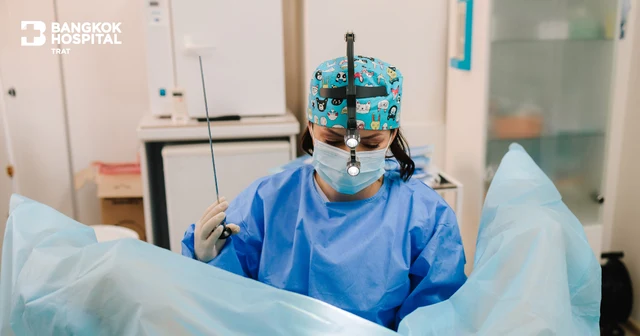
Hysteroscopy involves the use of a miniature camera (approximately 3-5 millimeters in diameter) equipped with a light source and lens at its tip. The device is inserted through the vagina and cervix directly into the uterine cavity. The images obtained are displayed on a monitor, allowing physicians to clearly visualize abnormalities inside the uterus.
During the same procedure, if an abnormality is detected, the physician can insert specialized surgical instruments through the hysteroscope to cut, remove, or cauterize the lesion immediately. This is known as Operative Hysteroscopy.
What Conditions Can Be Treated?
This technique is suitable for patients with abnormalities occurring directly within the uterine cavity, including:
- Endometrial Polyps: A common cause of heavy menstrual bleeding or irregular spotting.
- Submucous Myoma: Fibroids that protrude into the uterine cavity, causing severe menstrual pain, abnormal bleeding, and infertility.
- Intrauterine Adhesions: Often occur after uterine curettage and may result in absent menstruation and infertility.
- Uterine Septum: A congenital abnormality that may lead to recurrent miscarriages.
- Removal of Foreign Bodies: Such as retrieving an intrauterine device (IUD) with retracted strings or removing retained placental tissue after childbirth or miscarriage.
Why Is This Technique So Popular?
- No Visible Scars: The procedure is performed through the body’s natural passageways, leaving no external surgical scars.
- Minimal Pain: The body experiences very little trauma compared with open abdominal surgery or even laparoscopic surgery (Laparoscopy).
- Faster Recovery: The procedure is often performed as a Day Surgery. After a short recovery period of a few hours, patients can return home and usually resume normal activities the following day.
- High Precision: Direct visualization through the hysteroscope allows physicians to remove only the abnormal tissue while preserving as much healthy uterine tissue as possible.
Post-Procedure Care
After hysteroscopy, you may experience mild lower abdominal cramping similar to menstrual pain, along with light vaginal spotting for approximately 2-3 days. This is considered normal. It is important to avoid sexual intercourse, swimming, bathing in a bathtub, and vaginal douching for about 1-2 weeks to help prevent infection.
Modern gynecological treatments have evolved to provide greater safety and improve women’s quality of life. If you are experiencing any unusual symptoms, do not hesitate to consult your doctor. Today’s treatment options may be much simpler and less painful than you think.