
Warning Signs of Breast Cancer
-
A lump in the breast or underarm
Can be detected through regular self-examination at home. The lump may or may not be painful. All women should perform breast self-exams once a month, about one week after menstruation ends. -
Changes in breast size or shape
Although breasts are naturally not identical, noticeable changes in one or both breasts from their usual appearance should not be ignored, as early detection improves outcomes. -
Dimpling of the skin or thickened, orange-peel–like skin
Including changes in skin color or texture around the nipple. These may indicate cancer cells spreading beneath the skin and require prompt medical evaluation. -
Nipple discharge
Especially if the fluid is bloody, occurs spontaneously, or comes from one nipple only. Immediate medical assessment is recommended. -
Unusual breast pain or inflammation
Pain not related to the menstrual cycle, or redness and swelling of the breast skin—particularly when accompanied by a lump—should never be dismissed. -
Persistent itchy rash on the breast or nipple
If a rash does not resolve despite dermatological treatment and becomes scaly or crusted, further evaluation for breast cancer is advised, as it may indicate cancer spreading to the skin.
Who Is at Higher Risk of Breast Cancer?
-
Women who have previously had breast cancer in one breast
-
Early menstruation (before age 12) or late menopause (after age 55)
-
Having the first child after age 30 or never having children
-
Long-term use of female hormones or oral contraceptives
-
History of ovarian cancer
-
Lifestyle factors such as obesity, lack of exercise, alcohol consumption, or high radiation exposure
-
Having a first-degree relative with breast cancer
If you meet one or more of these risk factors, you may be at increased risk of developing breast cancer and should undergo screening.
How to Perform a Breast Self-Examination (BSE)
-
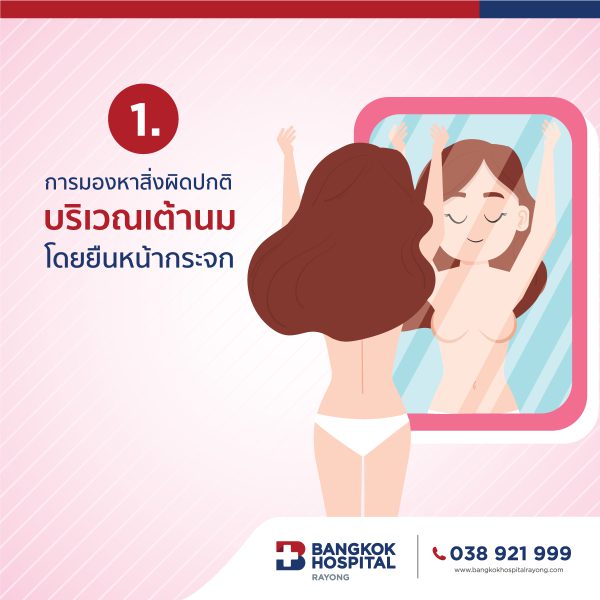
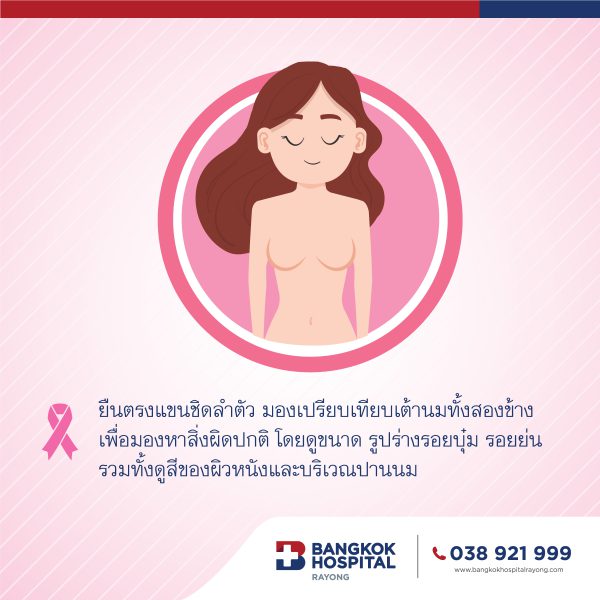
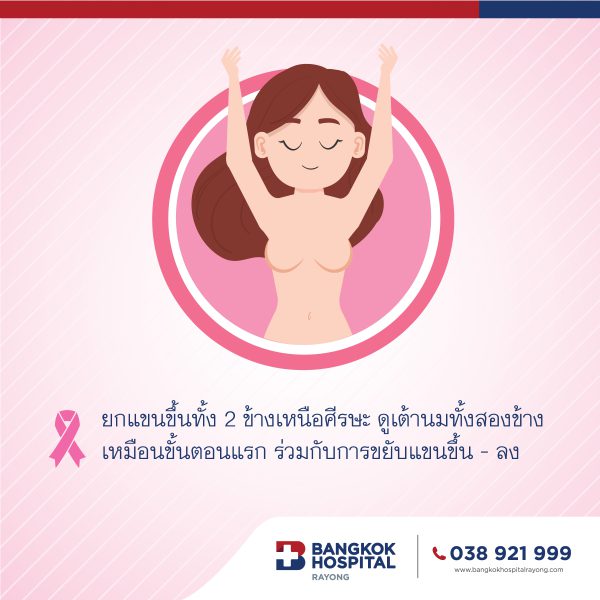
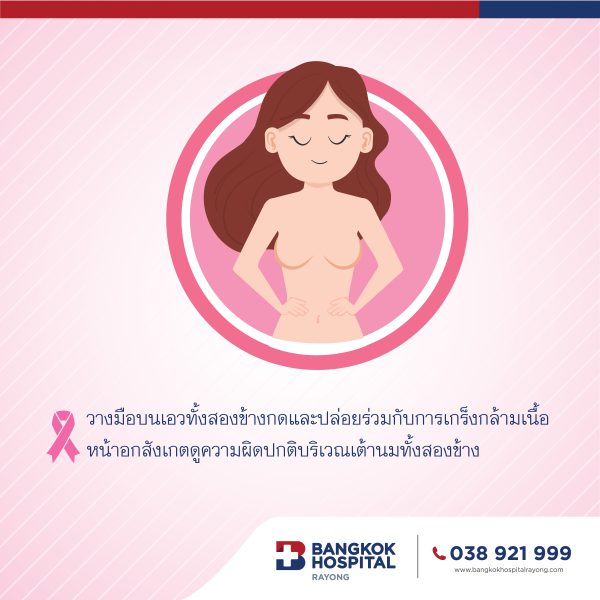
Look in the mirror
Stand with arms at your sides, then raise them overhead. Observe for changes in size, shape, skin texture, or nipple appearance. -
Examine while bathing
Use the pads of your fingers to gently feel the entire breast and underarm area in circular motions. -
Examine while lying down
Lie flat, place one arm behind your head, and use the opposite hand to check the breast thoroughly. -
Check the nipples
Gently squeeze to see if there is any discharge.
Perform this examination monthly and consult a doctor immediately if you notice any abnormalities.

Step 2: Breast Examination
Breast tissue consists of the mammary glands and milk ducts, which are located in the areas shown. Therefore, breast examination should cover all of these areas thoroughly.
-
Palpation should be performed in both sitting and lying positions.
-
Use the pads of the index, middle, and ring fingers, slightly toward the fingertips, as this area is most sensitive to touch.
Levels of Pressure During Palpation
Breast palpation should be done across the entire breast using three levels of pressure:
-
Light pressure – just beneath the skin
-
Medium pressure – deeper into the breast tissue
-
Deep pressure – down to the chest wall
Palpation Patterns
You may choose one of the following three palpation methods:
-
Circular (spiral) pattern
-
Wedge (radial) pattern
-
Up-and-down (vertical strip) pattern
Choose the method that feels most comfortable and ensure the entire breast area is examined.