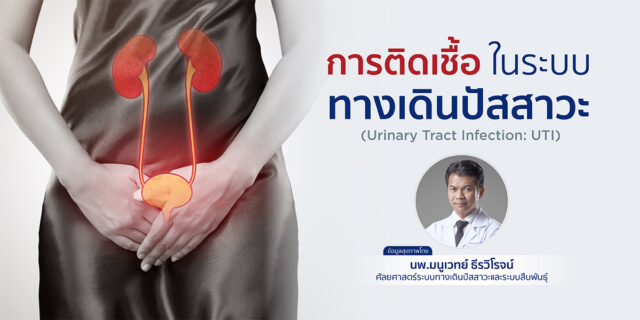

Urolithiasis can lead to other complications, such as urinary tract infections. This results in deterioration of kidney function and can be severe leading to chronic kidney failure and end-stage kidney disease, which can be fatal.
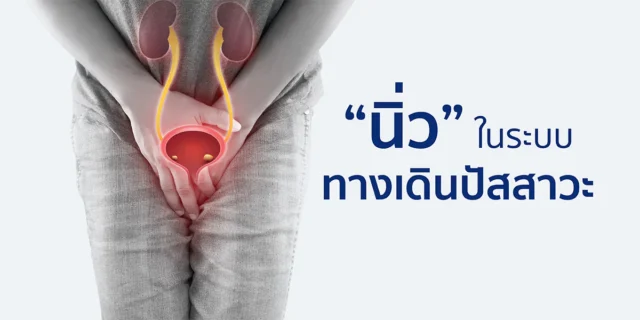
Stones usually begins to form in a kidney and may enlarge in a renal pelvis, ureter, bladder and urethra. Small stones can spontaneously pass from the patient’s body during urination, but larger stones can lead to ureteral obstruction in different locations.
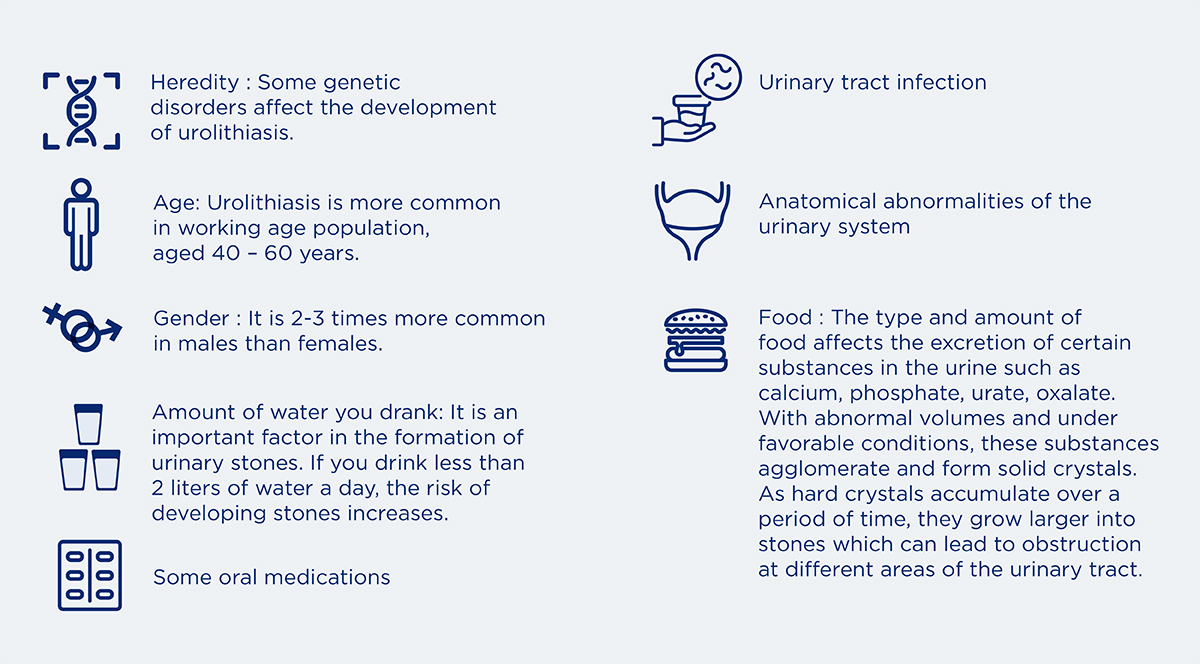
Urolithiasis is caused by a number of factors, such as environmental factors, metabolism, genetics, lifestyle and eating habits of the patient.
Causes of urolithiasis
Symptoms of urolithiasis
The symptoms of urolithiasis depend on the size of the stones and the location of the blockage by the stones. The symptoms also depend on the degree of urinary obstruction. In the early stages, our bodies may excrete stones spontaneously through urination, where small pebble-like sediments are found in the urine. However, as the stones grow larger, it can lead to more obstruction, causing friction and resulting in injury and bleeding. The urine can turn red or brown due to bleeding.
- Lower back pain or abdominal pain, depending on the location of the stones
- Pain during urination, difficulty urinating or interrupted urine flow
- Blood in the urine in 80-90% of patients
- Cloudy urine due to the presence of a chalky powder in the urine from the precipitation of the stone’s constituents.
- Blockage by stones causes urinary retention in the urinary tract causing infection and fever. In severe cases, urine may be cloudy, purulent and foul-smelling.
- Anuria due to urethral stones
- No urine output due to severe obstruction of both kidneys
- Complications such as nausea, vomiting, loss of appetite and bloating
The symptoms of kidney stones or ureteral stones are characterized by pain in the lower back where the kidneys are located. When the stone falls into the ureter, the patient experiences episodes of severe pain and sweating. In some cases, the urine may contain blood or become brown. If the stone causes an obstruction in the area where the ureter connects to the bladder, it can cause irritation when urinating, persistent need to urinate but with difficulty urinating or interrupted urine flow. If left untreated, chronic kidney injury can result in abnormal kidney shape and impaired kidney function, which ultimately leads to kidney failure.
Treatment of urolithiasis
At present, there are many methods of treatment for urolithiasis. The doctor determines the treatment methods based on information about the type, size and location of the stones, the hardness of the stones, the degree of kidney swelling, and kidney inflammation. After consideration and analysis, the doctor selects the appropriate treatment for each patient. Stone dissolution may be a suitable treatment for some patients, but not for others. Other methods of treating stones are as follows:
1. Symptomatic treatment for stones smaller than 4 mm. Patients are advised to drink plenty of water. This increases the likelihood of spontaneous passage of stones by 60-80%.
2. Medicinal treatment: Certain types of stones, such as uric acid stones, can be treated by taking stone-dissolving medications.
3. Shock wave lithotripsy is a non-surgical treatment for patients with stones up to 2 cm in size. It is a suitable treatment for kidney or ureter stones.
4. Cystoscopy for treating bladder stones
5. Ureteroscopic lithotripsy for treating ureter stone.
6. Surgical procedures such as open surgery and percutaneous nephrolithotomy. This method is suitable for large stones such as ureteral stones, staghorn stones in the kidneys, as well as for patients with severe inflammation requiring prompt removal of stones, patients with end-stage kidney failure, etc.
In the treatment of stones in the bladder and ureter using endoscopic methods, the doctor will insert a camera through the urethra to pick, gnaw and grind the stones.
Guidelines for preventing urolithiasis
1. Drinking more than 8 glasses of water per day or reaching a urinary volume of more than 2 liters per day to reduce urinary saturation and the stone formation in the urinary tract
2. Eat a balanced and nutritious diet, especially fruits and vegetables.
3. Reduce meat, animal fat, sweet, salty, and high-uric acid foods.
4. Avoid poultry skins, liver, kidneys, sardines.
5. Avoid foods high in oxalates, including spinach, chocolate, tea, nuts, apples, asparagus, broccoli, beer, soft drinks, coffee, cocoa, ice cream, pineapple, vitamin C, yogurt.
6. Patients with stones should eat a fiber-rich diet and exercise regularly.
7. Get an annual checkup regularly. Those with suspected symptoms of kidney stones should consult a doctor. However, people who have had kidney stones have a higher chance of recurrence. Therefore, learning how to take care of your health is the best way to prevent kidney stones.