


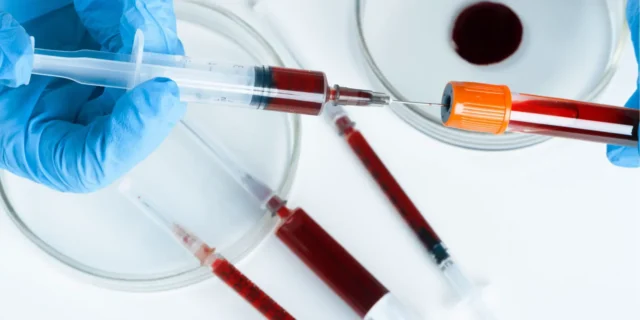
What Is a Liquid Biopsy?
In the past, to understand a patient’s cancer in detail, doctors needed to remove a piece of tumor tissue (tissue biopsy) and examine it under a microscope.
Today, with advances in molecular technology, we can gather similar information—sometimes even more dynamically—from a blood sample. This is called a liquid biopsy.
Liquid biopsy is a cutting-edge, non-invasive test that analyzes cancer-related materials released by cancer cells into the bloodstream, such as:
- ctDNA (circulating tumor DNA) – Fragments of DNA shed by tumor cells into the bloodstream
- CTCs (circulating tumor cells) – Intact cancer cells in circulation
- Exosomes – Small vesicles released by tumor cells
- cfRNA – Non-coding RNAs released by tumor cells
It provides valuable insights into the genetic profile of a tumor without the need for surgery or tissue extraction.
Clinical Applications
| Use Case | Description |
|---|---|
| Early Detection | Screening tool in high-risk individuals |
| Genomic Profiling | Detect actionable mutations; Identifying cancer-specific mutations |
| Monitoring Treatment Response | Track mutation clearance or persistence during therapy |
| Detecting Resistance/Drug resistance mutations | Reveal new mutations after treatment resistance (e.g., EGFR T790M, KRAS G12C) |
| Minimal Residual Disease (MRD) | Identify microscopic disease post-surgery or therapy—predict recurrence |
This allows oncologists to personalize cancer treatment, monitor disease progression, and adjust therapies in real time.
When is Liquid Biopsy Recommended?
- When tissue biopsy is not feasible or risky
- For patients with advanced cancer who need quick treatment decisions
- To track the effectiveness of current treatments
- To detect recurrence or resistance mutations
- As part of routine monitoring after cancer remission
Advantages of Liquid Biopsy
- Minimally invasive – performed via blood draw
- Repeatable – can be done regularly to monitor disease
- Faster results – often available within a few days
- Captures tumor heterogeneity – Reflects cancer from multiple sites in the body
- Helps identify drug resistance mutations early
- Useful in precision medicine for targeted therapy planning
Limitations of Liquid Biopsy
- Cannot completely replace tissue biopsy in initial cancer diagnosis
- Limited utility in cancers with low ctDNA shedding
- False positives can occur due to non-cancerous mutations (e.g., clonal hematopoiesis)
- False negatives are possible, especially in early-stage or slow-growing cancers
- Does not provide tissue architecture or information about tumor grade
Liquid Biopsy vs Tissue Biopsy: A Comparison
| Criteria | Liquid Biopsy | Tissue Biopsy |
|---|---|---|
| Invasiveness | Minimally invasive (just a blood draw) | Invasive (surgical or needle procedure) |
| Turnaround time | Fast (7-14 days) | Moderate (14-28 days) |
| Repeatability | Easily repeated over time | Limited by patient condition and tumor accessibility |
| Precision | High for detecting known mutations, especially in advanced stages | Gold standard; better for full histopathologic diagnosis |
| Comprehensive profiling | Limited if ctDNA levels are low | Yes |
| Tumor microenvironment | No | Yes; provides architecture, morphology |
| Use in initial diagnosis | No (not primary tool) | Yes |
| Resistance monitoring | Yes | Limited |
Is Liquid Biopsy Right for You?
Every patient is different. Liquid biopsy may be recommended if:
- A traditional biopsy is too risky or inaccessible
- Ongoing molecular monitoring is needed
- There is concern for recurrence or treatment resistance
Talk to Our Specialists
Liquid biopsy is a powerful tool in precision oncology—providing insights into the cancer’s molecular behavior without invasive procedures. While it cannot fully replace tissue biopsy, especially in initial diagnosis, it plays a growing role in treatment selection, monitoring, and personalized medicine.
If you’re a cancer patient or caregiver wondering whether liquid biopsy is right for your case, speak with our medical oncologist to find out whether liquid biopsy could be a beneficial part of your care plan. At our clinic, we stay at the forefront of personalized cancer treatment and are committed to using the most advanced technologies available.