


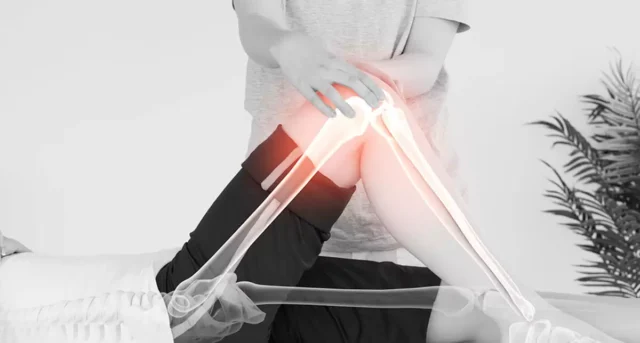
What Is Knee Osteoarthritis?
Knee osteoarthritis is a condition that affects many older adults, with concerns ranging from daily care and lifestyle adjustments to treatment options.
What Are the Treatment Options for Knee Osteoarthritis?
The treatment options include:
- Unicompartmental Knee Arthroplasty (UKA) — a newer technique suited for partial knee degeneration
- Minimally Invasive Total Knee Arthroplasty (TKA) for those requiring full or single-compartment knee replacement.
The appropriate approach depends on the degree of degeneration and the doctor’s diagnosis. In the meantime, the following practices can help slow the progression of knee degeneration.
How Can You Prevent & Slow Knee Osteoarthritis?
- Rest your knees when you experience pain in any position — pain is an important warning sign that should not be ignored.
- Practice Quadriceps Exercises — sit on the edge of a bed with your legs hanging down, straighten your knee, tighten the muscles above the knee for 3–5 seconds, then bend it back down. Aim for about 100 repetitions per day, split into smaller sets rather than all at once.
- Use the correct technique on stairs — if your right knee is painful, lead with your left (good) leg going up, followed by the right. Going down, lead with the right (painful) leg first, then the left. Take one step at a time.
- Take joint-protective supplements if pain does not improve — choose products that are backed by research to ensure they are effective in slowing degeneration and safe for long-term use.
- Consider surgery in advanced or end-stage cases where the knee is stiff and cannot fully extend or bend. An orthopedic surgeon may recommend joint resurfacing with knee realignment — the only definitive solution to end the suffering caused by this condition.
For questions about knee osteoarthritis or treatment options including UKA and Minimally Invasive TKA, consult our specialist surgeons at the Orthopedic Center, Bangkok Hospital Pattaya Tel. 0 3825 9999