

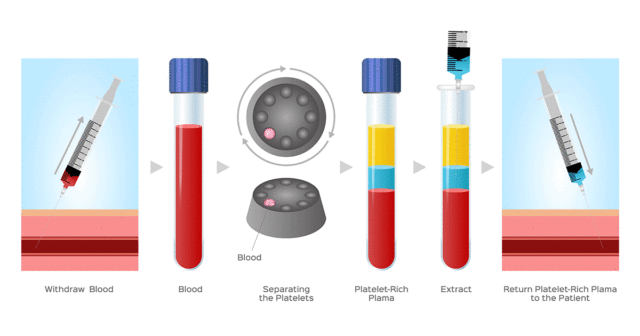
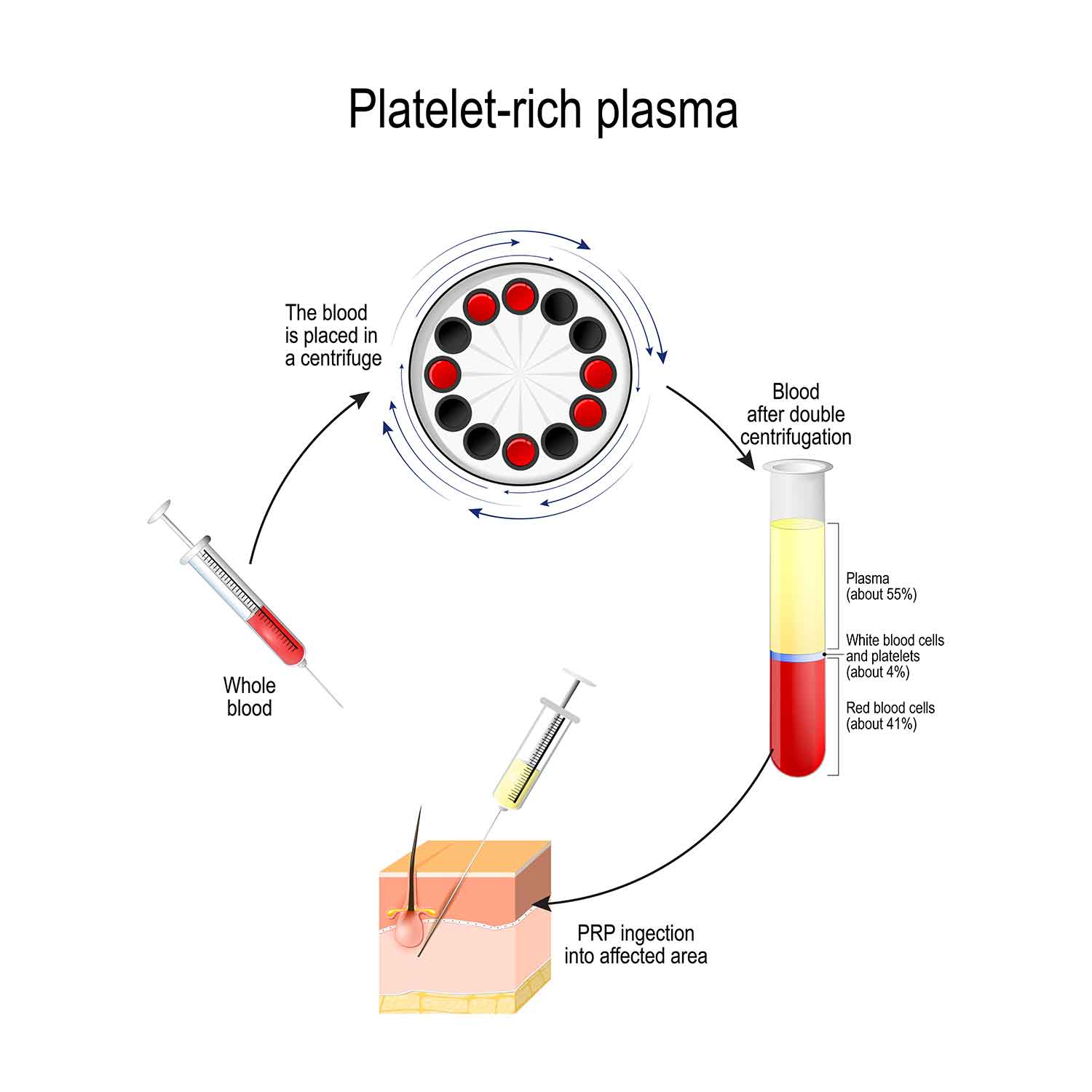
PRP, or Platelet Rich Plasma, is a treatment that uses the patient’s own plasma — a natural fluid found in the blood — to treat bone and joint conditions, including tendon degeneration. Since it uses the patient’s own blood components, there is no risk of allergic reaction and no chemical residue left in the body. The process involves drawing the patient’s blood, spinning it in a centrifuge, and injecting the concentrated plasma back into the affected area.
How Does PRP Treat Bone & Joint Conditions?
- Injected directly into the injured or degenerated area
- Stimulates natural tissue regeneration
- Reduces pain and inflammation
- Accelerates wound healing
How Is the PRP Procedure Performed?
Approximately 25–30 ml of the patient’s own blood is drawn and spun in a high-speed centrifuge to separate the layers, removing unwanted red blood cells and retaining only the plasma and platelets. The resulting plasma contains tissue-repairing and connective tissue-building agents at concentrations 10 to 25 times higher than normal blood — depending on the individual’s physical condition, age, and overall health. Younger patients tend to have higher concentrations, making the treatment more effective.
What Conditions Can Be Treated with PRP?
- Knee osteoarthritis
- Tendon inflammation
- Muscle tears
- Bone fractures
What Are the Advantages of PRP?
- Safe from blood-borne diseases — uses the patient’s own plasma
- Helps reduce reliance on anti-inflammatory drugs (NSAIDs) and steroids
- No negative impact on the stomach, intestines, or kidney function
- Can be repeated multiple times as needed
Who Is PRP Suitable for?
- Athletes or individuals with tendon or muscle injuries — such as tennis players, golfers, and footballers
- Those with spinal joint injuries, inflammation, or degeneration at the cervical (neck), lumbar, or thoracic levels (Facet Joints)
- Patients with myofascial pain or chronic muscle spasms, particularly in the neck, shoulders, and lower back
- Chronic muscle injuries that have not fully healed with standard treatment and continue to recur
- Those with joint degeneration, such as the knee or shoulder
What Results Can You Expect from PRP Treatment?
Research suggests that a single injection may be sufficient, though repeat injections at the affected area may be administered over a period of 2 to 8 weeks, or until pain and inflammation subside. Unlike steroid injections, results are not immediate — as cells and connective tissue need time to repair and regenerate. However, this is also one of the key advantages of PRP, as it allows doctors to reduce unnecessary use of anti-inflammatory medications in patients who may otherwise be over-relying on them.
For more information, contact the Orthopedic Center, Bangkok Hospital Pattaya | Tel. 0 3825 9999