.png)
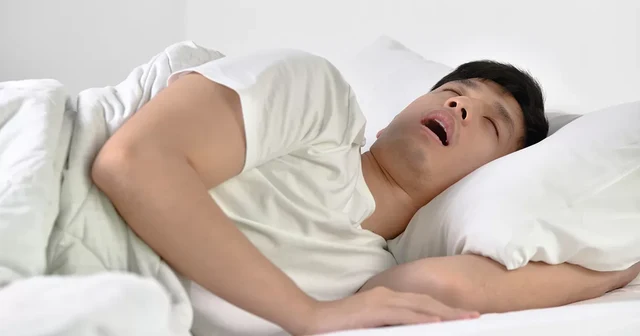
What are the symptoms of sleep apnea?
Often the first signs of OSA are recognized not by the patient, but by the bed partner. Many of those affected can have no sleep complaints. The most common symptoms of OSA include:
- Snoring
- Daytime sleepiness or fatigue
- Restless during sleep
- Sudden awakenings with a sensation of gasping or choking
- Dry mouth or sore throat upon awakening
- Morning headaches
- Intellectual impairment, such as trouble concentrating, forgetfulness, or irritability
- Night sweats
- Sexual dysfunction
What is sleep apnea?
Sleep apnea is a serious sleep disorder that occurs when a person’s breathing is interrupted during sleep. People with untreated sleep apnea stop breathing, repeatedly during their sleep, sometimes hundreds of times during night.
How common is sleep apnea?
Sleep apnea occurs in about 25% of men and 10% of women. Sleep apnea can affect people at all ages, including babies and particularly people over the age of 40 years and those who are overweight.
Who gets sleep apnea?
- Overweight people
- Certain physical features such as large neck, nasal obstruction, a low-hanging soft palate, enlarged tonsils, or a small jaw with an overbite.
What are the effects of sleep apnea?
If left untreated, sleep apnea can result in:
- Excessive daytime sleepiness which may be responsible for job impairment, work-related accidents, and motor vehicle accidents as well as academic underachievement in children and adolescents.
- A number of health problems including hypertension, diabetes, stroke, arrhythmias, cardiomyopathy (enlargement of the muscle tissue of the heart), congestive heart failure, heart attacks or obesity.
How is sleep apnea diagnosed?
The diagnosis of sleep apnea is based on sleep history and an overnight sleep study called a polysomnogram. During the test, a variety of body functions, such as the electrical activity of the brain, eye movements, muscle activity, heart rate, breathing patterns, air flow, and blood oxygen levels are recorded at night during sleep. After the study is completed, the number of times breathing is impaired during sleep is counted and the severity of sleep apnea is graded.
What to expect during your sleep study?
Some sleep disorders, such as sleep apnea, require over night observation in the sleep laboratory. During an over night sleep study calls a polysomnogram, electrodes are placed in the face, scalp, and legs to record brain activity, eye movements, and muscle activity. Additional sensors are placed around the nose, chest, and abdomen to record breathing patterns.
On the night of the study, you will be allowed to go to sleep at your usual bed time in a private sleep room.
You will be asked to complete a sleep disorders questionnaire and maintain a sleep log for at least one week before your appointment. This will provide us with more information about your sleep problem and usual sleep patterns so that we can better serve you.
How to prepare for your Polysomnogram (PSG)?
- Avoid napping the day of the study.
- Avoid alcohol, caffeine (coffee, tea and cola), sedatives, and stimulants for 24 hours, unless otherwise directed by your physician.
- On the day of the study, make sure that your hair is free of oil, hair spray, and other products.
- Bring your regularly scheduled medications and plan to take them as you normally would unless your physician instructs otherwise.
- If you are using positive airway pressure therapy, bring your mask and head gear
What are the treatments for sleep apnea?
1. Conservative treatments (In mild cases of sleep apnea)
- Overweight people can benefit from losing weight. Even a 10 % weight loss can reduce the number of apneic events for most patients.
- Avoid the use of alcohol and sleeping pills, which make the airway more likely to collapse during sleep and prolong the apneic periods.
- Try to sleep in side position. In some patients with mild sleep apnea, breathing pauses occur only when they sleep on their backs. In such cases, using pillows and other devices that help them sleep in a side position may be helpful.
- People with sinus problems or nasal congestion should use nasal sprays or decongestants to improve airflow for more comfortable nighttime breathing.
- Avoiding sleep deprivation is important for all patients with sleep disorders.
2. Mechanical therapy- Continuous positive airway pressure (CPAP)
Is the preferred initial treatment for most people with obstructive sleep apnea. With CPAP, patients wear a mask over their nose and/or mouth. An air blower forces air through the nose and/or mouth. The air pressure is adjusted so that it is just enough to prevent the upper airway tissues from collapsing during sleep. CPAP prevents airway closure while in use, but apnea episodes return when CPAP is stopped or it is used improperly. Other styles and types of positive airway pressure devices are available for people who have difficulty tolerating CPAP.
3. Mandibular advancement devices (MAD)
For patients with mild sleep apnea, dental appliances or MAD that prevent the tongue from blocking the throat and/or advance the lower jaw forward can be made. These devices help keep the airway open during sleep. A sleep specialist will determine if this treatment is best for you.
4. Surgery
Surgery is reserved for people who have excessive or malformed tissue obstructing airflow through the nose or throat, such as a deviated nasal septum, markedly enlarged tonsils, or small lower jaw with an overbite that causes the throat to be abnormally narrow. These procedures are typically performed after sleep apnea has failed to respond to conservative measures and a trial of CPAP. Types of surgery include:
- Somnoplasty – A minimally invasive procedure that uses radiofrequency energy to reduce the soft tissue in the upper airway.
- Uvulopalatopharyngoplasty (UPPP) – A procedure that removes soft tissue on the back of the throat and palate, increasing the width of the airway at the throat opening.
- Mandibular/maxillary advancement surgery – This is an invasive procedure that is reserved for patients with severe sleep apnea with head-face abnormalities.
- Nasal surgery – Correction of nasal obstructions, such as a deviated septum.