RSV (Respiratory Syncytial Virus) is a virus that causes respiratory tract infections, which are a significant cause of respiratory diseases in young children.
How is it transmitted?
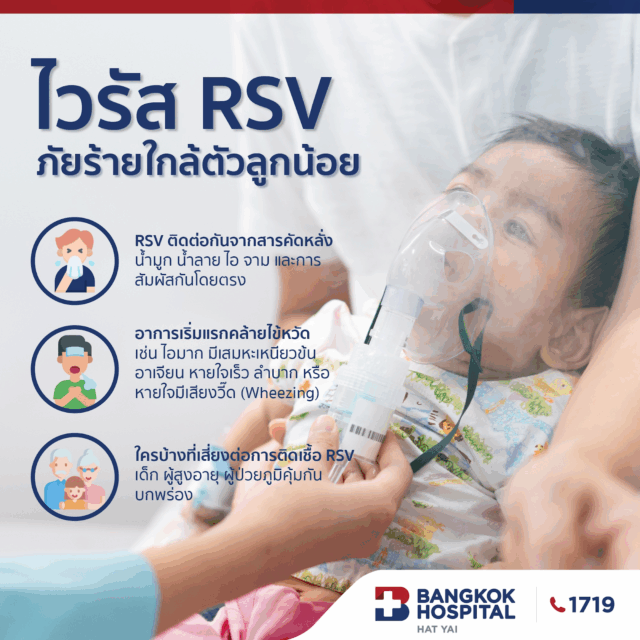
RSV is transmitted through contact with the secretions of an infected person, such as mucus, saliva, coughing, sneezing, or direct contact.
Initial symptoms are similar to a common cold
– Fever
– Runny nose
– Cough
– Sore throat
However, if symptoms become severe, other symptoms may follow, such as
– Thick mucus
– Vomiting
– Difficulty breathing or wheezing
Who is at high risk?
– Young children, especially infants
– Elderly individuals
– Patients with weakened immune systems
If your child shows suspicious symptoms, it’s important to see a doctor for diagnosis and appropriate treatment immediately to prevent severe complications.

Translated by AI
Bangkok Hospital Hat Yai