
🧬 What is Qdenga? Why does it meet the needs of Thai people?
The Qdenga vaccine was developed from dengue virus serotype 2 (DENV2), which is the serotype that has caused the most severe outbreaks in Thailand. Once injected, the vaccine acts like a personal trainer, stimulating the body to build strong immunity, ready to handle all 4 dengue virus serotypes.
✨ Why is the Qdenga vaccine a “Game Changer” in healthcare?
-
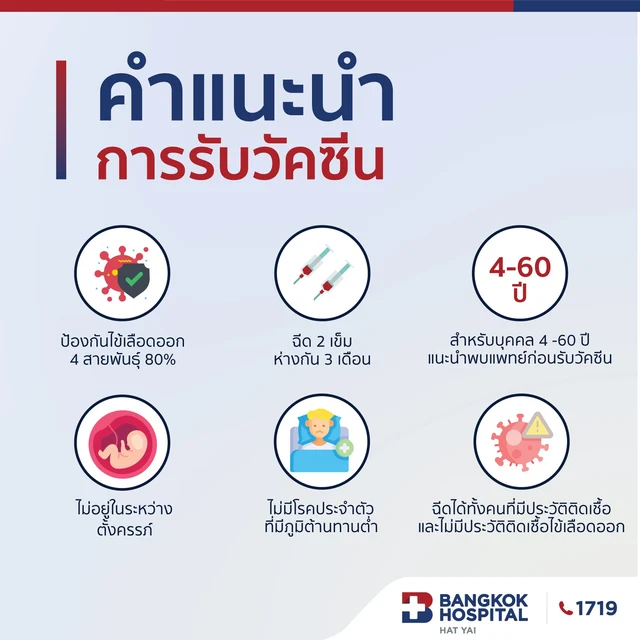
No blood test needed: Whether you have or have never had dengue fever before, you can get vaccinated safely right away.
-
Broad coverage: Can be given from children aged 4 years up to adults aged 60 years.
-
High efficacy for peace of mind:
-
Prevents viral infection by up to 80.2%
-
Reduces the chance of severe illness requiring hospitalization by up to 90.4%
-
Reduces disease severity by 85.9%
-
💉 How is it given? Does it hurt?
Building this immunity doesn’t take long. It’s simply injected subcutaneously in the upper arm, for a total of 2 doses, spaced 3 months apart (the first dose at month 0 and the second dose at month 3).
As for side effects, you can rest assured, because most are just common symptoms such as pain, swelling, and redness at the injection site, or possibly a low-grade fever and body aches during the first 2 days, which can resolve on their own within 3–4 days.
⚠️ Precautions: Who should “avoid” or “postpone” vaccination for now?
Although it is highly safe, there are exceptions for certain groups, including:
-
People with immunodeficiency (e.g., patients taking immunosuppressants, receiving chemotherapy, patients with HIV, or those receiving continuous high-dose steroids)
-
Pregnant women and breastfeeding women (For women planning to become pregnant, it is recommended to use contraception for at least 1 month after vaccination.)
-
People with a history of severe allergy to vaccine components
-
People who have recently recovered from dengue fever should allow the body to recover for at least 6 months before getting vaccinated to prevent reinfection.