

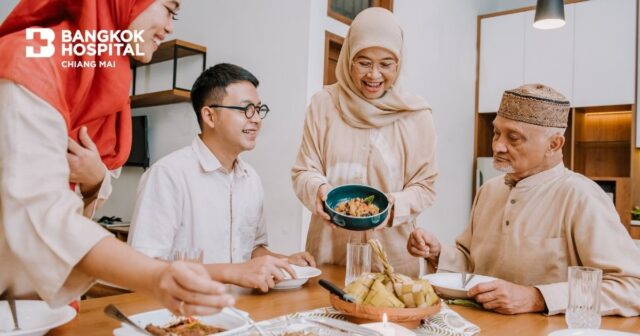

Normally, during Ramadan, meals are typically limited to 2 meals, which are before sunrise and in the evening after sunset. Fasters stop eating and drinking (including not swallowing saliva) after sunrise until sunset. After sunset, they can start eating, usually beginning with 3 dates followed by a meal. Diabetics may have their medications adjusted during Ramadan to prevent hypoglycemia and hyperglycemia.
The reason for eating dates after sunset is that dates are high in sugar and provide quick energy (3 dates have carbohydrates equivalent to 1 ladle of cooked rice or equal to 1 carb). Beyond the fasting period, it is recommended to eat fruits with a low glycemic index such as guavas, apples, rose apples, and dragon fruits, which help better control blood sugar levels compared to sweet fruits or juices.
During the pre-sunrise meal, it should be consumed at a similar time each day during fasting. The chosen meals should include all 5 food groups and complex carbohydrates such as unrefined grains like brown rice, unpolished rice, riceberry, whole wheat bread, and cereals. High-sugar drinks, caffeine drinks, and high-fat foods should be avoided, and adequate water should be consumed.
*Reference Practice Guidelines for Diabetes 2017
Nujichan Boonyapatapong
Professional Dietitian, Bangkok Chiang Mai Hospital