
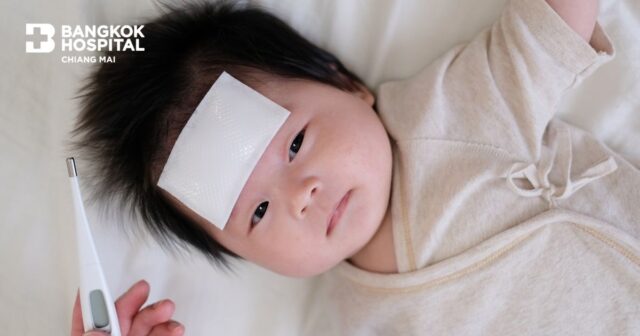

When your child has a fever, what alarms many parents the most is “a seizure,” especially when the child becomes stiff, has jerking movements of the arms and legs, or is briefly unresponsive. Although it may look frightening, in reality, “febrile seizures” are common in children and are usually not severely dangerous.
Febrile seizures occur in about 2–5% of children, most often between 6 months and 5 years of age. Most children recover normally, with no long-term effects on development or learning.
What is a febrile seizure?
A febrile seizure (Febrile Seizure) is a seizure that occurs along with a fever, not caused by a brain infection or other neurological disorders. It often happens on the first day of a fever, especially when the temperature rises quickly.
The brains of young children are still sensitive to changes in body temperature, making seizures easier to trigger than in adults. Most seizures stop on their own within a few minutes, and as children grow older, this condition often resolves by itself.
How many types of febrile seizures are there?
1. Simple febrile seizure (Simple Febrile Seizure)
Key features include:
- Whole-body seizure
- Lasts less than 15 minutes
- Occurs only once within 24 hours
This is the most common type, and most children recover well.
2. Complex febrile seizure (Complex Febrile Seizure)
Key features include:
- Seizures affecting only part of the body
- Lasts longer than 15 minutes
- Recur multiple times within the same day
In this case, further evaluation by a doctor is recommended.
Symptoms of febrile seizures parents should know
Common symptoms include:
- Body stiffening with jerking arms and legs
- Eyes rolling back or a fixed stare
- Unresponsive during the seizure
- Temporary abnormal breathing or slightly bluish lips
- After the seizure stops, the child may be drowsy for about 15–30 minutes
What should you do when your child has a febrile seizure?
If your child has a febrile seizure, parents should stay calm and do the following:
- Place the child on their side to prevent choking
- Loosen clothing to make breathing easier
- Remove food or foreign objects from the mouth if present
- Time the seizure
- After the seizure stops, take the child to see a doctor to evaluate the cause of the fever
Although most seizures stop on their own, accurate observation helps the doctor make a more precise assessment.
What NOT to do during a seizure
- Do not pry the child’s mouth open
- Do not give water or medicine
- Do not hold the arms and legs forcefully
- Do not shake the child
Incorrect actions may increase the risk of injury.
When should you go to the hospital urgently?
Seek medical care immediately if the child has any of the following:
- Seizure lasting more than 5 minutes
- Repeated seizures
- Difficulty breathing or marked blueness
- Abnormal lethargy after the seizure stops
- Stiff neck, frequent vomiting, or suspected nervous system infection
- Child younger than 6 months
- Developmental delay or a pre-existing neurological condition
Do febrile seizures increase the risk of epilepsy?
About 30% of children may have recurrent febrile seizures, especially those who have their first seizure at a younger age.
However, children with simple febrile seizures generally have a low risk of developing epilepsy in the future, similar to children in general.
In cases of complex febrile seizures or other risk factors, further follow-up with a pediatric neurologist may be needed.
How to care for your child when they have a fever
- Give paracetamol (acetaminophen) as an antipyretic at an appropriate dose
- Wipe the body with warm water or room-temperature water
- Let the child rest and drink enough fluids
- Avoid using very cold water, ice, or alcohol for wiping
Appropriate fever care helps the child feel more comfortable and reduces the risk of complications.
Although febrile seizures can frighten parents, most children recover well and continue to develop normally for their age. The important things are to stay calm, care for the child correctly, and watch for abnormal symptoms that require prompt medical attention. If you have concerns about seizures, development, or your child’s nervous system, consult a pediatrician for guidance appropriate to each child.
References:
- Corsello A, et al. Febrile Seizures: A Systematic Review of Different Guidelines. Pediatric Neurology. 2024.
- Bhatt P, Bhatt D. Febrile Seizure. StatPearls. 2024.
- Leung AK, et al. Febrile seizures: an overview. Drugs in Context. 2018.
- Ferretti A, et al. Best practices for the management of febrile seizures in children. Ital J Pediatr. 2024.
- The Royal College of Pediatricians of Thailand 2025
Note: This document is prepared to provide basic information for parents and is not individualized medical advice · May 2026