


Condition of “Hair Loss” After Recovering from COVID-19
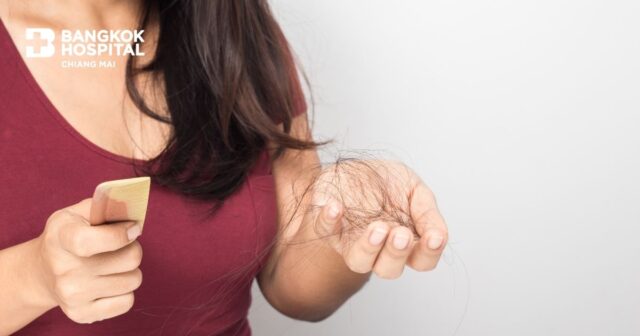
Aside from COVID-19 infection being a concern, the consequences that follow after recovery should not be overlooked either. Patients who have been infected with COVID-19 may experience prolonged physical effects even after proper treatment and a negative test result. This condition is known as ‘Long COVID’, which includes various symptoms. One common symptom following COVID-19 infection is sudden hair loss, or Telogen Effluvium, which can be observed in both patients and those who have recovered. The prevalence rate is as high as 30 percent, and those with sudden hair loss might take up to 12 months to return to normal.
Hair Loss Symptoms in COVID-19 Patients and Those Who Have Recovered
- Non-scarring hair loss across the scalp, especially when shampooing or combing hair. This may occur 1-3 months after recovery or, in some cases, up to 6 months post-recovery.
- Loss of more than 100 strands, or approximately 300 strands, but not exceeding 50 percent of the hair on the scalp.
- Thinning hair, particularly at the temples.
- Hair loss in other areas, such as underarm hair.
Dr. Kulvadee Laosakun, a dermatologist at Bangkok Hospital Chiang Mai, has stated that these hair loss symptoms are more commonly found in women than men. Apart from hair loss, patients might experience other skin symptoms such as dermatitis, dry itchy skin, or exacerbation of psoriasis. If these abnormalities occur or if there are any doubts, it is advised to consult a specialist for accurate diagnosis and appropriate treatment.
Understanding Sudden Hair Loss or Telogen Effluvium
Dr. Kulvadee Laosakun further explained that the cause of sudden hair loss is due to a portion of hair stopping its growth and the hair cycle accelerating abnormally, combined with inflammation in various systems within the body and stress. Additionally, other causes include side effects from medications and lack of complete nutrition during illness, causing hair to enter a resting phase and eventually fall out.
Treatment Guidelines
Specialists will treat by applying Minoxidil to stimulate and restore hair. If there is no improvement in hair loss within 3-6 months, the doctor may consider additional treatments, such as using low-level laser therapy.
Expert Recommendations
Patients with sudden hair loss should not be overly concerned, as this is only a temporary condition. With expert treatment, hair loss will cease and new hair will grow, returning the patient to normal within 3-12 months. Dr. Kulvadee has provided the following self-care advice:
- Eat a balanced diet with all 5 food groups.
- Get enough rest and try not to stress.
- Take iron or vitamin supplements like zinc and biotin.
- Avoid using drugs that may cause hair loss, such as vitamin A derivatives, certain blood pressure medications, anticoagulants, and thyroid medications. However, discontinuation of any medication should be done under a physician’s advice.
“While sudden hair loss can cause concern for patients, timely treatment and strict adherence to medical advice will allow the patient’s body to gradually recover and return to normal.”
With best regards from
Specialist Dermatologist
Long COVID Treatment Center | Bangkok Hospital Chiang Mai
Reference:
Starace M., et al. JAAD Int. 2021 Dec; 5: 11–18.
Asghar F., et al. Cureus 12(5): e8320.
Tammaro A., et al. J Cosmet Dermatol. 2021;20:2378–2379.
Diotallevi F., et al. JEADV 2022, 36, e158–e247
Sharquie KE, et al. Ir J Med Sci. 2021 Aug 31;1-5.