

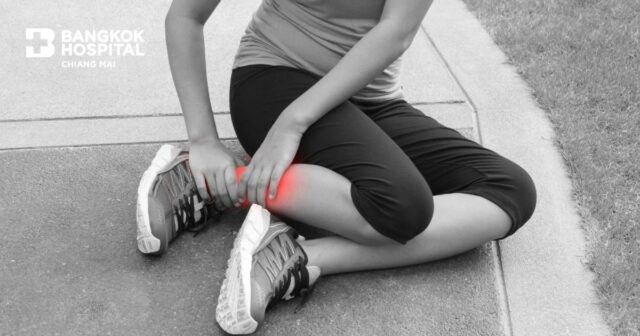
Ankle sprains may happen to anyone if they take one incorrect step and tumble down. That’s why ankle sprains are the most common emergency department visit, but if it happens again and again until it becomes a bothersome chronic condition, it might prevent people from doing things like exercising or walking. Do not, however, criticize oneself for being clumsy; today we will discover more about this ailment known as “Joint Hypermobility” (loose joints).
Doctors diagnose loose joints as an indication of chronic ankle instability. If physical therapy (such as strengthening the muscles surrounding the ankles) does not improve the patient’s condition, doctors may recommend arthroscopic surgery to repair torn ankle ligaments so that the patient may resume normal walking as soon as feasible.
Who Is More Likely to Have an Ankle Sprain?
Ankle sprains are commonly caused by a twisted ankle while the toe bends down. They can occur for a variety of reasons—including sports injuries, walking on uneven ground, stairs, or falls from height. Athletes, however, are most vulnerable to developing “loose joints.”
How Does an Ankle Sprain Hurt?
There are three main ankle ligaments: anterior, lateral, and medial. The severity of the injury depends on how many ligaments are affected and whether they are partially or completely torn.
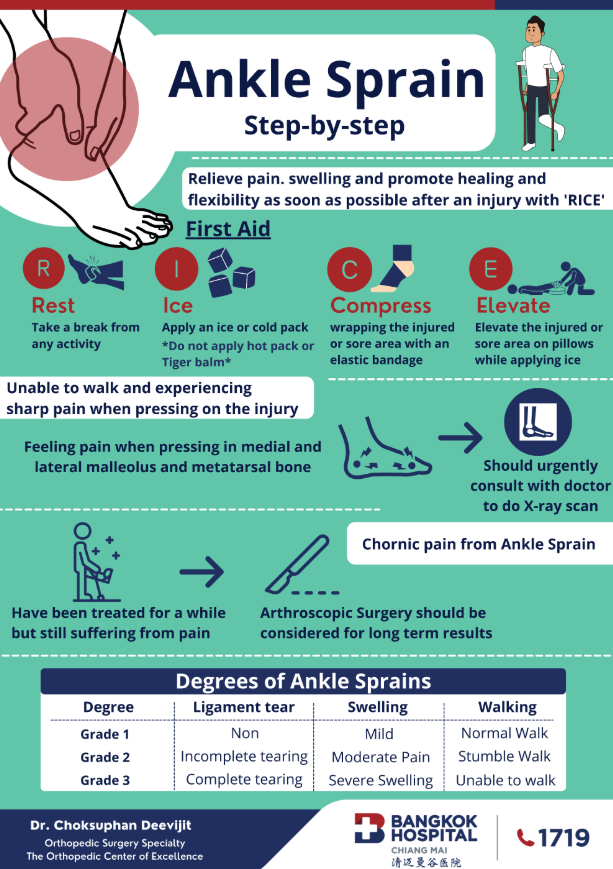
The Severity of an Ankle Sprain Is Divided into Three Levels:
- Mild: Able to bear weight, minimal swelling and stiffness.
- Moderate: Partial tear, swelling, difficulty bearing weight.
- Severe: Complete tear, significant swelling/bruising, instability, unable to bear weight.
RICE: First Aid & Self-Care for Ankle Sprains
- R = Rest: Rest your ankle.
- I = Ice: Apply ice pack or cold compress (no topical cooling gels).
- C = Compression: Wrap the ankle with an elastic bandage.
- E = Elevation: Elevate the ankle above heart level.
A Popping Sound “POP!”
If you hear a “POP!” when the injury occurs, experience loose joints, severe swelling, acute pain, or instability—and self-care with RICE doesn’t help—please see a specialist. They will perform a physical exam, possibly with imaging, and assess pain on the medial/lateral malleolus or adjacent foot bones.
Medical Assistance from a Professional
- Continue RICE as first aid.
- Administer NSAIDs for pain and inflammation.
- Wrap the ankle or use a soft splint for 7–10 days, then start ankle and muscle strengthening exercises.
- For chronic cases with persistent instability, inability to exercise, or recurrent sprains—consider arthroscopic ligament repair.
If chronic or recurrent sprains interfere with daily life, or if pain is unbearable, please consult an orthopedic specialist promptly for proper treatment and a return to normal, active living.
With best wishes,
Dr. Choksuphan Deevijit
Orthopedic Surgery Specialty
The Orthopedic Center of Excellence | Bangkok Hospital Chiang Mai