The Sleep Center at Bangkok Hospital Chiang Mai provides comprehensive sleep disorder assessment and diagnosis for patients with sleep difficulties with physicians and a multidisciplinary team of experts in neurology and sleep disorders.
The Sleep Center at Bangkok Hospital Chiang Mai provides comprehensive sleep disorder assessment and diagnosis for patients with sleep difficulties with physicians and a multidisciplinary team of experts in neurology and sleep disorders. A sleep test is an examination that allows a physician to monitor a patient during their sleep to see what’s happening in their body and brain by recording brain waves, heart rate, and breathing as well as noticing for abnormal behavior while sleeping. The sleep test will enable a physician to identify results for sleep disorder diagnosis. We understand that sleep quality has an impact on physical and mental health. Snoring, sleep apnea, and inadequate sleep can contribute to stress, irritation, and even depression. While obtaining enough sleep will aid in bodily healing, and mood enhancement, including memory and attention improvement.
When Should You Get a Sleep Test?
- Snoring while sleeping
- Daytime sleepiness
- Frequent wakings
- Shortness of breath
- Breathing pauses
- Bruxism, sleepwalking, or nightmares
- Avoid taking naps on the day of the sleep test
- Avoid caffeine-containing drinks in the afternoon and evening before the sleep test
- Make sure the fingernail is cut short and do not wear nail polish
- Avoid alcoholic beverages
- Those who take medicine must need consultation from a physician
- Schedule an appointment in advance by calling 1719 or 052-089-862.
- Patients will see a sleep disorder physician on the 2nd floor for a history taker on the scheduled appointment day.
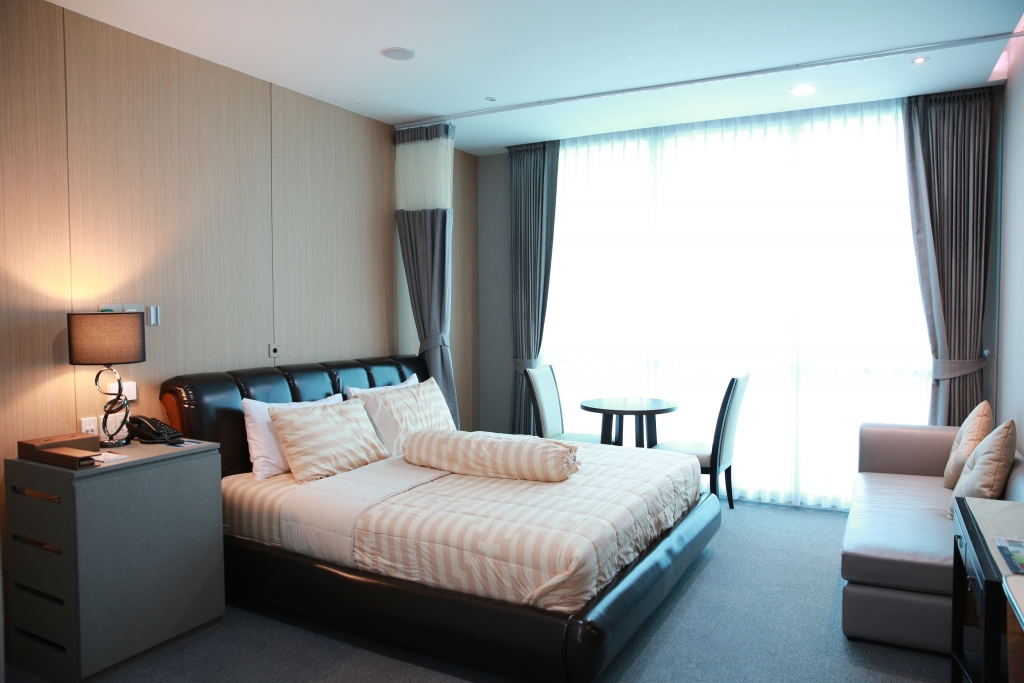
- Check into a room, have a meal, take a bath, and dress comfortably. Patients will undergo a sleep test on the 7th floor at 7 p.m.
- Patients must stay overnight in the hospital.
- Patients will be connected up to the equipment to monitor what’s happening to the body.
- Video recording will be used during the sleep test to document sleep postures and look for anomalous activity while the patients are sleeping.
- A technologist will utilize a computerized polysomnography to monitor the patient’s brain waves, breathing rhythm, and oxygen saturation in the monitoring room. These findings will be submitted to a specialist for interpretation.
- The test is used to assess vital signals in the human body, such as brain waves, breathing patterns, eye-rolling when sleeping, chest and abdomen movement, snoring sound, sleeping postures, muscle traction, heart wave, oxygen saturation, and carbon dioxide levels in the blood.
- Sleep test equipment will be taped to the skin for the test; there will be no piercing or implanting of equipment in the patient’s body, and no radiation will be given to the patient.
- Patients who have sleep apnea will undergo a test by a technologist using CPAP machines with attached masks on patients.
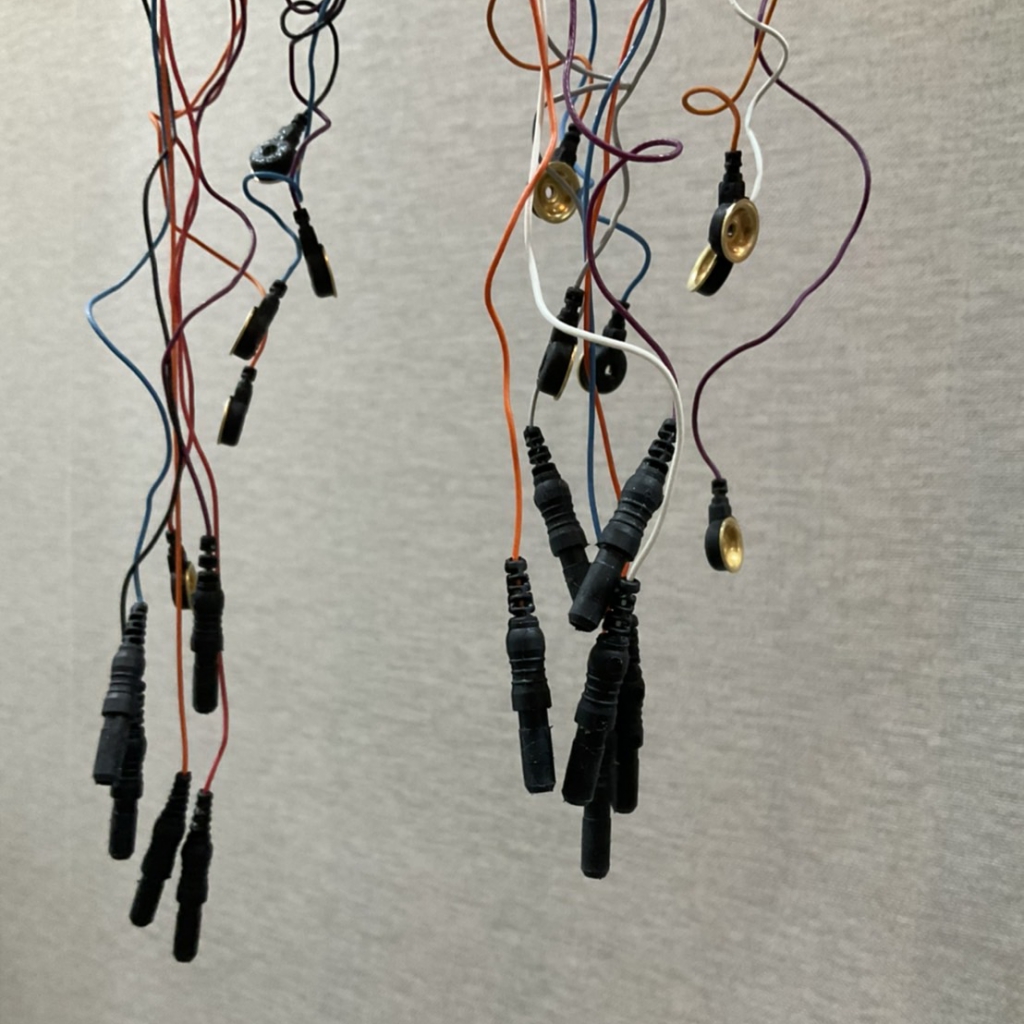
A sleep study is a diagnostic procedure in which electrodes or various sensors are connected to different body parts to record brain waves, eye movement, chest and abdominal movement, body movement, heart rate, airflow, respiratory effort, and other factors.
Sleep Test Procedures
Day One
- 16:00 hrs. See a sleep disorder physician for consultation and instruction
- 17.00 hrs. Check-in
- 18.00 hrs. Enjoy a meal (Thai and International food are available at Food house)
- 19.00 hrs. The temperature of the room and the surrounding environment can be adjusted according to the patient’s preferences. Patients should switch off all electronic and mobile devices. Sensors will be placed on the patient’s scalp, temples, and body by a technician. The placement of the equipment is neither harmful nor painful. Patients can notify staff straight away if they require special assistance or need to use the restroom.
Day Two Patients must ring notification in the morning after waking up to alert the staff person to remove the sensors and equipment.
- 08.30 hrs. Enjoy breakfast (Thai and International food are available at Food house)
- 9.00 hrs. See a physician for consultation and test results.
- 10.00 hrs. Check-out
Sleep Center | Bangkok Hospital Chiang Mai
The Neuro Science Center of Excellence Floor.2 And Sleep Test Room Floor.7
For more information Call 052-089-862 Call Center 1719
The Sleep Quality Center is a comprehensive medical center for the diagnosis and treatment of sleep disorders, led by sleep specialists (neurologists with subspecialty in sleep medicine), in collaboration with a multidisciplinary team at Bangkok Hospital Chiang Mai. The sleep quality assessment is conducted to observe the body’s functions while sleeping, such as brain waves and breathing, including abnormal behaviors during sleep, to diagnose diseases and evaluate treatment plans directly by sleep specialists. We recognize that the quality of sleep directly affects both the body and emotions. Poor sleep quality, whether it be snoring, sleep apnea, or even insufficient sleep, can lead to stress, irritability, easy anger, or even depression. Conversely, good sleep with sufficient deep sleep helps to restore the body effectively, keeps mood bright, improves concentration, and enhances memory.
Is it time to undergo a sleep quality assessment?
- Severe snoring
- Feeling drowsy during the day
- Frequent waking and heavy breathing, suspecting sleep apnea
- Teeth grinding, sleepwalking, or frequent nightmares
- Avoid napping during the day before the assessment
- Refrain from drinking tea, coffee, soda, or any stimulants after 12:00 PM
- Keep fingernails short; no nail polish
- Avoid alcoholic beverages
- Consult your doctor regarding medication
- Make an appointment at the Sleep Quality Center by calling 1719 or 052-089862
- On the appointment day, the patient will meet with a sleep disorder specialist at the center on the 2nd floor before entering the examination room to discuss symptoms and answer preliminary questions
- Check in to the room with your belongings, have dinner, take a shower, and dress comfortably. At 7:00 PM, undergo sleep analysis in the Sleep Lab on the 7th floor, where equipment will be installed, and you can relax as desired
- This assessment requires the patient to stay overnight at the hospital during the night
- There will be equipment attached to track physical changes during the assessment
- During the assessment, video will be recorded to observe sleeping positions and any behavioral abnormalities that may occur while sleeping
- In the control room, there will be a computer receiving signals from the patient, such as brain waves, breathing, blood oxygen levels, etc., along with video monitoring, while staff ensures the recording runs smoothly. This data will be forwarded to the physician for analysis
- This test only receives natural signals from the human body, such as brain waves, breathing patterns, eye movements during sleep, chest and abdominal movements, snoring sounds, sleeping position, muscle tone, heart rate, and oxygen or carbon dioxide levels in the blood
- Attachment of equipment involves using metal leads and adhesive patches placed on various areas of the skin; there will be no piercing or implanting of devices within the body, and no signals will be sent into the body
- In certain patients where staff detect sleep apnea due to significant upper airway collapse, a mask connected to a CPAP (continuous positive airway pressure) device will be fitted to determine the appropriate pressure
The sleep diagnosis assessment, or sleep studies, is an evaluation of sleep disorders by attaching electrodes or sensors to the skin of the client, placed on the head, chin, nose, around the eyes, chest, abdomen, fingers, and both legs to measure brain waves, eye movements, muscle activity, heart rate for frequency and rhythm, chest and abdominal movements, breathing through the nose and mouth, blood oxygen saturation, muscle movements, retinal function, and brain activity.
Behavior During the Assessment
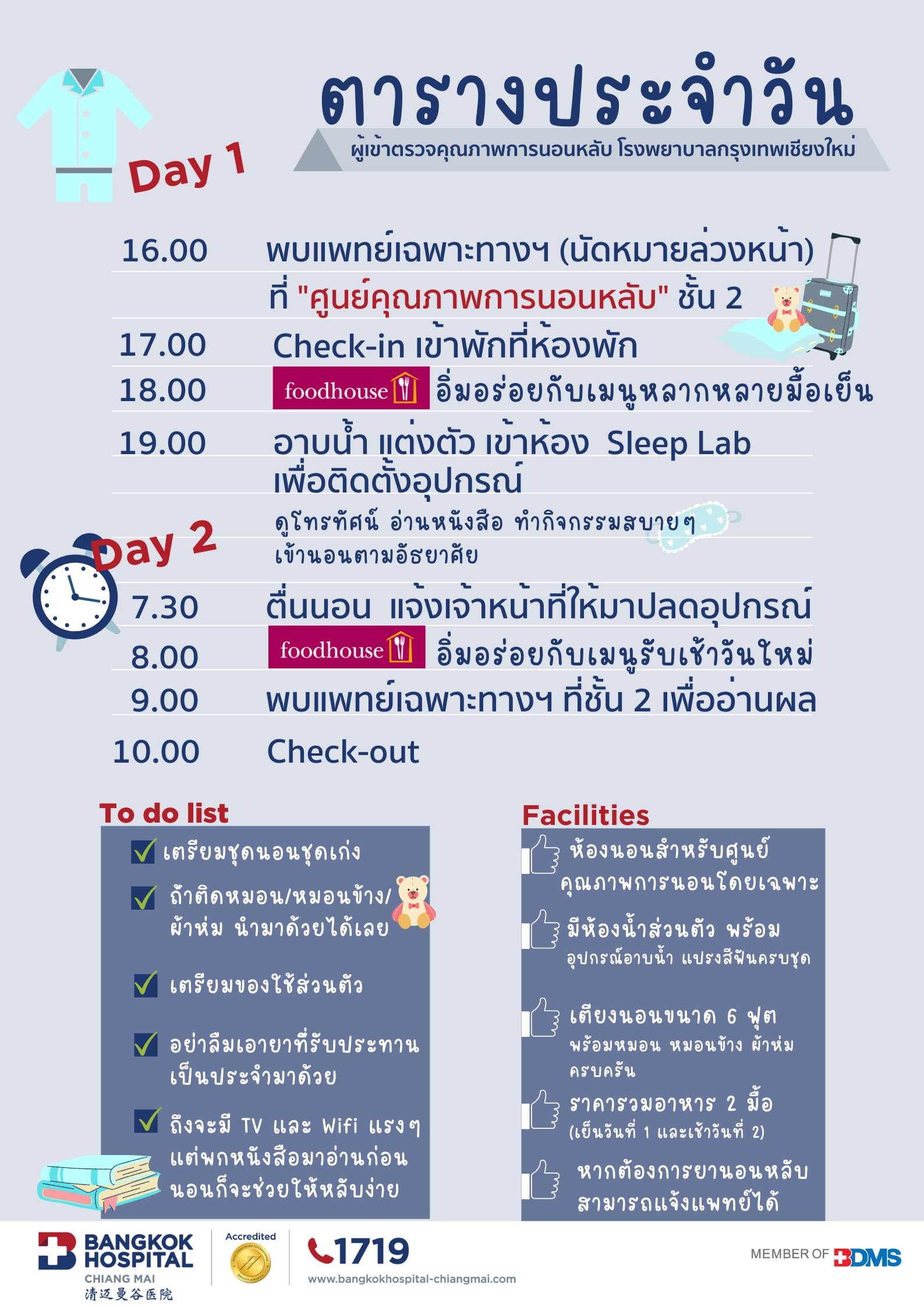
Day 1
- 4:00 PM Meet with a sleep specialist to provide information and answer preliminary questions
- 5:00 PM Check in with your belongings
- 6:00 PM Dinner (Thai and international food can be ordered by phone)
- 7:00 PM Adjust the room temperature to your preference and turn off communication devices. Staff will then attach equipment to the head and torso, which is painless and safe. If special assistance is needed or if you need to use the restroom during the assessment, you can notify the staff immediately.
Day 2 Upon waking in the morning, ring the bell to notify the staff, who will then remove the equipment.
- 8:30 AM Breakfast (Thai and international food can be ordered by phone)
- 9:00 AM Dress normally to meet with the specialist, who will analyze and interpret results to plan treatment for each patient
- 10:00 AM Check out and prepare to return home
Sleep Quality Center | Bangkok Hospital Chiang Mai
Located within the Center of Excellence for Brain and Nervous System on the 2nd floor and the sleep analysis bedrooms on the 7th floor.
For more information, call 052-089-862 or Call Center 1719