
Rectal prolapse may not be heard of very often, even though it can occur at any age. It is commonly found in people with chronic constipation and older adults, but it is often mistaken for hemorrhoids, leading to neglected treatment and allowing it to become more severe. This greatly affects quality of life, so you should regularly check for warning signs and understand the correct treatment.
What is rectal prolapse
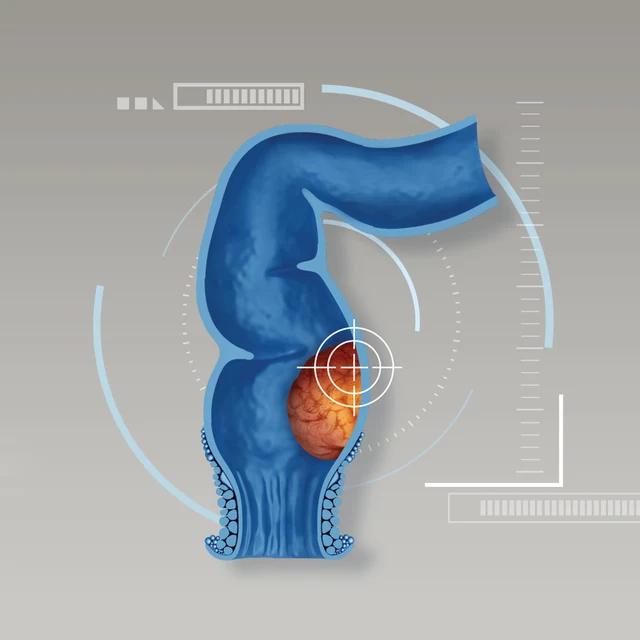
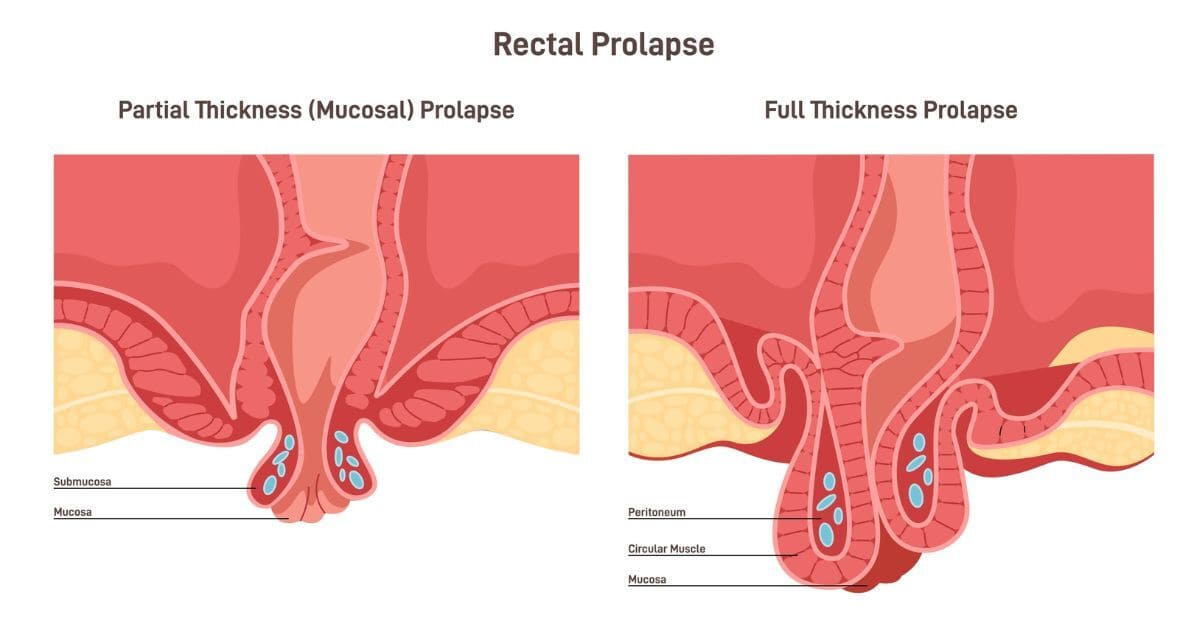
Rectal prolapse (Rectal Prolapse) is a condition in which the rectum or the wall of the distal bowel protrudes out through the anus. It is caused by laxity of organs or muscles in the pelvic floor, which is related to bowel habits such as prolonged straining, chronic constipation, and weak pelvic floor muscles. It may affect quality of life and increase the risk of infection or inflammation. It should be examined, diagnosed, and treated as soon as possible.
How many stages of rectal prolapse are there
In the early stage of rectal prolapse, a lump protrudes during defecation, then retracts on its own. But as it becomes more severe, the lump may protrude all the time—whether walking, standing up, sitting, or doing activities for a long time—and may remain protruded continuously. Especially if it has been protruded for a long time and becomes swollen, it may not be able to be pushed back in, with risk of ischemia. You must see a specialist immediately.
Warning signs and symptoms of rectal prolapse
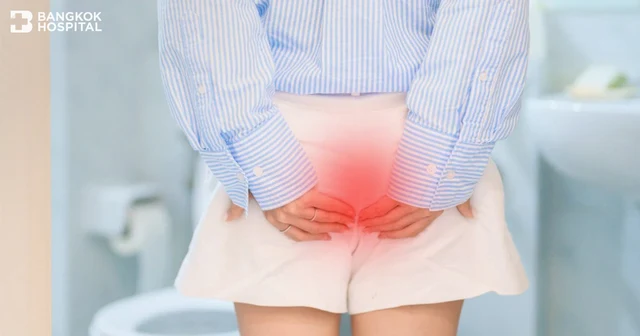
- A lump can be felt at the anus
- A lump protrudes from the anus and can be pushed back in
- After defecation, a prolapse often occurs
- During various activities, a prolapse occurs
- Difficulty holding stool or inability to control bowel movements
- Difficulty passing stool; feeling of incomplete evacuation
- Bleeding
- A feeling of heaviness in the anus
- Wetness around the buttocks or stained underwear
Risk groups for rectal prolapse
Rectal prolapse is found more often in women than in men, especially women who have given birth or have also had a hysterectomy, which further increases the risk. In addition, it is more common in older adults because the muscles and various organs in the pelvic floor are more lax than in younger people.

How is rectal prolapse treated
The choice of treatment for rectal prolapse mainly depends on the severity and the physician’s diagnosis.
- Behavior modification In mild cases, patients may take mild laxatives as recommended by a doctor and treat chronic constipation by eating a high-fiber diet.
- Laparoscopic rectal prolapse surgery (Laparoscopic Rectopexy) The doctor makes small incisions to insert special instruments to dissect and pull the protruding rectum back into place so it does not prolapse again. Fewer complications and faster recovery.
- Transanal rectal prolapse surgery (Transanal Surgery) Suitable for patients who have many underlying diseases and for those who are not suitable for abdominal surgery. It uses instruments to dilate the anal opening to remove the protruding part of the rectum without opening the abdomen. Less pain and quick recovery.
- Robot-assisted rectal prolapse surgery da Vinci Xi The doctor controls robotic-assisted surgical technology with robotic arms to operate at the desired location. It can easily access deep areas in the abdomen, helping reduce the risk of injury to adjacent organs. Small incisions, less pain, faster recovery, and a quicker return to daily life.
Which behaviors increase the risk of rectal prolapse
- Prolonged straining
- Sitting in the bathroom for a long time
- Chronic constipation
- People who have had pelvic organ surgery or have abnormalities of the pelvic nerves

Rectal prolapse emergencies that require immediate hospital care
In most cases, rectal prolapse (Rectal Prolapse) does not start suddenly; various symptoms appear beforehand. If patients do not notice them, they may not think it is an acute emergency. Therefore, if you have the following symptoms, urgent treatment is required:
- Bleeding
- The protruding bowel becomes swollen and cannot be pushed back in
- Bowel ischemia; inflammation and infection of the bowel with swelling and pain in the affected area, or inflammation and infection around the anus
How dangerous is rectal prolapse
The danger or severity of rectal prolapse depends on the stage of the disease. In the early stage, symptoms are minimal but may be bothersome. If left untreated, it becomes more severe and a lump may protrude through the anus all the time. If swelling increases until it cannot be pushed back in, there is a risk of bowel ischemia causing bleeding and leading to inflammation and infection, with a risk of bowel necrosis. This requires urgent surgery to remove the ischemic or necrotic, inflamed, infected portion of the bowel.

Preventing rectal prolapse
- Take care to avoid constipation
- Drink water and eat enough fiber each day
- Do not sit in the bathroom for a long time; do not strain for a long time; do not take a mobile phone or a book in to read
- Use an appropriate posture for defecation: use a footstool and lean forward while defecating
- Avoid activities that greatly increase intra-abdominal pressure, such as heavy lifting
- If constipation is severe, take mild laxatives as recommended by a doctor
- If you have chronic coughing, it should be fully treated because every cough increases pressure in the cavity
Can exercise help prevent rectal prolapse
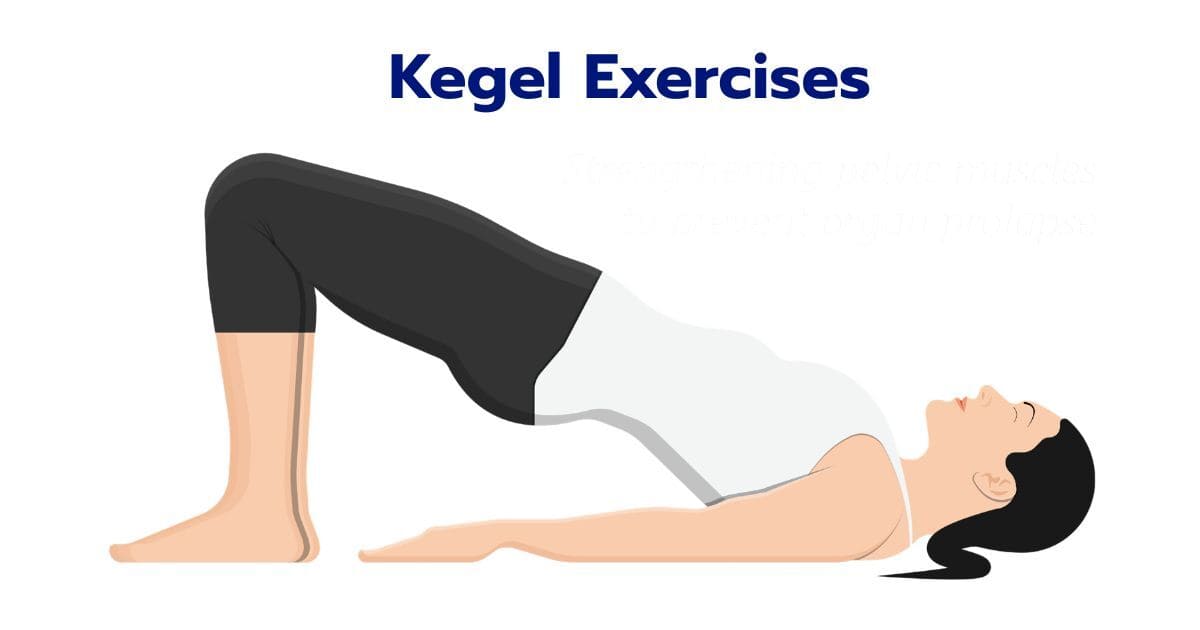
Kegel exercises (Kegel Exercise) strengthen the pelvic floor muscles by contracting and relaxing the anal sphincter. Both men and women should do them regularly in a sitting or lying position. Then tighten the pelvic floor muscles as if trying to stop holding back stool, hold for about 5 – 10 seconds, and repeat about 10 – 15 times per set. Do 5 – 10 sets per day to increase the strength of the pelvic floor muscles and help the pelvic organs function better, and it also helps prevent pelvic organ prolapse as well.
Which hospital specializes in treating rectal prolapse (Rectal Prolapse) Where is a good place
Colorectal Surgery Clinic, Bangkok Hospital is ready to provide diagnosis, evaluation, and treatment for rectal prolapse (Rectal Prolapse) by specialist physicians with expertise, nurses, and the GI Motility Unit (GI Motility Unit) with modern equipment and technology, so you can return to a good quality of life every day.
Physicians specializing in the treatment of rectal prolapse (Rectal Prolapse)
Dr. Sarinda Lertbannaphong Colorectal Surgeon, Bangkok Hospital
You can click here to make an appointment yourself.