
Many men with erectile dysfunction carry a quiet burden: lost confidence, worry about disappointing a partner, and discomfort about raising the subject with anyone. When tablets stop working, or other options do not deliver, it can feel as though there is nothing left to try. In reality there is. A penile implant is an option a doctor may consider when other treatments have failed, or when a man wants a permanent solution he can control himself — and it delivers some of the highest satisfaction of any treatment for erectile dysfunction. This guide explains what a penile implant is, the types available, how the surgery works, how to care for yourself afterwards, and the benefits and risks to weigh before deciding.
What Is a Penile Implant?
A penile implant (also called a penile prosthesis) is a medical device placed inside the penis during surgery so that it can become firm enough for sex whenever you wish. It is the final and most definitive step in treating erectile dysfunction, used when oral tablets, penile injections, or a vacuum device have not worked or cannot be used.
Two points are important to understand before deciding. First, the device sits entirely inside the body — nothing protrudes, nothing is visible from the outside, and no one can tell it is there. Second, placing an implant permanently changes the erectile tissue inside the penis, so natural, unassisted erections will no longer be possible afterwards. For that reason it is a decision to make carefully with your doctor, after other options have been tried.
Who Is a Penile Implant Suitable For?
A doctor may consider a penile implant for men in the following situations:
- Erectile dysfunction that does not respond to oral PDE5 inhibitor tablets
- Penile injections or a vacuum device that have failed or caused intolerable side effects
- A contraindication to medication, such as needing nitrate drugs for heart disease
- Severe erectile dysfunction due to diabetes, or following prostate surgery
- Significant Peyronie’s disease (penile curvature) together with an inability to achieve an erection
- Previous prolonged priapism that has damaged the erectile tissue
- A preference for a permanent solution that does not require medication or a device before every occasion
Men with an active infection anywhere in the body, poorly controlled diabetes, or unrealistic expectations should have these factors addressed before proceeding to surgery.
How Many Types of Penile Implant Are There?
There are three main types, differing in how they work, how natural the result looks, how complex the surgery is, and cost.
1. Malleable (semi-rigid) implants
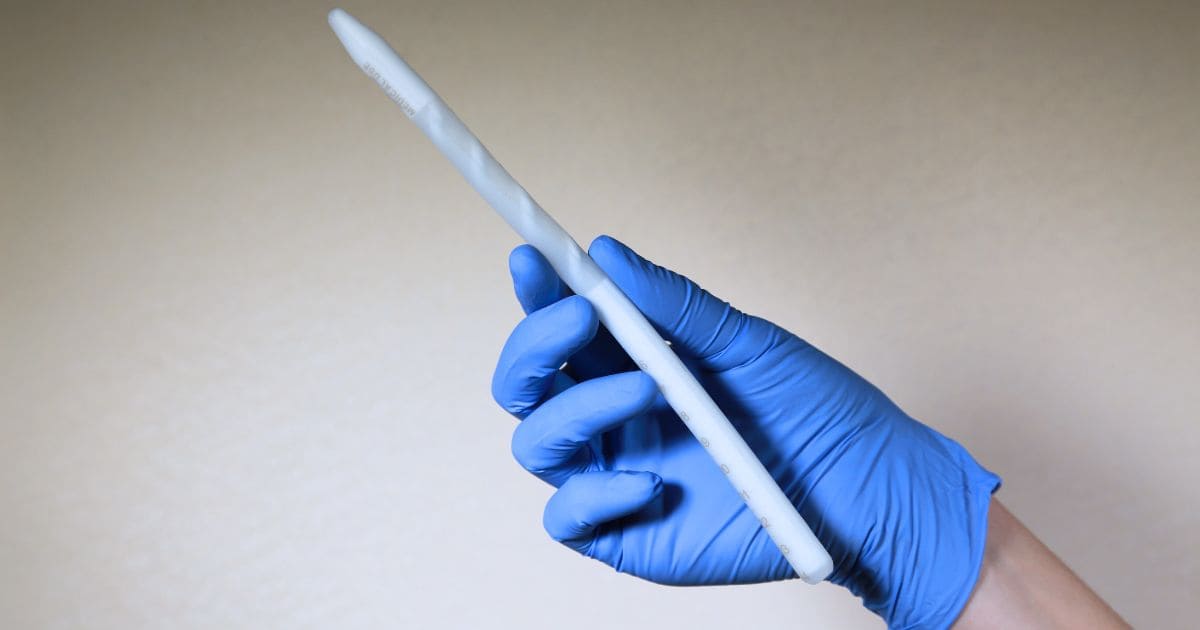
The simplest design: two firm but bendable rods are placed in the erectile chambers on each side. You bend the penis up for sex and down against the body for everyday activities.
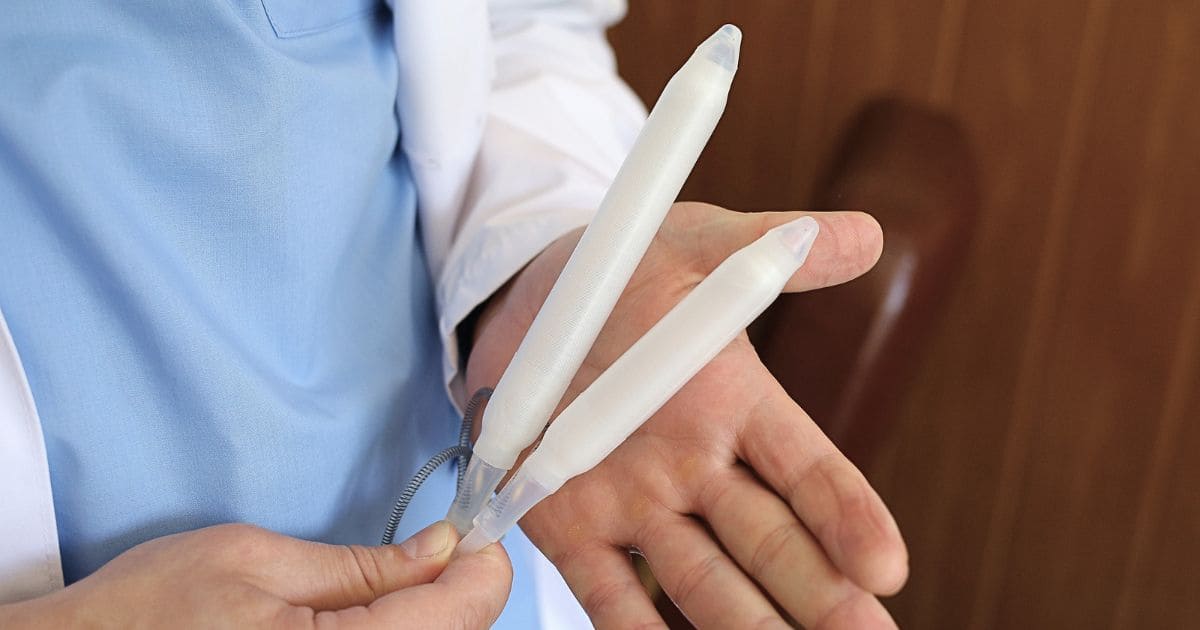
2. Two-piece inflatable implants
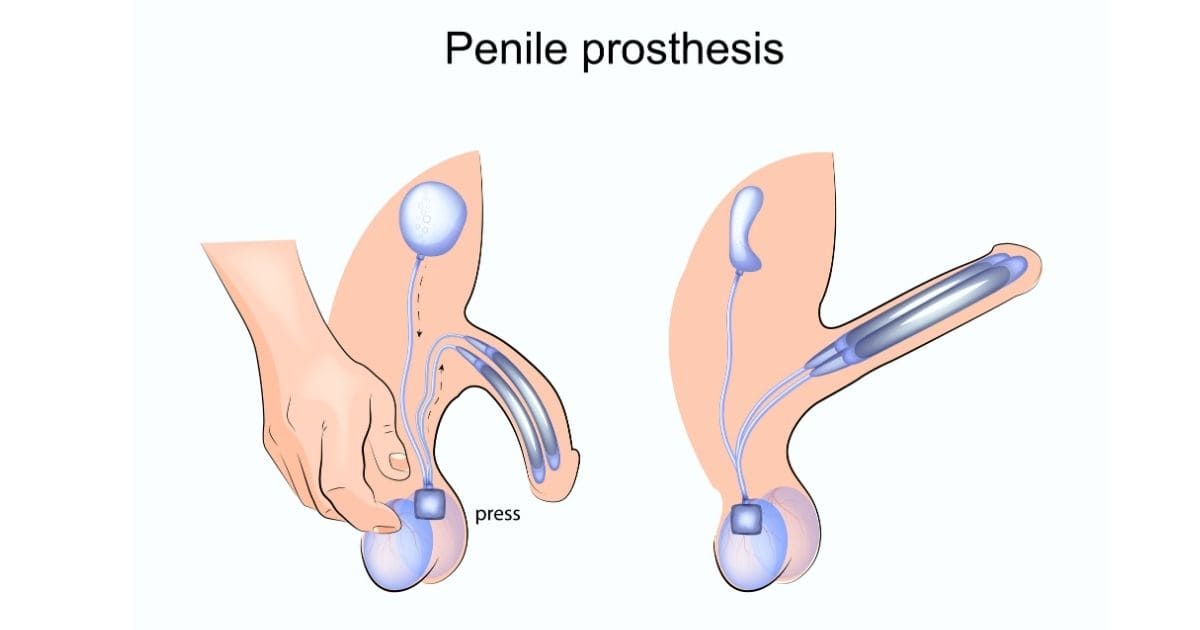
Two inflatable cylinders in the penis connect to a single combined pump-and-reservoir unit in the scrotum, so no separate reservoir is needed in the abdomen.
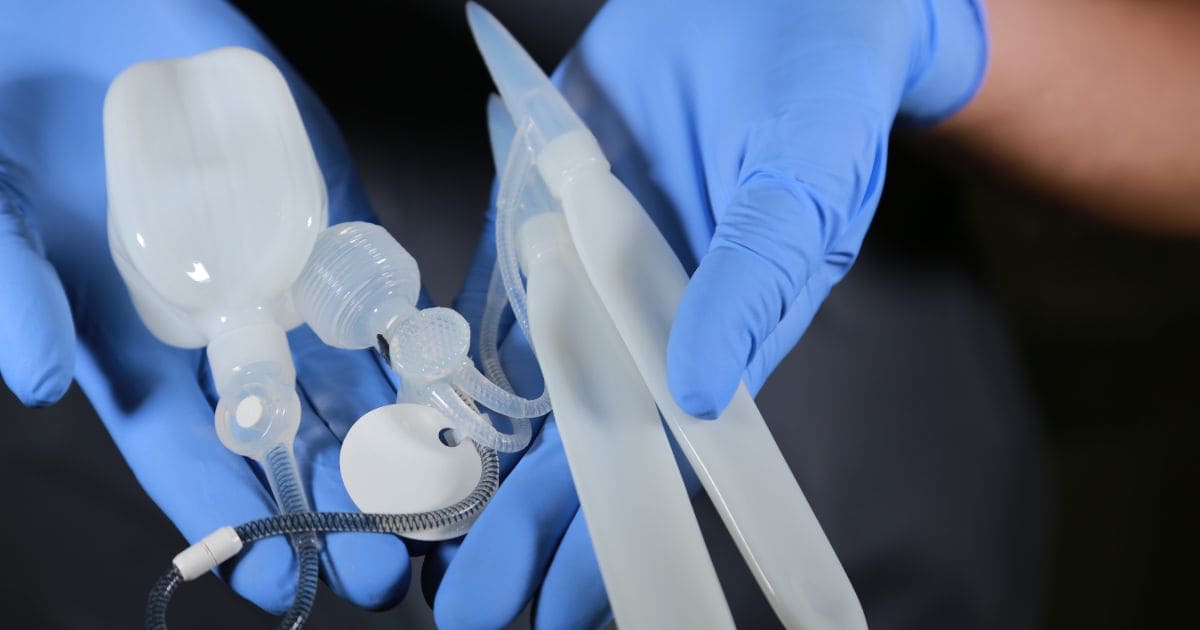
3. Three-piece inflatable implants
The most widely used standard today. It has three parts: two inflatable cylinders in the penis, a control pump in the scrotum, and a saline reservoir placed behind the pubic bone. It gives the most natural result both when erect and when flaccid.
How Do the Three Types Differ?
The table below compares the three types, as background for your discussion with your surgeon.
|
Feature |
Malleable (semi-rigid) |
Two-piece inflatable |
Three-piece inflatable |
|
How you use it |
Bend up and down by hand |
Squeeze scrotal pump |
Squeeze scrotal pump |
|
Natural appearance |
Semi-firm at all times |
Moderately natural |
Most natural |
|
Rigidity and girth |
Constant firmness |
Less than 3-piece |
Best |
|
Abdominal reservoir |
None |
None (built into scrotum) |
Yes (behind pubic bone) |
|
Surgical complexity |
Lowest |
Moderate |
Highest |
|
Mechanical durability |
Very high (no moving parts) |
Good |
Good (median ~20 years) |
|
Best suited for |
Limited hand dexterity or lower budget |
Men who must avoid an abdominal reservoir |
Men wanting the most natural result |
In summary, the malleable implant is simpler to place, highly durable because it has no moving parts, less expensive, and ideal for men who would find a scrotal pump difficult to operate — for example those with severe arthritis or a spinal cord injury. Its limitations are that the penis remains semi-firm at all times, which some men find harder to conceal under clothing, and the result looks less natural.
The three-piece inflatable gives the most natural result — good rigidity in use and a natural flaccid state at rest — and the highest satisfaction, but the surgery is more complex and the cost higher. The two-piece sits in between, useful for men who want an inflatable device but should avoid an abdominal reservoir, such as those with previous pelvic surgery, pelvic radiation, or a kidney transplant.
One telling figure: about 7.7% of men who start with a malleable device later convert to a three-piece inflatable, while only about 0.2% go the other way — a reflection of the higher satisfaction with inflatable devices. That said, a malleable implant remains an excellent and reliable choice for the right patient. The decision should be made with your surgeon based on your anatomy, other medical conditions, hand dexterity, previous surgery, and budget.
How Does a Penile Implant Work?
The mechanism depends on the type of device.
Malleable implants. The rods stay firm at all times but bend as needed. You bend the penis upward for sex, and downward against the body afterwards for discretion in daily life. There is no pumping or deflating step.
Inflatable implants. The system holds sterile saline in a reservoir. To produce an erection, you squeeze the small pump concealed in the scrotum several times; saline moves into the cylinders in the penis, which expand and become firm. Afterwards you press the release valve on the pump, the saline returns to the reservoir, and the penis returns to its natural soft state.
You control everything yourself, choosing when and for how long, without waiting for a drug to take effect and with no limit on frequency. Your doctor and nurse will teach you how to operate the device in detail before you begin using it, and most men become confident with it quickly.

Preparing for Penile Implant Surgery
Good preparation directly affects the success of surgery and reduces the risk of complications. Your team will address the following, and there are things you can do as well:
- Counselling and aligned expectations. Your surgeon will explain the device types, how to use them, what results are realistically achievable in terms of firmness and length, and the key limitation that natural erections will no longer be possible. This step matters a great deal, and involving your partner in the discussion is recommended.
- Blood sugar control. Men with diabetes should have blood sugar well controlled beforehand, as an HbA1c of roughly 8–8.5% or above has been associated with a higher risk of infection.
- Screening and treating infection. There must be no active infection, particularly of the urinary tract. Your doctor may test and culture your urine before surgery.
- Stopping smoking and managing weight. Smoking and obesity both increase the risk of poor wound healing and infection.
- Reviewing your medications. Tell your doctor about all medicines you take, especially blood thinners or anticoagulants, which may need to be paused on your doctor’s advice.
- Antiseptic preparation and antibiotics. You will be given preventive antibiotics before surgery, the skin will be cleaned with antiseptic solution, and hair clipping at the surgical site may be advised on the day.
You will also be asked to fast for a set period before going to the operating theatre, and you should arrange for someone to take you home after discharge.

The Penile Implant Surgery Step by Step
The procedure is performed by a urologist with specific expertise in prosthetic surgery. The usual steps are:
- Anaesthesia is given — either general anaesthesia or a spinal anaesthetic, depending on the assessment by your surgeon and anaesthetist.
- A small incision is made, most commonly at the junction between the base of the penis and the scrotum (penoscrotal) or just above the pubic bone (infrapubic). The incision is usually small and sits in an area that is hard to notice.
- The erectile chambers on both sides are opened and gently dilated, then measured precisely so that the cylinders or rods chosen fit that individual patient.
- The cylinders or rods are placed into both chambers and positioned in correct alignment.
- For inflatable devices, the control pump is placed in the scrotum; for a three-piece device the saline reservoir is placed behind the pubic bone, and the tubing is connected.
- The device is tested in the operating theatre by inflating and deflating it several times to confirm that it works well and gives a good shape.
- The incision is closed in layers and the device left in the state your surgeon specifies. A urinary catheter may be placed temporarily.
Surgery takes roughly one to two hours, and most men stay in hospital for one to two days before going home. Surgeon experience clearly affects outcomes: results improve with the number of these procedures a surgeon performs, up to around 15 cases per year.

Aftercare Following Penile Implant Surgery
Following instructions closely gives the smoothest recovery and lowers the risk of complications.
- The first one to two weeks. Swelling and soreness around the surgical site are normal and are managed well with the pain relief your doctor prescribes. Use cold compresses as advised, rest, and avoid heavy lifting or strenuous effort.
- Wound care. Keep the wound clean and dry as instructed, complete the full course of antibiotics, and watch for warning signs — increasing redness, discharge, unusually worsening pain, or fever — which warrant seeing your doctor promptly.
- Using the device. Your surgeon will usually ask you to wait about four to six weeks, until the wound has healed and swelling has settled, before teaching you to operate the device and activating it. Do not start using it before your doctor allows.
- Returning to sex. This begins once your surgeon confirms the wound has healed and has taught you to use the device, typically around six weeks after surgery.
- Follow-up visits. Attend every scheduled appointment so your surgeon can assess healing and device function, and help you become confident using it.
Benefits of a Penile Implant
- The highest satisfaction of any ED treatment. Patient satisfaction ranges from about 75% to over 90%, and partner satisfaction reaches up to about 88% — the highest of any treatment for erectile dysfunction.
- Reliable and under your own control. An erection whenever you want one, with no waiting for a drug to work, no injection beforehand, and no limit on duration or frequency.
- Private and invisible from the outside. The device is entirely internal, with no external parts, and cannot be detected by others.
- No medication side effects. It avoids side effects such as headache, facial flushing, and nasal congestion, and can be used by men who cannot take these tablets, such as those on nitrates.
- Long-lasting. Modern inflatable devices have a median lifespan of around 20 years, with roughly 87% still working at 5 years and 77% at 10 years. Malleable devices are extremely durable as they have no moving parts.
- Can correct associated problems. In men who also have Peyronie’s disease, implant surgery can straighten the curvature at the same time.
- Restored confidence and quality of life. It helps men return to a good relationship with their partner and reduces anxiety about sexual performance.
Risks and Complications of a Penile Implant
With modern devices and techniques, serious complications are uncommon — but you should understand them fully before deciding.
- Infection. This is the most significant complication, because it usually means the device must be removed. Modern antibiotic-coated devices have roughly halved infection rates, from about 2.3% to 0.9%. Most studies report rates under 5%, and large real-world datasets show around 1.5–3%. The risk is higher with poorly controlled diabetes, obesity, spinal cord injury, and revision surgery.
- Mechanical problems. These affect inflatable devices, which have moving parts — for example fluid leakage or pump malfunction. Three-piece devices carry roughly a 5.5% chance of needing revision surgery over the long term. A worn device can be replaced.
- Erosion. The device pressing through thinned tissue is uncommon — mostly under 5% — and is seen a little more often with malleable devices, particularly in men with reduced penile sensation.
- Unwanted self-inflation. Uncommon with inflatable devices, and greatly reduced by the lock-out valves in modern models.
- Glans droop. Caused by inadequate support of the tip; it can be corrected with an additional procedure.
- Chronic pain or altered sensation. Uncommon. Pain generally improves within four to six weeks, though some men — those with diabetes, for example — may take longer.
- A sense of shortening. Some men feel the penis is slightly shorter afterwards. This usually reflects tissue changes that were already present before surgery rather than the operation itself, which is why discussing expectations beforehand matters.
The single factor that most reduces satisfaction is having a complication — so choosing an experienced surgeon and centre, together with thorough preparation, is very important.

Frequently Asked Questions
Does a penile implant make the penis bigger?
A penile implant is not intended to enlarge the penis and does not make it longer or thicker than before. Its purpose is to make the penis firm enough for sex. Your surgeon measures the erectile chambers precisely in the operating theatre to select a device that fits you, so the result is close to your own previous erect size.
Some men feel the penis is slightly shorter after surgery. This usually reflects tissue changes that were already present beforehand — from long-standing erectile dysfunction, Peyronie’s disease, or previous prostate surgery — rather than the device itself. Discussing expectations about size with your surgeon beforehand is therefore very important.
Does a penile implant affect orgasm?
In principle, a penile implant only restores rigidity. It does not interfere with the sensory nerves or the hormonal system, so it does not affect orgasm. In detail:
- Skin sensation. Unchanged, because the nerves supplying sensation to the penile skin and glans are separate from the erectile chambers where the device sits. Most men retain normal sensation. Temporary changes may occur soon after surgery and usually settle once healing is complete.
- Sexual desire. Unchanged, because desire is governed by testosterone and the brain, neither of which the surgery touches. In practice many men find desire improves, as confidence returns and anxiety about erections falls away.
- Erection. This now comes from the device rather than the natural mechanism, so you can become firm whenever you want without needing arousal to produce it or waiting for medication. Natural, unassisted erections are no longer possible afterwards.
- Orgasm. Still occurs normally, because orgasm is a nervous-system and brain response and does not depend on the erection itself. Men who could reach orgasm before surgery will still be able to afterwards.
- Ejaculation. Not affected by the device, since ejaculation depends on the prostate, seminal vesicles, and urethra, none of which are disturbed by the surgery. However, if you already had an ejaculation problem — such as retrograde or absent ejaculation after prostate surgery — that will remain unchanged, as it has a separate cause.
- Fertility. A penile implant does not cause infertility and does not affect sperm production in the testicles or testosterone levels. Men with normal ejaculation retain their own baseline fertility potential. If you are planning to have children, tell your doctor so that fertility can be assessed alongside your treatment.
Is penile implant surgery painful?
You will not feel pain during the operation, as you will have either a general or spinal anaesthetic. Afterwards, swelling and soreness around the wound are common during the first one to two weeks. This is normal and is well controlled with the pain relief your doctor prescribes, and it usually eases noticeably within four to six weeks.
Some men — those with diabetes, for example — may recover and settle more slowly. Chronic pain after surgery is uncommon. If pain worsens unexpectedly, the wound becomes increasingly red or swollen, there is discharge, or you develop a fever, see your doctor promptly as these can be signs of infection.
How long does a penile implant last?
Modern inflatable devices have a median lifespan of around 20 years, with roughly 87% still functioning well at 5 years and about 77% at 10 years; newer models tend to last longer. Malleable devices are extremely durable because they have no moving parts.
If a device wears out or malfunctions in the future, it can be surgically replaced. Attending regular follow-up and using the device as your surgeon advises helps extend its life and allows problems to be detected early.
This article is for general education and does not replace personalised medical advice. If you have erection problems or are considering treatment, please consult a specialist.
References
- Levine LA, Becher EF, Bella AJ, et al. Penile prosthesis surgery: current recommendations from the International Consultation on Sexual Medicine. J Sex Med. 2016;13(4):489-518.
- Goodstein T, Jenkins LC. A narrative review on malleable and inflatable penile implants: choosing the right implant for the right patient. Int J Impot Res. 2023;35(7):599-606.
- Ancha N, Eldin M, Woodle T, et al. Current devices, outcomes, and pain management considerations in penile implant surgery: an updated review of the literature. Asian J Androl. 2024;26(4):345-352.
- Cocci A, Capogrosso P, Minhas S, et al. Penile prosthesis implantation: a systematic review of intraoperative and postoperative complications. Int J Impot Res. 2026;38(2).
- Çayan S, Aşcı R, Efesoy O, et al. Comparison of long-term results and couples’ satisfaction with penile implant types and brands: lessons learned from 883 patients. J Sex Med. 2019;16(7):1092-1099.
- Capogrosso P, Pescatori E, Caraceni E, et al. Satisfaction rate at 1-year follow-up in patients treated with penile implants: data from the multicentre prospective registry INSIST-ED. BJU Int. 2019;123(2):353-359.
- Miller LE, Khera M, Bhattacharyya S, et al. Long-term survival rates of inflatable penile prostheses: systematic review and meta-analysis. Urology. 2022;166:51-57.
- Mandava SH, Serefoglu EC, Freier MT, Wilson SK, Hellstrom WJ. Infection retardant coated inflatable penile prostheses decrease the incidence of infection: a systematic review and meta-analysis. J Urol. 2012;188(5):1855-1860.
- Habous M, Tal R, Tealab A, et al. Defining a glycated haemoglobin (HbA1c) level that predicts increased risk of penile implant infection. BJU Int. 2018;121(2):293-300.
- Brant W, Sato R, Rojanasarot S, et al. Infection rates and risk factors following inflatable penile prosthetic implantation: an analysis of real-world hospital data. J Sex Med. 2025;22(11).
- Byrne ER, Ungerer GN, Ziegelmann MJ, Kohler TS. Complications and troubleshooting in primary penile prosthetic surgery — a review. Int J Impot Res. 2023;35(7):607-614.
- Van Huele A, Lenaers M, Renterghem KV. Preoperative counseling for penile implant surgery: standardized approach in a high-volume center of excellence. Int J Impot Res. 2025;37(1):18-24.
- Burnett AL, Nehra A, Breau RH, et al. Erectile dysfunction: AUA guideline. J Urol. 2018;200(3):633-641.
- Salonia A, Bettocchi C, Carvalho J, et al. EAU Guidelines on Sexual and Reproductive Health. European Association of Urology; 2025.
The Specialist in Penile Implant Surgery
Dr. Soarawee Weerasopone is a urologist specialising in men’s health and sexual medicine, covering erectile dysfunction, testosterone and hormone disorders, Peyronie’s disease, and penile prosthesis (implant) surgery, as well as robotic and minimally invasive urological surgery.
Why Choose Bangkok Hospital for Penile Implant Surgery
The Urology Center at Bangkok Hospital provides comprehensive, confidential, and compassionate care for men’s sexual health, with experienced urologists, modern diagnostic tools, and the full range of treatments — from lifestyle and medical therapy through to advanced surgery such as penile prosthesis implantation. Because erectile dysfunction is often linked to cardiac, metabolic, and hormonal health, our specialists work alongside internal medicine and cardiology to care for the whole patient.
For enquiries and appointments, please contact the Urology Center, 3rd Floor, Building C, Bangkok Hospital.
Tel. 0 2310 3009 or 1719 (24-hour hotline)