

Women’s internal health issues are not something distant—especially uterine fibroids, which are common in women and only about 20–30% show symptoms. By the time you realize it, the fibroid may have grown to the point of affecting nearby organs, worsening symptoms or making treatment more complex. Paying attention to warning signs and staying informed about this condition is therefore something that should not be overlooked.
Getting to Know Uterine FibroidsWhat are they?

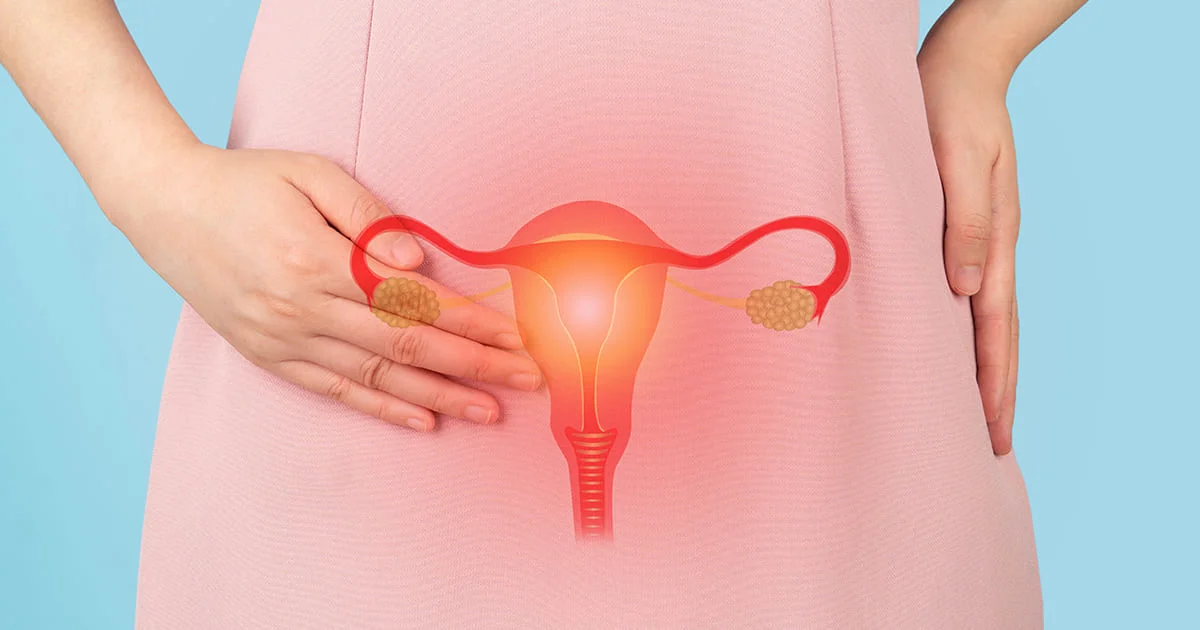
Uterine fibroids (Myoma Uteri or Uterine Fibroids) are a condition caused by abnormal growth of uterine muscle cells, forming a mass in the uterus. They may grow inside the uterine cavity or protrude outward from the uterus. This mass may grow slowly or remain the same size. The size, location, and number vary from person to person.
This condition is commonly found in women of reproductive age, especially between 30–40 years. Although the exact cause is still unknown, medical evidence suggests that estrogen and progesterone produced by the ovaries can stimulate fibroids to increase in size. At the same time, when entering menopause, the fibroids can become smaller.
Types of Uterine Fibroids
Uterine fibroids can be classified by location as follows:
- Fibroids on the outer surface of the uterine wall (Subserosal Fibroid): If very large, they may press on other organs or cause severe pain.
- Fibroids within the uterine muscle or uterine wall (Intramural Fibroid): This is the most common type and often causes menstrual cramps, heavy menstrual bleeding, and infertility, depending on the size and location of the fibroid.
- Fibroids in the uterine cavity (Submucosal Fibroid): They can cause heavy and abnormal menstruation, menstrual pain, infertility, and an increased risk of miscarriage. In some cases, when a fibroid is pedunculated and extends through the cervix, the patient may feel a mass resembling a vaginal tumor, which requires a doctor’s examination and diagnosis to differentiate conditions.
Are uterine fibroids dangerous? Can they become cancer?
When a mass is found, many women worry and ask: Are uterine fibroids dangerous? Will they become cancer? In reality, most fibroids are benign, not malignant, and are very unlikely to develop into cancer, and 80% are not cancer. Even complications from uterine fibroids are uncommon. When they do occur, it is in cases where fibroids compress nearby organs such as the ureters, which may lead to kidney disease.
However, complications from this condition can still be dangerous. For example, if a fibroid grows large enough to compress nearby organs such as the ureters, it may cause kidney deterioration. Or if an outward-growing fibroid twists on its stalk, it can cause sudden, severe abdominal pain, which is considered an emergency.
Uterine fibroid symptoms: warning signs to pay attention to

People with uterine fibroids may have symptoms or no symptoms. There may be one or multiple fibroids, or a combination of types. Key symptoms that should not be ignored include:
- Severe menstrual cramps or a dull aching pain in the lower abdomen
- Infrequent menstruation, abnormally frequent periods, or heavy menstrual bleeding to the point of anemia
- Frequent urination or difficulty urinating
- Constipation or a dull ache in the rectal area
- A palpable mass in the pelvis or abdomen in cases of large or numerous fibroids
- Sudden pain with fever and nausea if the fibroid grows outside the uterus and the stalk twists
Diagnosis of Uterine Fibroids
Early detection helps make treatment easier. An obstetrician-gynecologist can diagnose the condition through a pelvic exam combined with ultrasound, which clearly shows details of the mass, its size, and its location. In some cases, hysteroscopy or laparoscopy may be used for a more accurate diagnosis.
How to treat uterine fibroids
Treatment for uterine fibroids is done through surgery, and the difficulty depends on the size, number, and location. It can be divided into:
1. Surgical removal of only the fibroid (Myomectomy)
This method is suitable for patients who still want to have children. The doctor preserves the uterus and removes only the fibroid(s). It can be done in several ways, including open abdominal surgery and laparoscopic myomectomy. In the past, if the fibroid was larger than 5 centimeters, open abdominal surgery was usually required.
However, advances in medicine now make laparoscopic surgery possible even for large masses. This results in smaller uterine surgical incisions, reduces the chance of significant blood loss, and shortens recovery time. Nonetheless, about 25–30% of patients may have fibroids grow back, so regular follow-up with a doctor is necessary.
2. Surgical removal of the uterus (Hysterectomy)
This method is often recommended for patients with severe symptoms, very large fibroids, or those who have entered menopause and no longer wish to have children. It can be performed by:
- Vaginal hysterectomy
- Laparoscopic hysterectomy
- Minilaparotomy hysterectomy (abdominal approach with an incision ≤ 6 cm)
- Abdominal hysterectomy
- Robot-assisted surgery
Women’s Health Center, Bangkok Hospital, ready to care for all women’s health concerns
Women’s internal health issues are delicate and require understanding care. The Women’s Health Center at Bangkok Hospital is equipped to provide diagnostic and treatment services for uterine fibroids and various gynecologic conditions, cared for by a team of experienced specialist obstetricians and gynecologists, along with minimally invasive surgery technology. This offers a treatment option that helps patients recover quickly, with less trauma, and return to daily life with confidence.
Article summary
Uterine fibroids are a condition that many women may have without realizing it, as they often show no symptoms in the early stages. Regularly observing menstrual abnormalities, lower abdominal pain, and having annual pelvic exams and ultrasounds are strong protective measures that help you manage and treat this condition in time.
Frequently Asked Questions (FAQ) about uterine fibroids
1. Can uterine fibroids shrink or disappear on their own?
In general, uterine fibroids do not go away on their own during reproductive years. However, when a patient enters menopause, female sex hormone levels decrease, causing most fibroids to gradually shrink and become smaller on their own.
2. If you have uterine fibroids, can you get pregnant?
Yes, you can become pregnant, but it depends on the size and location of the fibroid. If the fibroid is in the uterine cavity, it may interfere with embryo implantation, leading to infertility or an increased risk of miscarriage. Patients planning pregnancy should always consult an obstetrician-gynecologist to assess readiness beforehand.
3. For uterine fibroid surgery, is the incision large? Is recovery long?
It depends on the surgical method. With open abdominal surgery, the incision is large, similar to a cesarean section, and recovery takes longer. Today, if laparoscopic surgery is chosen, the incision is only 0.5–1 centimeter, resulting in less pain, less blood loss, and typically only 1–3 days of hospital recovery.
4. If you can feel a lump in the vagina, is it a uterine fibroid?
A mass protruding into the vagina may be a submucosal fibroid with a long stalk that extends through the cervix (prolapsed myoma), or it may be a polyp, uterine prolapse, or other conditions. Therefore, you should not self-diagnose, and you should see a doctor promptly for a proper pelvic examination and differential diagnosis.