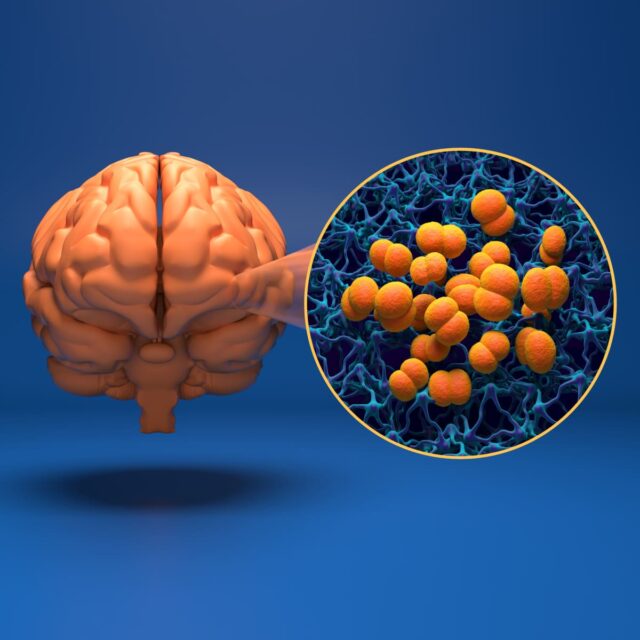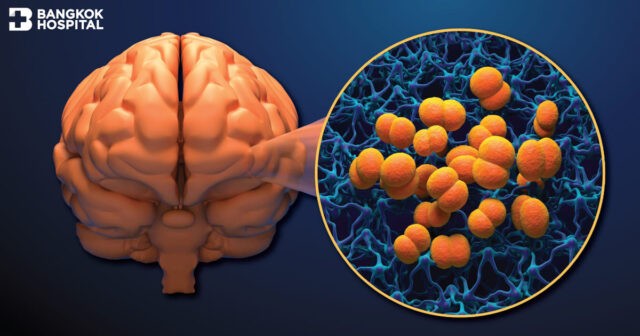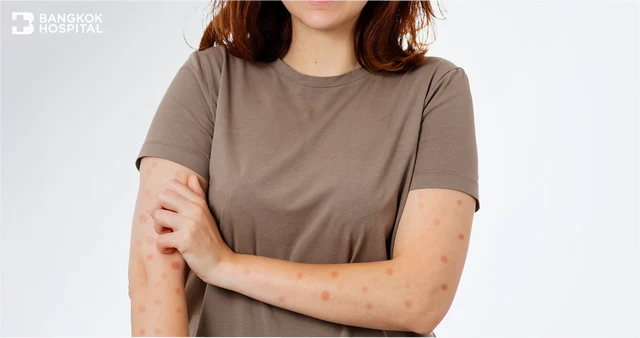


Bacterial meningitis, also known as meningococcal disease, is a serious illness that can spread into the bloodstream and the meninges, causing death if not treated promptly. Although in Thailand only 30 – 40 cases are found each year, vaccination for prevention in high-risk groups is extremely important to prevent infection and reduce disease severity.
Meningitis vaccine (meningococcal disease) what is it
The meningitis vaccine (Meningococcal Vaccine) is a vaccine designed to protect against the bacterium Neisseria Meningitidis, which is the main cause of meningococcal disease. This disease is easily transmitted through respiratory droplets from nasal mucus and saliva via close contact or being in large groups in crowded areas.
Meningitis vaccine (meningococcal disease) how many types are currently available
In Thailand, there are 2 main types of meningococcal vaccines as follows:
- MenACWY vaccine (4-strain) protects against bacterial groups A, C, W and Y. It is given in 1 – 2 doses (depending on risk) and can protect for 3 – 5 years. Suitable for those traveling abroad, students, or those with certain underlying conditions.
- MenB vaccine (strain B) protects against serogroup B, which is the most common in Thailand and in some countries. Requires 2 – 3 doses. Suitable for school students or university students going to study in countries where it is required, or those at high health risk.
Who should get the meningitis vaccine (meningococcal disease)
The Ministry of Public Health and the Infectious Disease Association of Thailand do not recommend this vaccine as a routine vaccine for the general Thai population, but recommend it only for the main high-risk groups as follows:
1) MenACWY vaccine (protects against 4 serogroups A, C, W, Y) Indications and groups who should receive it, by number of doses, are as follows:
- Groups that require 2 doses (8 weeks apart):
- People with underlying disease/immunodeficiency: such as asplenia, splenic dysfunction, people with HIV infection (with CD4 < 200), or certain immunodeficiency conditions
- Booster: 1 booster dose every 5 years if risk remains
- Groups that require 1 dose:
- People traveling for Hajj or Umrah pilgrimage (must be vaccinated at least 10 days before travel)
- People traveling to outbreak areas, such as sub-Saharan Africa
- Laboratory personnel who must have direct exposure to the pathogen
- People traveling to events with large crowds, such as carnivals or sports festivals
- Booster: 3 groups listed first above should receive 1 booster dose every 5 years if risk remains
- School students / university students studying abroad (e.g., the United States, Europe, Australia, especially those living in dormitories):
- Receive 1 or 2 doses: generally, the first dose is recommended at age 11 – 12 years and a second booster at age 16 years; however, if the first dose is started at age 16 years or older, only 1 dose is needed

2) MenB vaccine (protects against serogroup B) Indications and groups who should receive it, by number of doses, are as follows:
- Groups that require 3 doses (at months 0, 1 – 2, and 6):
- People with underlying disease/immunodeficiency, such as asplenia, splenic dysfunction, or receiving certain immunosuppressive drugs
- Laboratory personnel who must have direct exposure to the pathogen
- People traveling to outbreak areas where serogroup B outbreaks occur
- Groups that require 2 doses (1 – 6 months apart)
- School students/university students studying abroad: vaccinate when it is a mandatory requirement of the area or educational institution
*Note: For all MenB groups, if the risk of infection remains a booster dose of 1 dose is recommended 1 year after completing the series, and then repeated every 2 – 3 years
Side effects from vaccination
The meningitis vaccine (meningococcal disease) is an inactivated vaccine. Side effects are usually general and not severe such as:
- Pain, swelling, and redness at the injection site
- Low-grade fever; most symptoms are mild and resolve on their own within 1 – 2 days
How necessary is the meningitis vaccine (meningococcal disease)
For the general Thai population living in Thailand with no plans to travel abroad, this vaccine is not necessary. However, it is very important for the high-risk groups above to prevent outbreaks and reduce severity if infected in high-risk areas.

Can the meningitis vaccine (meningococcal disease) be given together with other vaccines
The meningitis vaccine (meningococcal disease) can be given together with other vaccines on the same day, but should be injected at different sites (e.g., different arms), except for the MenACWY (MCV4-DT type), which is recommended to avoid being given simultaneously with the pneumococcal conjugate vaccine (PCV); an interval of at least 4 weeks should be left between them.
Can adults who have never received the meningitis vaccine (meningococcal disease) get vaccinated
Adults who have never received the meningitis vaccine (meningococcal disease) can be vaccinated if you are in a high-risk group or plan to travel to a country with outbreaks. You should bring your travel plan or the educational institution’s requirement documents (if any) to consult a physician before vaccination in order to choose the most appropriate vaccine type.
Which hospital is specialized in treating meningitis (meningococcal disease)
Infectious Disease Clinic, Bangkok Hospital is ready to provide diagnosis and care for patients with meningitis (meningococcal disease), as well as correct consultation and advice, including risk assessment and pre-travel vaccination, with a team of specialist physicians and a multidisciplinary team with expertise and extensive experience to help patients have a good quality of life every day.