

Most patients usually have no symptoms and are detected through blood pressure measurement. However, some may experience headaches, dizziness, or easy fatigue. This article explains hypertension—from its causes, risk factors, and warning signs to watch for—along with recommended proper self-care practices for maintaining good health.
What is hypertension, and at what level is it dangerous?

Hypertension is a condition in which the pressure of blood inside the arteries remains continuously higher than the standard threshold. This disease is classified as one of the non-communicable diseases (NCDs), which do not spread from person to person, but result from deterioration of internal body systems due to lifestyle behaviors and ongoing neglect of health care.
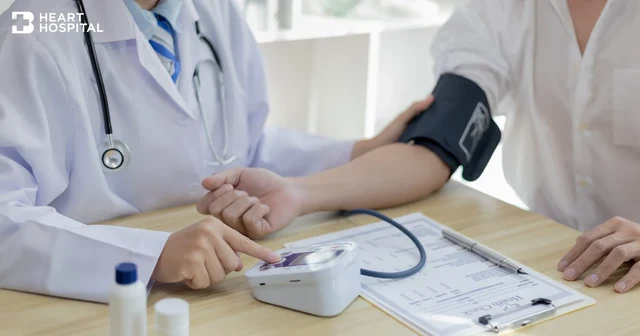
According to the 2024 European Society of Cardiology (ESC) clinical practice guidelines and the Hypertension Society of Thailand, office blood pressure measurement is used to assess blood pressure levels and diagnose hypertension, categorized as follows:
- Normal blood pressure (Normal): Systolic blood pressure less than 120 and diastolic blood pressure less than 80 mmHg.
- Elevated blood pressure (Elevated Blood Pressure): Systolic blood pressure 120–139 and/or diastolic blood pressure 70–89 mmHg. People in this group are not yet considered to have hypertension, but they have an increased risk of cardiovascular disease; therefore, they should modify health behaviors and monitor blood pressure regularly.
- Hypertension (Hypertension): Systolic blood pressure of 140 mmHg or higher and/or diastolic blood pressure of 90 mmHg or higher. A physician will confirm the diagnosis with repeat measurements or out-of-office blood pressure measurements (Home Blood Pressure Monitoring or Ambulatory Blood Pressure Monitoring), as appropriate.
What causes hypertension?
According to the European Society of Cardiology (ESC) 2024 and the Hypertension Society of Thailand, hypertension can be divided into two main types as follows:
- Primary (Essential) Hypertension
This is the most common type, accounting for about 90–95% of all patients. The exact cause cannot be clearly identified, but it results from multiple contributing factors, including genetics, increasing age, overweight, high-sodium diet, lack of exercise, stress, smoking, and alcohol consumption, causing blood pressure to gradually rise over time.
- Secondary Hypertension
This is high blood pressure caused by another disease or abnormality, which may be treatable at the root cause. Common causes include chronic kidney disease, renal artery stenosis, abnormally excessive aldosterone production by the adrenal glands (Primary Aldosteronism), adrenal tumors, obstructive sleep apnea, thyroid disorders, and certain medications such as oral contraceptives, NSAIDs, steroids, and some weight-loss drugs.
Everyday risk factors that can cause hypertension without realizing it

Risk factors that increase the likelihood of developing hypertension
In addition to the causes of the disease, there are several risk factors that increase the likelihood of developing hypertension—from genetics, age, and lifestyle behaviors—most of which can be prevented or modified, as follows:
- Age and genetics: Risk increases with age, especially in those aged 60 years and older, and in those with a family history of hypertension, due to shared genetic factors and lifestyle behaviors.
- Overweight and obesity: People who are overweight or obese are at increased risk of hypertension because the heart must work harder to pump blood throughout the body, and metabolic abnormalities often coexist.
- Lack of exercise: Insufficient physical activity or a sedentary lifestyle reduces cardiovascular fitness and increases the risk of overweight, diabetes, and hypertension.
- Smoking and alcohol consumption: Smoking damages blood vessels and increases the risk of cardiovascular disease. Regular heavy alcohol consumption may raise blood pressure and increase the risk of heart disease.
- High-sodium diet and insufficient potassium intake: Regular consumption of salty foods, processed foods, and ready-to-eat foods leads to sodium intake beyond the body’s needs, which is associated with increased blood pressure. Meanwhile, insufficient potassium from fruits and vegetables may reduce the body’s ability to maintain sodium balance and blood pressure.
- Underlying diseases and other health conditions: Diabetes, chronic kidney disease, dyslipidemia, and obstructive sleep apnea all increase the risk of hypertension and cardiovascular complications.
- Stress and insufficient sleep: Chronic stress and poor-quality sleep or too little sleep may contribute to higher blood pressure in the long term, especially when combined with other risk factors.
Symptoms of hypertension to watch out for
Hypertension has been dubbed the “Silent Killer” because most patients have no abnormal symptoms even when blood pressure is high for a long time, and it is often detected during health checkups or regular blood pressure measurements. However, if blood pressure is very high or a hypertensive crisis occurs, the following symptoms may appear:
- Neurological symptoms: Severe headache, dizziness, blurred vision or unclear vision, confusion, weakness of an arm or leg, numbness on one side of the body, or slurred speech, which may be signs of stroke.
- Heart and lung symptoms: Chest pain or tightness, shortness of breath, difficulty breathing, unusually severe fatigue, or palpitations, which may indicate acute myocardial ischemia or heart failure.
- Danger signs requiring urgent medical attention: If blood pressure is 180/120 mmHg or higher together with symptoms such as chest pain, shortness of breath, severe headache, blurred vision, confusion, limb weakness, or loss of consciousness, go to the hospital immediately, as it may be a hypertensive emergency that can cause acute damage to vital organs such as the brain, heart, kidneys, or eyes.
If hypertension is left untreated, what are the impacts?
If hypertension is not treated or properly controlled over a long period, persistently high blood pressure can damage blood vessels and vital organs (Target Organ Damage), increasing the risk of heart disease, kidney disease, stroke, and many non-communicable diseases (NCDs). Key complications include:
- Cardiovascular-Kidney-Metabolic (CKM) Syndrome: Hypertension is a key component of CKM Syndrome, which links heart disease, kidney disease, and metabolic disorders. Poor blood pressure control accelerates vascular deterioration and increases the risk of chronic kidney disease, heart failure, and cardiovascular disease, especially when obesity, diabetes, or high blood lipids coexist.
- Cardiovascular disease: Chronic hypertension causes arteries to stiffen and deteriorate faster (atherosclerosis), increasing the risk of coronary artery disease, acute myocardial ischemia, heart failure, and certain arrhythmias.
- Stroke: Hypertension is an important risk factor for both ischemic and hemorrhagic stroke, which can lead to paresis, paralysis, disability, or death.
- Chronic kidney disease: Hypertension causes deterioration of small blood vessels within the kidneys, reducing kidney filtration efficiency and increasing the risk of chronic kidney disease or kidney failure in the long term.
- Complications affecting other organs: Hypertension may cause hypertensive retinopathy affecting vision, and it also increases the risk of aortic aneurysm and peripheral artery disease.
When hypertension is diagnosed, what tests should be done?
Once a physician diagnoses hypertension, care is not limited to prescribing antihypertensive medication. It is also necessary to assess risk factors, comorbidities, and target organ damage to plan appropriate treatment and reduce the long-term risk of complications, according to the European Society of Cardiology (ESC) 2024 and the Hypertension Society of Thailand. Recommended tests include:
- Blood and urine tests: To assess comorbidities and vital organ function, including blood glucose or HbA1c to screen for diabetes, blood lipid levels, kidney function (serum creatinine and eGFR), electrolyte levels, and urine protein or albumin testing (Urine Albumin-to-Creatinine Ratio; UACR) to assess the risk of chronic kidney disease.
- Electrocardiogram (ECG): To detect arrhythmias, left ventricular hypertrophy, and evidence of coronary artery disease or myocardial ischemia.
- Echocardiography: May be considered in some patients to evaluate cardiac structure and function, assess left ventricular hypertrophy, valve function, and heart failure.
- Additional tests as indicated: In some patients, the physician may consider additional tests such as fundus examination, home blood pressure monitoring (HBPM), or 24-hour ambulatory blood pressure monitoring (ABPM), as well as investigations to identify secondary causes of hypertension when clinically indicated.
Recommended practices and exercise for patients with hypertension

Lifestyle modification is the cornerstone of hypertension treatment, alongside taking medications as prescribed by a physician. It helps effectively lower blood pressure and reduce the risk of heart disease, kidney disease, and stroke. Recommended practices include:
- Maintain a healthy weight: People who are overweight or obese should lose weight appropriately. Losing just 5–10% of initial body weight can help reduce blood pressure. Maintain BMI within the appropriate range for Asians (18.5–22.9 kg/m²) and keep waist circumference no more than 90 cm for men and 80 cm for women.
- Exercise regularly: Do moderate-intensity aerobic exercise such as brisk walking, cycling, swimming, or light jogging for at least 150 minutes per week, or about 30 minutes per day, at least 5 days per week, and add resistance exercise 2–3 days per week to help control blood pressure and promote heart health.
- Exercise precautions: People with very high blood pressure (e.g., greater than 180/110 mmHg) or abnormal symptoms such as chest pain, shortness of breath, or dizziness should consult a physician before starting exercise, and avoid heavy weightlifting or breath-holding during exertion (Valsalva maneuver).
- Avoid factors that increase risk: Stop smoking, limit alcohol intake, eat a low-sodium diet, and avoid consuming large amounts of caffeine, especially before measuring blood pressure. Also, get enough sleep and manage stress appropriately.
Foods to lower high blood pressure: the 2:1:1 plate method and sodium reduction
Diet is one of the important methods that can effectively help control blood pressure. An evidence-supported approach is DASH (Dietary Approaches to Stop Hypertension), whose principles align with the 2:1:1 plate method that encourages vegetables, whole grains, and low-fat protein, together with sodium reduction, as follows:
- Arrange meals according to the 2:1:1 principle: Divide each meal into 2 parts vegetables to increase fiber, potassium, and magnesium; 1 part rice or whole grains such as brown rice, whole-wheat bread, or whole grains; and 1 part low-fat protein such as fish, lean meat, tofu, or legumes, while avoiding processed meats such as sausages, ham, and bacon.
- Reduce sodium intake: The World Health Organization (WHO) recommends sodium intake of no more than 2,000 mg per day, equivalent to about 5 grams of salt (1 teaspoon). Reducing added seasonings and choosing fresh foods instead of processed foods helps lower blood pressure and reduce the risk of cardiovascular disease.
- Avoid high-sodium foods: Such as processed foods, instant foods, pickled foods, snacks, and ready-made soups or sauces. For low-sodium salt products or potassium salt, consult a physician before use, especially in patients with chronic kidney disease or those taking medications that affect blood potassium levels.
- Increase potassium- and calcium-rich foods: People without medical contraindications should eat vegetables, fruits, and low-fat or fat-free dairy products such as plain milk and yogurt, which are key components of the DASH diet and help control blood pressure.
Specialist physician in the treatment of hypertension
Dr. Chayapol Cheethanom, Internist, Bangkok Hospital
Hypertension screening at the Internal Medicine Clinic, Bangkok Hospital
Hypertension is a health problem that often shows no warning signs in the early stages. If persistently high blood pressure is left unmanaged, it can harm blood vessels and vital organs, leading to severe complications. Therefore, undergoing diagnostic evaluation to assess risk is important.
The Internal Medicine Clinic at Bangkok Hospital has a team of internists ready to provide care—from identifying causes and screening for complications to planning treatment and providing lifestyle modification guidance—so patients can control blood pressure within standard levels and maintain a good quality of life in the long term.
Summary of hypertension
Hypertension is a chronic non-communicable disease that often has no symptoms in the early stages. However, without appropriate diagnosis and control, it can damage blood vessels and vital organs such as the heart, brain, kidneys, and eyes, increasing the risk of heart disease, stroke, chronic kidney disease, and other long-term complications.
Regular blood pressure measurement, lifestyle modification such as a balanced diet following the 2:1:1 principle together with sodium reduction, regular exercise, weight control, smoking cessation, limiting alcohol consumption, and taking medications continuously as prescribed by a physician are key approaches to controlling blood pressure and reducing the risk of complications.
If high blood pressure is detected or there are risk factors for cardiovascular disease, you should be evaluated by an internist to identify the cause, assess target organ damage, and plan appropriate treatment so the condition can be effectively controlled and a good long-term quality of life can be maintained.