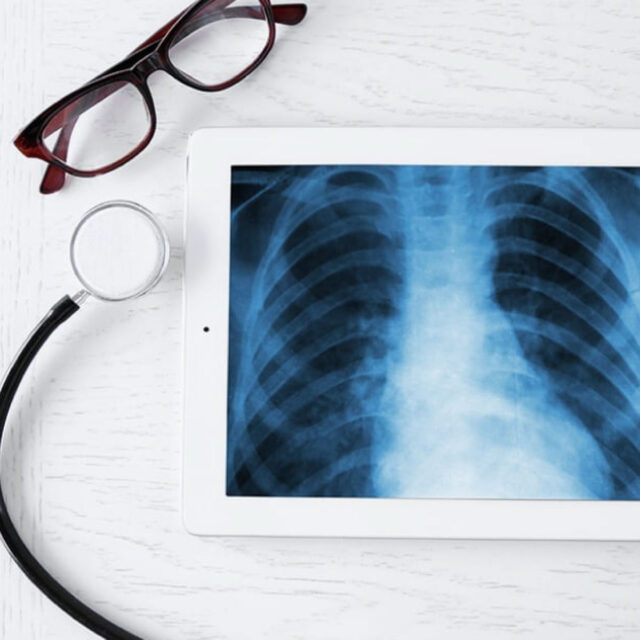
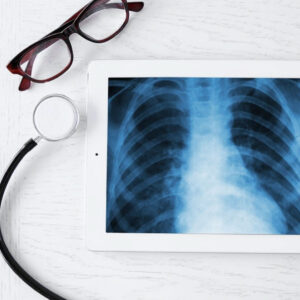


When a spot or mass is detected in the lungs or when the mediastinal lymph nodes are abnormally enlarged, in the past surgery may have been required to obtain a tissue sample for confirmation. However, today medical advances have developed procedures such as EBUS-TBNA and RP-EBUS that allow physicians to access abnormalities in the lungs and mediastinal lymph nodes without surgery.
What is EBUS?
EBUS (Endobronchial Ultrasound) is the application of high-frequency sound waves (ultrasound) in combination with bronchoscopy to help diagnose lesions in various areas more clearly and accurately without surgery.
How many types of EBUS are there?
Currently, there are 2 types of EBUS, each suitable for different types of lesions:
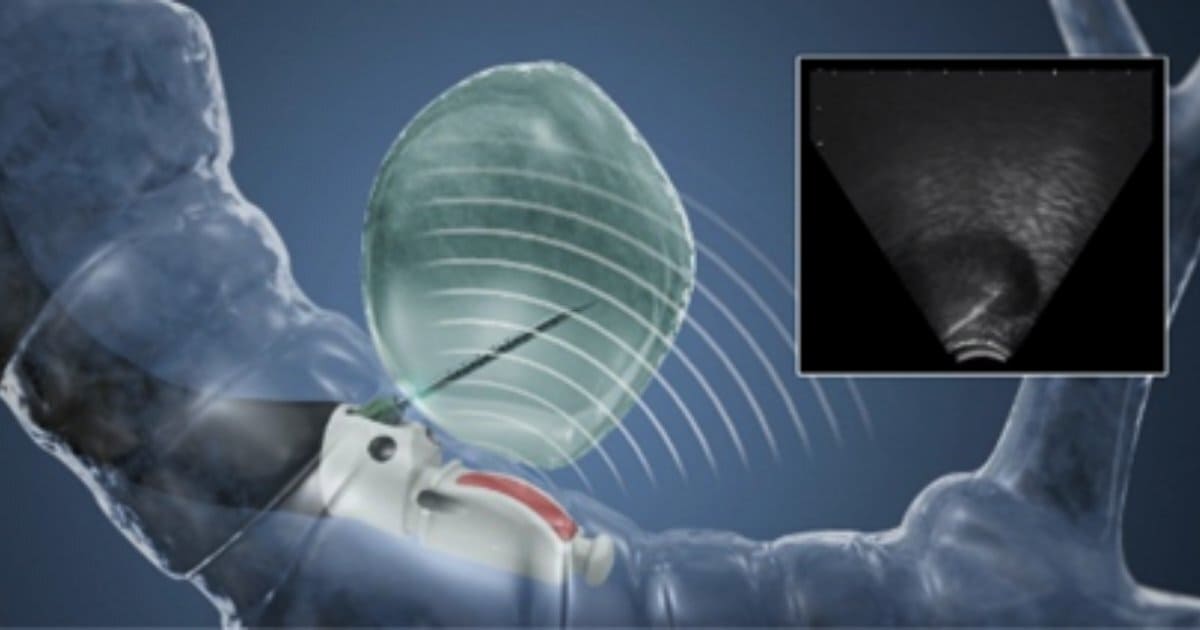
1) EBUS-TBNA (Endobronchial Ultrasound with Transbronchial Lymph Node Aspiration) uses a bronchoscope with a convex probe, suitable for lymph nodes or abnormalities in the mediastinum.
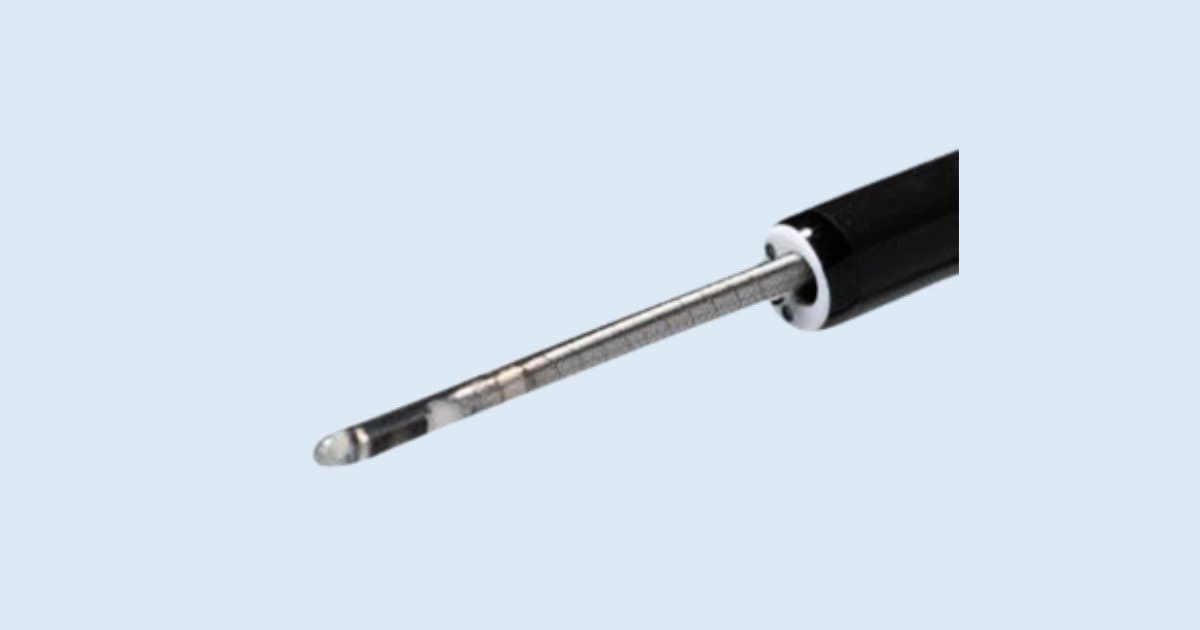
2) EBUS-GS (Endobronchial Ultrasonography with Guide Sheath) uses a 360° radial probe for spots or masses in the lungs.
What is EBUS-TBNA?
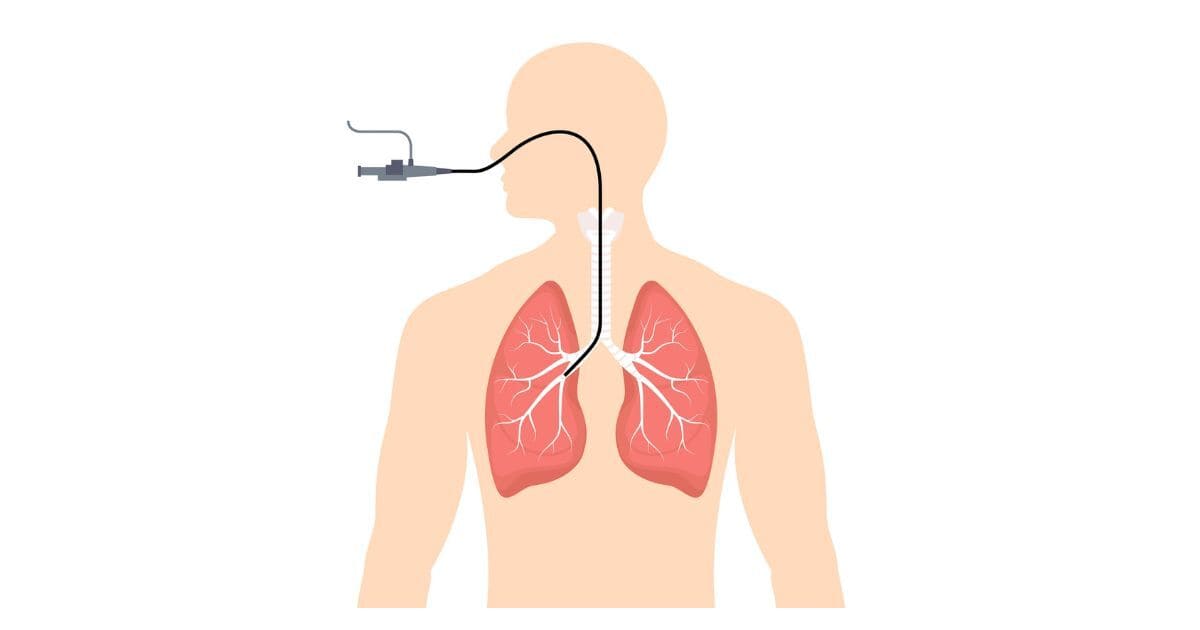
EBUS-TBNA (Endobronchial Ultrasound with Transbronchial Lymph Node Aspiration) is a procedure that uses an EBUS bronchoscope with a curved convex probe placed against the airway wall to create images. When the physician visualizes lymph nodes via real-time ultrasound, a small needle is inserted through the bronchial wall to aspirate a cell sample for examination. This allows the physician to see the target at all times and make an accurate diagnosis.
Who should undergo EBUS-TBNA
- Lung cancer (NSCLC) patients who need disease staging before treatment planning (mediastinal staging)
- Patients with enlarged lymph nodes or a mass in the mediastinum of unknown cause
- Patients suspected of having tuberculosis, sarcoidosis, or lymphoma in the mediastinum
- Those who need molecular testing for cancer mutations before selecting medication
Staging assessment for lung cancer is an important indication for EBUS-TBNA in patients newly diagnosed with lung cancer. The physician needs to know whether the cancer has spread to mediastinal lymph nodes, because this information determines the entire treatment plan—whether surgery is possible and whether chemotherapy or radiation therapy is needed before or after surgery.
What is RP-EBUS?
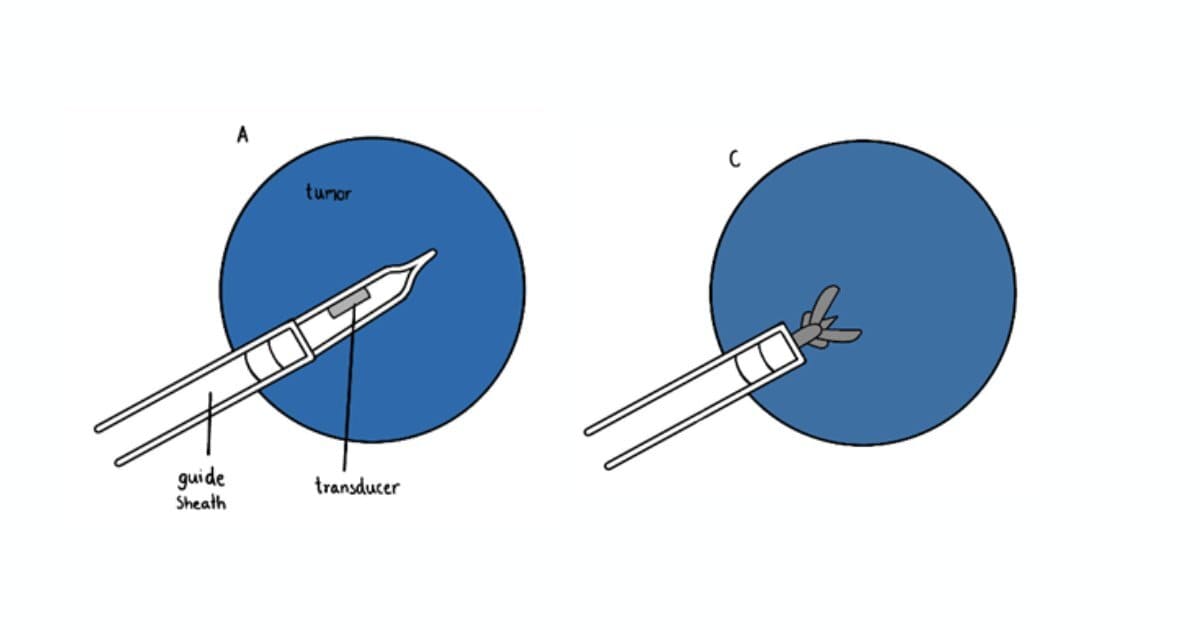
RP-EBUS (Radial Probe Endobronchial Ultrasound) is a procedure that uses a 360° rotating radial probe to locate peripheral lung lesions that are far from the main bronchi and therefore cannot be reached by standard bronchoscopy. Once located, a guide sheath holds the position at the target. The radial probe is withdrawn from the guide sheath, and the physician advances biopsy instruments through the sheath to obtain tissue samples.
Who should undergo RP-EBUS
- Those in whom a small spot or mass is found at the peripheral lung on a CT scan

Advantages of bronchoscopy with EBUS-TBNA and RP-EBUS
- No need for full general anesthesia Most EBUS procedures can be performed under local anesthesia and conscious sedation without open surgery, reducing anesthesia-related risks.
- Low complication rate EBUS-TBNA and RP-EBUS are minimally invasive procedures. Comparative studies between EBUS-TBNA and mediastinoscopy found that EBUS-TBNA has a low complication rate of about 1–2%, compared with a higher risk of complications with mediastinoscopy.
- High accuracy Meta-analyses have found that EBUS-TBNA has a high diagnostic sensitivity of 85–94% and specificity close to 100%, comparable to mediastinoscopy.
- Fast recovery Most patients can go home the same day, or at the latest within 24 hours after the procedure.
- Comprehensive information in a single examination In one session, physicians obtain information on the location, size, and characteristics of lymph nodes (from ultrasound) and cell samples for pathology, including cancer gene testing (molecular markers).

How to prepare before EBUS-TBNA and RP-EBUS
- See a physician for a physical examination, disease assessment, and evaluation of readiness for surgery
- Fast from food for at least 6 hours before the procedure
- Do not drink water for at least 2–4 hours before the procedure
- Blood tests (INR, platelet count) as scheduled by the physician
- Bring a family member, relative, or close person with you because sedatives are given after the procedure
- Avoid food and water until the throat anesthetic wears off, about 1–2 hours after the procedure
- If you have difficulty breathing, chest pain, high fever, or significant coughing up blood, see a doctor immediately
- Inform the physician of all medications you take, especially blood thinners (warfarin, aspirin, clopidogrel, NOAC), which may need to be temporarily stopped about 5–7 days before the procedure; also disclose underlying diseases, drug allergy history, and pregnancy
Risks and complications
EBUS-TBNA and RP-EBUS are procedures with low side effects, though minor complications may occur, including:
- Sore throat, hoarseness, mild cough, usually resolving on its own within 24–48 hours
- Bleeding or pneumothorax, uncommon
- Fever or infection, very rare
- If coughing produces blood-tinged sputum, avoid forceful coughing
- If you develop high fever after returning home, shortness of breath, or chest tightness, you should return to see a doctor immediately
Limitations of EBUS-TBNA and RP-EBUS
Patients with an airway mass that prevents the scope from reaching the desired location may not be able to undergo the examination—for example, lesions adjacent to the chest wall may require needle biopsy through the chest wall instead. In addition, examination performance depends on the mechanism and course of the patient’s disease and the expertise of the physician performing the procedure.
Reference:
- Bhatia M, et al. Healthcare. 2025;13(15):1924. PMC:12346525
- Jaliawala HA, et al. Diagnostics. 2021;11(12):2331. PMID:34943567
- Minami D, et al. Cureus. 2024;16(3):e55595. PMID:38576679
- Lou L, et al. Clin Exp Metastasis. 2023;40(1):45–52. PMID:36401666
- Shafiek H, et al. J Thorac Dis. 2025. PMC:12780401
- Dietrich CF, et al. Endosc Ultrasound. 2024;13(1):6–15. PMID:38947115
Hospitals ready to provide EBUS-TBNA and RP-EBUS
The Pulmonary and Respiratory Disease Center, Bangkok Hospital, is ready to take care of lung health with EBUS-TBNA and RP-EBUS to check for lung abnormalities. Specialist physicians and a multidisciplinary team provide close care to help patients return to strong health and live confidently every day.
Physicians experienced in EBUS-TBNA and RP-EBUS
Dr. Kulachat Ekpumimas, Pulmonologist and Critical Care Specialist in Respiratory Medicine, Bangkok Hospital
You can click here to make an appointment yourself.