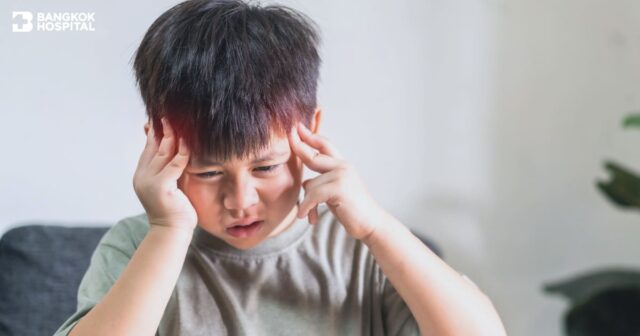
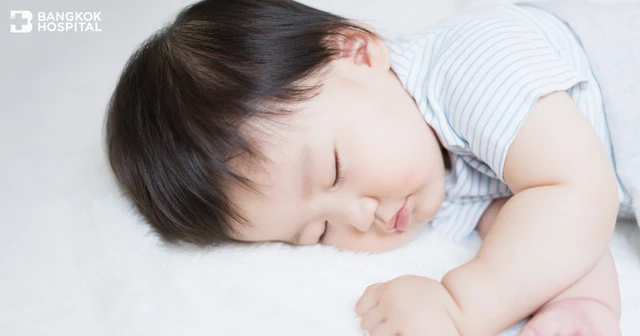

Children’s sleep problems are varied. Some conditions are temporary, some are normal according to age, but many conditions indicate serious diseases that can affect health and development. Being aware of common sleep problems in children should not be overlooked.
1. Infant Sleep Problems
Characteristics of infant sleep that new parents need to know are that in the first few months, infants mostly sleep and wake up only for short periods to feed and play. The sleep and wake cycle does not align with the parents’ lifestyle. This sleep pattern is normal for infants but will gradually improve as parents adjust the environment to match real time, that is, light during the day and dark at night, to use natural signals to set the infant’s biological clock, leading to nighttime sleep as they grow.
2. Difficulty Falling Asleep
Difficulty falling asleep is a major problem in toddlers and preschool children. They often negotiate to go to bed later to have more playtime. The solution is to set clear bedtime rules. However, for children with severe problems or who cannot sleep during the usual bedtime, it is advisable to consult a doctor for appropriate guidance.

3. Snoring
Children snore for different reasons than adults because children’s snoring often results from enlarged tonsils or adenoids in the throat narrowing the airway causing snoring, or from abnormal facial structure and dental alignment. If a child has snoring problems, a medical consultation is necessary because it may affect long-term development.
4. Sleepwalking
Parents might hear their children laugh or talk in their sleep on some nights. This does not necessarily indicate illness unless the child wakes up in the middle of the night crying loudly, appears confused, speaks incoherently, or gets out of bed and performs daily activities as if awake. These symptoms might indicate parasomnia, requiring evaluation by a specialist for appropriate treatment.

5. Restless Sleep
Restless sleep can indicate certain conditions, such as nasal congestion or blocked nose at night due to allergic rhinitis, requiring sleeping position adjustments for easier breathing, or inappropriate bedroom environment can cause the child to sleep restlessly.
6. Arms and Legs Jerking During Sleep
Arms and legs jerking during sleep can occur temporarily when the child first falls asleep, which is not considered a disorder but if it happens continuously and severely causing the child to wake up at night, a doctor’s consultation is needed to determine the cause.

7. Daytime Sleepiness
Daytime sleepiness is a very common problem today, mostly due to not getting enough sleep at night or having sleep disorders that reduce sleep quality. If a child gets enough sleep at night according to their age range yet still experiences excessive daytime sleepiness, it is advisable to undergo a sleep study to check for sleep disorders such as Obstructive Sleep Apnea (OSA) or Narcolepsy.
Excellent Hospital for Treating Children’s Sleep Problems
Bangkok Hospital Pediatric Center is ready to provide care for all children’s sleep health problems, with the expertise of a specialized pediatrician team, nursing staff, multidisciplinary team, and modern treatment technology to ensure the child sleeps quality, develops well, and grows according to their age.
Expert Physician for Treating Children’s Sleep Problems
Dr..Worasit Siripornpanich, Pediatrician specialized in Sleep Medicine, Bangkok Hospital Pediatric Center