
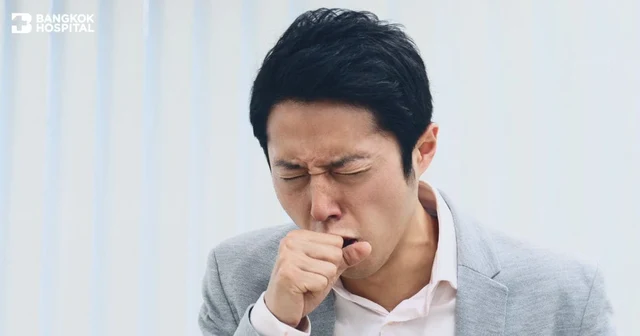

Chronic cough should not be overlooked because it may be a sign of treatable respiratory diseases, such as allergic rhinitis and asthma. These are common conditions and are increasing worldwide, with contributing factors including air pollution, environmental changes, and modern lifestyles. If a cough persists for more than 8 weeks, you should consult a doctor to identify the true cause and receive appropriate early treatment to help control the disease, reduce exacerbations, and improve quality of life.
What is chronic cough?
Chronic cough is a condition in which coughing persists for more than 8 weeks. Although it is not a disease itself, it is a sign that there may be an underlying condition and that the cause should be appropriately investigated.
Currently, chronic cough is found in about 9–10% of the global population. It affects quality of life, including sleep, work, and social interactions, and may also cause muscle pain, urinary leakage, or depression in some patients.
Warning signs with chronic cough
Although most patients with chronic cough do not have a serious disease, doctors must always screen for warning signs (Red Flag Signs) first, such as:
- Coughing up blood
- Unexplained weight loss
- Persistent fever
- Unusually severe shortness of breath
- Chest pain
- Persistent hoarseness
- Difficulty swallowing
- Recurrent pneumonia
If these symptoms are present, urgent further evaluation is required. However, many patients have no warning signs (Red Flag Signs) and have a normal chest X-ray. In such cases, diagnostic evaluation will focus on common causes, most of which are treatable (Treatable trait in Chronic Cough).
The most common diseases that cause chronic cough

Global research and clinical practice guidelines indicate that the key causes of chronic cough include:
1) Allergic rhinitis and Upper Airway Cough Syndrome (postnasal drip)
This is the most common cause in many countries. Preliminary data from chronic cough clinics in Thailand found that more than 70% of chronic cough patients also have allergic rhinitis, reflecting the relationship between upper and lower airway diseases.
Patients commonly have the following symptoms:
- Nasal congestion
- Clear nasal discharge
- Sneezing
- Itchy nose, itchy eyes
- A sensation of mucus dripping down the throat, requiring frequent throat clearing
- Worsening cough at night or upon waking

2) Asthma
Many people assume asthma must always involve shortness of breath or wheezing. In fact, some patients have only chronic cough (cough-variant asthma), commonly with:
- Cough at night
- Cough during exercise
- Cough after having a cold
- Cough when exposed to dust, smoke, or cold air
- Cough when exposed to allergens
Without treatment, it may progress to full-blown asthma.

3) Non-asthmatic eosinophilic bronchitis
Patients have chronic cough similar to asthma, but lung function remains normal and there is no shortness of breath. This group responds well to inhaled corticosteroids, similar to asthma.
Allergic rhinitis, asthma, and eosinophilic bronchitis share the same type of inflammation known as Type 2 inflammation. Therefore, it is not unusual for many patients to have multiple conditions together, such as:
- Allergic rhinitis with asthma
- Allergic rhinitis with airway hyperresponsiveness
- Allergic rhinitis with asthma and sinusitis
This concept is called United Airway Disease, meaning the entire airway is connected from the nose to the lungs, which contributes to chronic cough.

How can the cause of chronic cough be investigated?
When there are no warning signs and the chest X-ray is normal, the doctor may choose additional tests to identify the true cause of chronic cough.
1) FeNO test (Fractional Exhaled Nitric Oxide) This requires a single exhalation to measure Type 2 inflammation within the airways. If FeNO is high, especially greater than 25 ppb, it may indicate cough-variant asthma or eosinophilic airway inflammation, and it helps assess response to inhaled corticosteroid treatment. The advantages are that it is painless, quick, and provides immediate results.
2) Spirometry (lung function test) This is an important basic test to assess whether:
- There is airway narrowing
- There is asthma
- There is chronic obstructive pulmonary disease (COPD)
Some cases may require additional tests such as bronchodilator response or bronchial provocation testing to detect hidden asthma.
3) Nasal endoscopy This allows the doctor to see whether the nasal mucosa is swollen in an allergic pattern, nasal polyps, thick sinus discharge, and postnasal drip, which may be important causes of chronic cough.
4) Testing for allergens that trigger allergic rhinitis and asthma using a skin prick test or blood testing for specific IgE to inhalant allergens. Skin testing for inhalant allergens is the standard method to identify allergens that trigger symptoms of these diseases, such as dust mites, grass pollen, tree pollen, mold, dog dander, and cat dander. Blood testing for specific IgE is suitable for those who cannot undergo skin testing because they cannot stop antihistamines or have severe skin disease. This test can also identify airborne allergens similarly to skin testing.
Once the cause is known, patients can avoid allergens correctly. In some patients, allergen immunotherapy may be appropriate, which is the only treatment that helps control diseases that cause chronic cough, such as allergic rhinitis and asthma, at the root cause (disease modification).
Why is identifying the cause of chronic cough important?
In the past, patients with chronic cough often received many cough medicines but still did not improve. Today, a new concept is “Know the Cause. Treat the Trait. End the Cough.” Knowing the cause and treating it correctly is what stops the cough. Treatment therefore focuses on finding and managing the true cause of the cough, such as treating allergic rhinitis, controlling asthma, reducing airway inflammation, avoiding allergens, and treating other related comorbidities.
Early diagnosis and treatment help most patients improve significantly, reduce exacerbations, improve quality of life, and may help slow or prevent long-term disease progression (disease modification).
Reference
- WHO. Climate change, air pollution, pollen and health. 2025.
- Kanjanawasee D, Poachanukoon O, Sriprasart T, Chiewchalermsri C, et al. Chronic cough management: Practical guidelines and PICO-based evidence for screening and investigation. Asian Pac J Allergy Immunol. 2024;42:305–317.
- Kanjanawasee D, Poachanukoon O, Sriprasart T, Chiewchalermsri C, et al. Chronic cough management: Practical guidelines and PICO-based evidence for treatment. Asian Pac J Allergy Immunol. 2024;42:318–332.
- Oliveira A, Lee YJ, Chiewchalermsri C, Choi H, Song WJ. From symptom to disease: Reclassifying chronic cough through the treatable traits framework. Respir Med. 2026;254:108729.
- Global Initiative for Asthma (GINA). Global Strategy for Asthma Management and Prevention. 2026.
- Bousquet J, Schünemann HJ, Togias A, et al; Allergic Rhinitis and Its Impact on Asthma Working Group. Next-generation Allergic Rhinitis and Its Impact on Asthma (ARIA) guidelines for allergic rhinitis based on Grading of Recommendations Assessment, Development and Evaluation (GRADE) and real-world evidence. J Allergy Clin Immunol. 2020 Jan;145(1):70-80.e3.
Hospital specialized in treating chronic cough
Allergy and Asthma Center, Bangkok Hospital is ready to provide close evaluation, diagnosis, and treatment for those with chronic cough, as well as consultations and accurate education, with a team of specialist physicians and a multidisciplinary team with expertise and extensive experience to help patients achieve a good quality of life.
Doctors specialized in treating chronic cough
Dr. Chirawat Chiewchalermsri Allergy and asthma specialist, Allergy and Asthma Center, Bangkok Hospital
You can click here to make an appointment yourself.