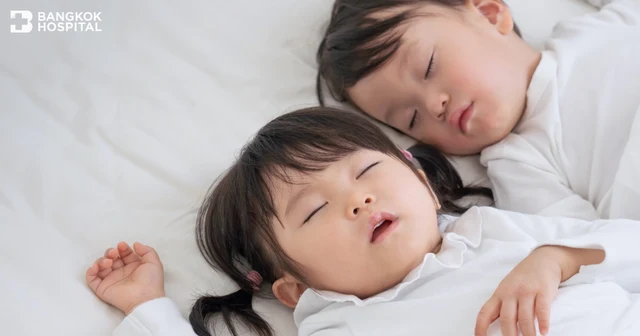

Don’t consider children’s snoring as normal because it may affect development and indicate forthcoming health issues. Snoring occurs in about 10 – 17% of young children. Children who snore three or more nights a week should be diagnosed by a specialist to see if they also have sleep apnea in order to provide timely treatment.
What is snoring in children?
Snoring in children is the sound of loud breathing during sleep due to a narrowed upper airway from the nose, pharynx, or tongue base. When children breathe through a narrow airway, the tissues vibrate and produce a snoring sound. This is common in preschool and school-aged children, and such snoring may affect development, concentration, behavior, and learning ability.
What causes snoring in children?
- Abnormally enlarged tonsils or adenoids behind the nose
- Chronic nasal inflammation due to allergies
- Being overweight
- Congenital abnormalities of facial skeleton or respiratory structures
- Neuromuscular diseases affecting breathing

What is sleep apnea in children?
Sleep apnea in children refers to a condition where breathing diminishes or stops during sleep, resulting in decreased oxygen levels in the body, increased carbon dioxide levels, or waking up disrupted. This affects sleep quality and causes health, behavioral, emotional, concentration, and learning issues.
How many types of sleep apnea are there in children?
Sleep apnea in children is divided into 2 types:
- Sleep apnea due to obstructed breathing from a narrow or blocked airway, often caused by:
- Enlarged adenoids and tonsils due to repeated infections, like frequent colds
- Obesity
- Others, such as congenital abnormalities in the airway structure or general muscle abnormalities affecting the muscles supporting the airway
- Sleep apnea caused by brain or muscle control disorders affecting breathing
What are the symptoms of sleep apnea in children?
Common symptoms of sleep apnea in children often appearing during sleep include:
- Regular snoring, but not necessarily every night
- Interrupted breathing, temporary cessation of breathing
- Open-mouth breathing, loud breathing
- Coughing or choking during sleep
- Restless tossing during sleep
- Excessive sweating during sleep
- Some may wet the bed or sleepwalk
- Some children may have behavioral and emotional issues, such as attention deficit, hyperactivity, restlessness, irritability, etc.
- Diagnosis of sleep apnea in children
- Detailed medical history
- Further examination, such as Sleep Study Polysomnography, X-ray for adenoids, Echocardiogram to assess potential complications, etc.
Treatment approaches for sleep apnea in children
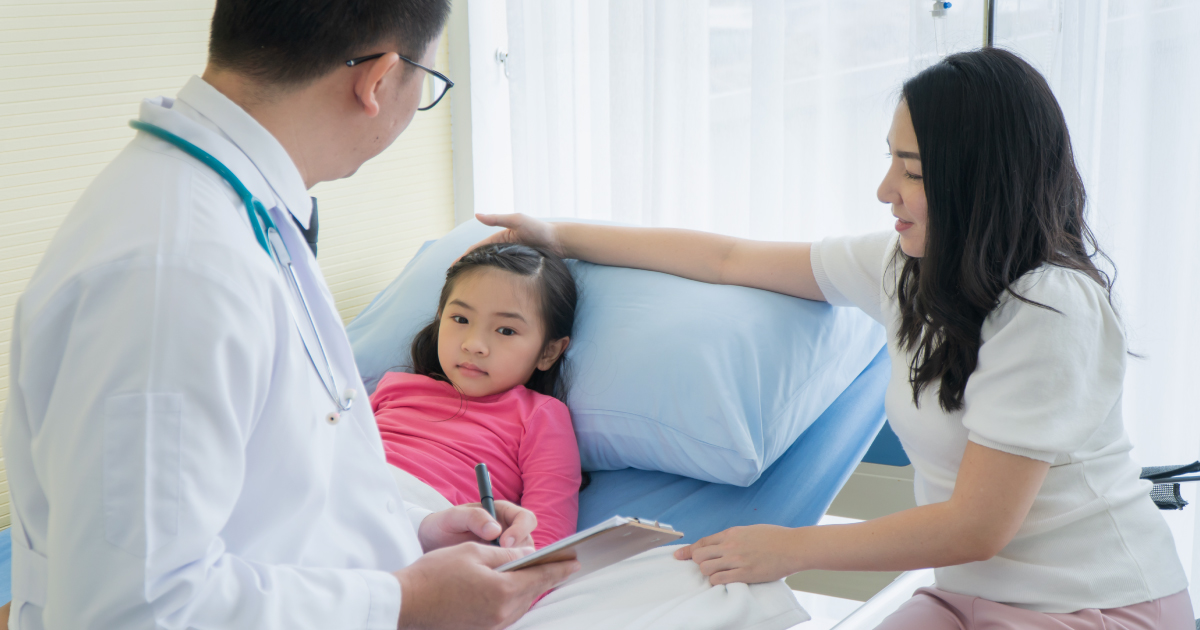
Doctors will consider a comprehensive treatment approach for sleep apnea in children, including:
- Monitoring and follow-up, possibly for those with mild symptoms, including repeated sleep assessments
- Treatment with medication
- Surgery for adenoids and tonsils if necessary
- Use of sleep support machines, such as CPAP (Continuous Positive Airway Pressure), Auto CPAP (Auto Continuous Positive Airway Pressure), BiPAP (Bilevel Positive Airway Pressure), depending on each patient’s suitability
Complications from sleep apnea in children
Children with sleep apnea may face complications such as:
- High blood pressure
- Pulmonary hypertension
- Thickening of heart muscles
- Attention deficit disorders
- Learning issues
- Difficulty with emotional control, easily irritated
- Possible development of insulin resistance, increasing diabetes risk
- Slower growth, more energy used for breathing during sleep, reduced growth hormone secretion
Will a child easily get infections if tonsils and adenoids are removed?
When tonsils and adenoids are removed, the concern is infection susceptibility. Tonsils help fight infection, but removal doesn’t increase infection risk as other body parts still defend against it. Conversely, children who have had tonsillectomy show noticeably reduced throat infections. However, treated children may still experience regrowth of adenoids; tonsils can be completely removed.
Where to find specialized hospitals for treating sleep apnea in children?
The Pediatric Center of Bangkok Hospital provides comprehensive care for children with sleep apnea by a specialized team of pediatricians, nurses, and multidisciplinary professionals using advanced treatment technology, ensuring quality sleep and proper development.
Pediatric sleep apnea specialists
Dr. Passara Liangthanasarn, Pediatrician at Bangkok Hospital
Appointments can be made here.
Sleep apnea diagnostic package for children
Snoring screening package for children