
Dialysis
One of the treatments for kidney failure is renal replacement therapy through hemodialysis to help improve kidney function, remove waste from the body, and correct blood acidity. Currently, high-efficiency dialysis methods (Online Hemodiafiltration – OL HDF) have been developed, which help remove waste even more effectively.
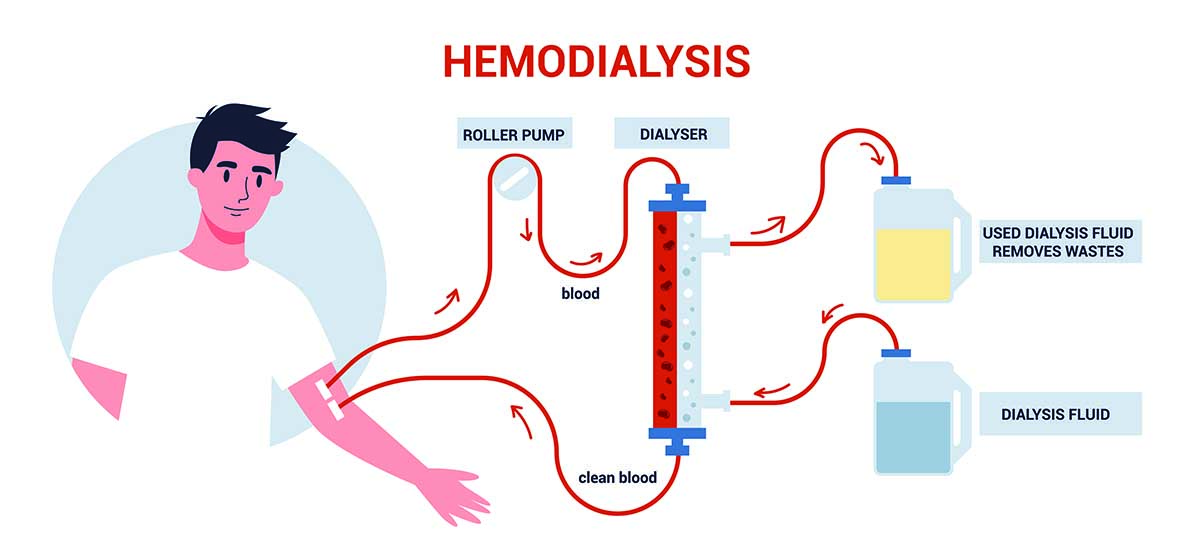
Hemodialysis
Hemodialysis is the process of taking the patient’s blood into the dialysis machine through a filter, which filters out waste and excess water from the blood before returning the cleaned blood to the body. This is done using the principle of substance exchange through the filter via diffusion, which is effective for removing small molecular waste but not very effective for medium-sized waste, leading to a gradual accumulation of waste in the body. Generally, the process takes about 4 hours and is done 2 to 3 times a week.
High-Efficiency Dialysis
High-efficiency dialysis (Online Hemodiafiltration – OL HDF) differs from traditional dialysis in that it removes waste from the blood through both diffusion and convection. The dialysis machine can produce highly purified fluid that is added to the blood and carries the waste out of the body, making it more effective in removing both medium and small-sized waste.
Benefits of High-Efficiency Dialysis (Online Hemodiafiltration)
- Reduces mortality rates compared to patients receiving standard hemodialysis, if treated with sufficiently high doses.
- Cardiovascular system functioning is more stable than in standard dialysis, and low blood pressure during dialysis decreases.
- Removes phosphates better than standard dialysis, alleviating symptoms and reducing complications from phosphate accumulation in the blood.
- Can remove large molecular wastes such as Leptin, reducing appetite loss, and Beta 2 Microglobulin, helping to decrease the incidence of Dialysis Related Amyloidosis.
- Anemia in patients improves, reducing the need for erythropoietin-stimulating drugs.
- Reduces bodily inflammatory markers and oxidative stress.
- Decreases the risk of death from coronary artery disease.
- Patients feel less fatigue from dialysis and experience reduced variability in blood pressure during dialysis; however, treatment outcomes depend on the individual.
Limitations of High-Efficiency Dialysis -(Online Hemodiafiltration)
Although high-efficiency dialysis (Online Hemodiafiltration – OL HDF) has many advantages, it also has limitations, including:
- Dialysis nurses must have experience and expertise in using high-efficiency dialysis machines.
- Since high-efficiency dialysis requires water purity greater than standard dialysis, close monitoring of the water quality used for dialysis is necessary.
- The cost per treatment is higher than traditional dialysis due to the use of newer and more complex dialysis machines.