Total Knee Replacement
“When it comes to total knee replacements, the quality and expertise of the medical team is paramount. Equally important is effective pain management before, during, and after surgery. These will result in minimal pain, a faster recovery, and less muscle trauma, reduced chance of infection, lower risk of thrombosis, and the ability to be walking again within 24 hours*”
* Results may vary from person to person
Symptoms that may indicate need for Total Knee Replacement Surgery
- Pain whilst walking, sitting, getting up, and navigating stairs (hinders daily activities)
- Knee pain while sleeping
- Chronic inflammation, pain, swelling, and warmth around the knee,
- Knee deformities, i.e. change in shape
- Difficulties moving, straightening, or bending the knee
- Treatments such as changes in behavior, medication, and injections become ineffective
***Suitability for surgery will be made on a case by case basis dependent on symptoms and severity of conditions
Where can I get a Total Knee Replacement Surgery?
Before deciding where to get a Total Knee Replacement Surgery it is important to consider several factors such as the institution’s ability to provide hands-on quality care through every step of the process. This includes pre-op services, post-op services, and follow-ups through to complete recovery.
6 Factors to consider before deciding where to receive Total Knee Replacement Surgery includes:
- Digital Template A computer program which helps to plan and personalize each surgery to the individual. This includes customizing the size and position of the prosthesis to optimally suit the patient. This technology helps to reduce risk of fracture and reduces the chance of the prostheses becoming incompatible helping to ensure durability.
- Total Knee Pathway A Total Knee Pathway helps to ensure safety standards before, during, and after surgery under the care of specialist nurses and doctors. This includes evaluating the body’s readiness for surgery, diagnosis and knee deformities, analyzing muscular and tissue conditions around the bone, optimizing the prosthesis which is most suitable to the patient, as well as medication throughout the treatment process.
- Pain Management Pain management (pre-post surgery) involves blocking pain receptors via injection in the upper thigh safely and effectively. This involves an ultrasound into the area to avoid key blood vessels and muscles. Conducted effectively, this can help to reduce surgical wound pain, reduce pain medication and other side effects which may occur.
- Reduce Risk of Thrombosis Reduce risk of thrombosis with the Intermittent Pneumatic Compression Device (IPC) combined with blood thinners to prevent blood clots. This is pivotal as during surgery a clot may move into the heart or lungs, causing cardiovascular or respiratory failure.
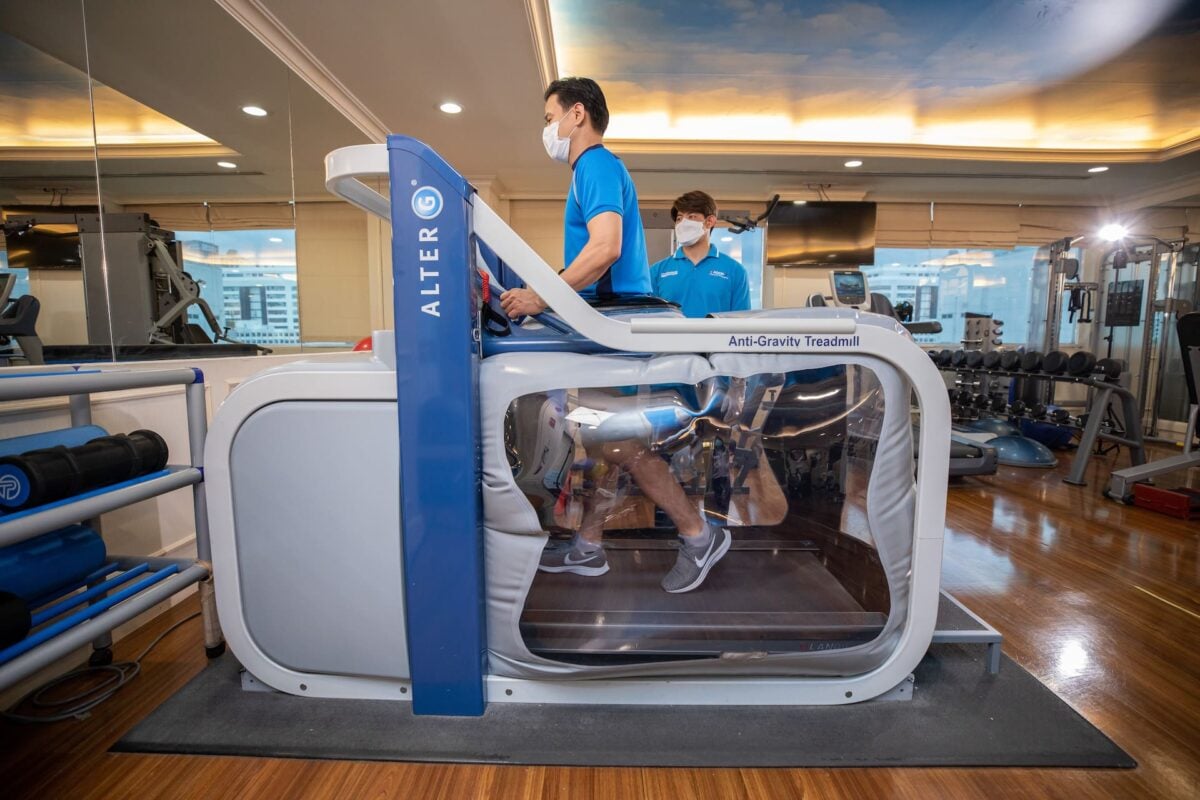
- Faster Recovery… Walk again within 24 hours Rehabilitation and recovery is facilitated by the Anti-Gravity Treadmill or Alter G which helps to restore muscle function post-surgery. The Alter G provides an environment which helps to reduce pain by reducing weight (pressure) on the knee during exercise. The Continuous Passive Motion is a machine that allows the patient to bend the knee up to a 90 degree angle, effectively reducing the chances of scar tissue.
“Although the chances of complications from injection during surgery are less than 1% it is recommended to use the Laminar Air Flow system during surgery to ensure free ventilation and prevent dust”.
Total Replacement for a Better life…
Over 90% of patients who receive Total Knee Replacement:
- Less pain
- Are able to return to daily activities