



Bangkok Hospital
Caret Right
Search
CTA Curve
Find doctors icon
Find doctors
Appointments icon
Appointments
Contact icon
Contact
Call undefined
Menu
  • Select Hospital

  • Language

Doctor not found
Doctor not found
Doctor not found
Doctor not found
Bangkok Hospital
Stay Connected
View on Google Maps
    Privacy Policy

    |

    Cookie Policy

    Copyright © 2026 Bangkok Hospital. All right reserved


    Network Hospitals Directory
    MEMBER OFBDMS logo

    Ambulatory monitoring or Holter monitor

    2 minute(s) read
    Doctor
    Package Image
    Dr. Thachyossaphat Ukkayagorn

    Bangkok Hospital Headquarter

    Package Image
    Dr. Sharmila Sehli

    Bangkok Heart Hospital

    Package Image
    Dr. Panya Leechasan

    Bangkok Heart Hospital

    See All
    Dr. Thachyossaphat Ukkayagorn
    Dr. Thachyossaphat Ukkayagorn
    Bangkok Hospital Headquarter
    Recommended Packages
    Package Image
    Superior Heart Screening EST
    Ambulatory monitoring or Holter monitor
    Table of contents
    • Type of Ambulatory Electrocardiogram
    • What is a Holter Monitor?
    • Why do people wear Holter Monitor?
    • What do we use Holter Monitor for?
    • What are the risks of Holter Monitors?
    • How is Holtor Monitor done?

    Type of Ambulatory Electrocardiogram

    • Holter monitor. It is a wired type
    • Event recording. It has both wired and wireless type.

    The Holter monitor and other devices record your ECG as you go about your daily activities.
    What is a Holter Monitor?

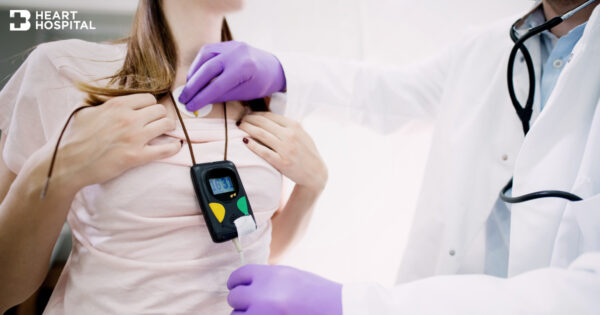
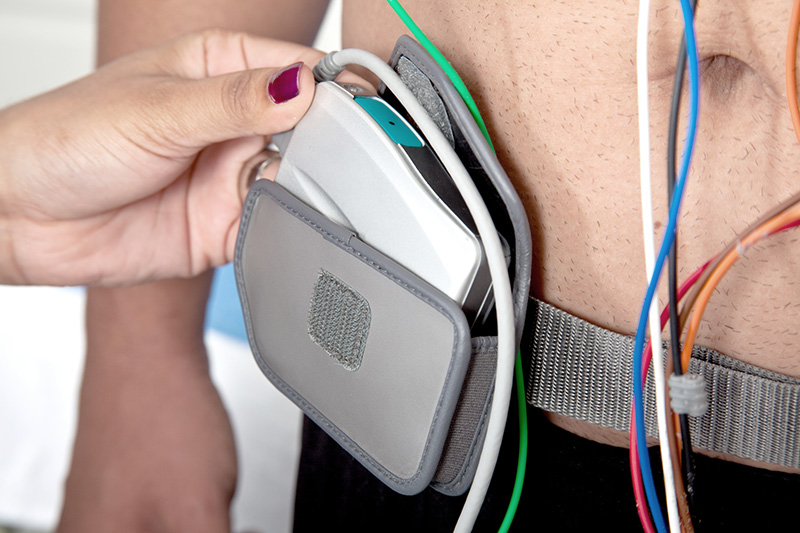
    A Holter monitor is a battery-operated portable device that measures and tape records your heart’s activity (ECG) continuously for 24 to 48 hours. The device is the size of a small camera or mobile phone. It has wires with silver dollar-sized electrodes that attach to your skin. This monitor has no risks and wearing it is not painful.
    Why do people wear Holter Monitor?

    • Regular electrocardiograms (ECGs or EKGs) show the heart beat activity at the time during your ECG test (about 12 seconds). But abnormal heart rhythms and cardiac symptoms may come and go. Holter monitor will cover up to 24-48 hours.

    คลื่นไฟฟ้าหัวใจแบบพกติดตัว, AMBULATORY MONITORING, HOLTER MONITOR

    What do we use Holter Monitor for?

    • To determine how the heart beat responds to normal activity  
    • To evaluate symptom of abnormal heart beat such as palpitation, skipping or racing heartbeat.
    • To evaluate symptom of dizziness or faintness whether they are caused by arrhythmia
    • To see how well your medicines are working to treat these problems.
    • To find out if your pacemaker is working properly.

    What are the risks of Holter Monitors?

    Wearing a Holter monitor causes no pain. There is an uncommon small discomfort of mild skin irritation from the electrode. Tell the technician if you are allergic to any tapes or adhesives

    How is Holtor Monitor done?

    • The technician first attaches the electrodes to your chest. If you have a hairy chest, the technician will ask for the permission to shave some hair off to attach the electrodes firmly.
    • Once the electrodes are in place, the technician will attach the Holter monitor and explains how to take care of it.
    • You can carry the monitor in a pocket or pouch, slung across your shoulders and neck like a purse or camera, or attach it to your waist.
    • Do your usual activities while you wear the monitor with these exceptions:
      • Don’t bathe, shower or swim while wearing the monitor.
      • Don’t have X-rays while wearing the monitor.
      • Stay away from high-voltage areas, metal detectors or large magnets.
    • The technician will give you a small note book and show you how to keep a diary of your activities and symptoms during the test. It is important to keep an accurate diary. If you feel symptoms such as chest pain, shortness of breath, uneven heartbeats or dizziness, note in your diary the time of day they began and what were you doing. Your diary will be compared to the changes in your ECG recorded by the Holter monitor.

    For more information, please contact

    Non-Invasive Cardiology Laboratory

    2nd Floor, R-Building, Bangkok Hospital.

    Service Hours: Monday - Sunday 07.00 a.m. – 04.00 p.m.

    (+66) 2310 3370

    (+66) 2755 1371

    [email protected]

    @hearthospital

    Related Doctors

    See all doctors

    Packages & Promotions

    Superior Heart Screening ESTSuperior Heart Screening EST
    Superior Heart Screening EST

    9,900 Baht

    15,775 Baht

    Detail
    Superior Heart Screening EchoSuperior Heart Screening Echo
    Superior Heart Screening Echo

    9,900 Baht

    16,045 Baht

    Detail
    CT Coronary Calcium Score PackageCT Coronary Calcium Score Package
    CT Coronary Calcium Score Package

    5,200 Baht

    7,400 Baht

    Detail
    More packages

    Medical Services

    More services

    Medical Services

    Echocardiogram Image
    Echocardiogram
    Cardiovascular MRI Image
    Cardiovascular MRI
    Electrocardiogram (EKG) Image
    Electrocardiogram (EKG)
    More services