

No more worries about Heart after double valve surgery - Valve Replacement
My life is well saved after CABG - Off Pump Surgery
Discover how off-pump coronary artery bypass graft (CABG) surgery saved Mr. Win Aung's life under the expert care of Dr. Vitoon Pitiguagool.
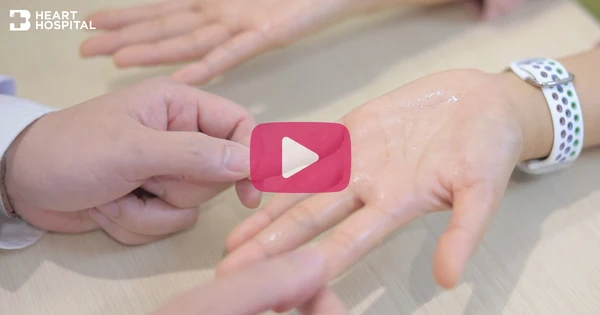
Sweaty Palms? Sweat No More!
Occasional sweaty palms are normal and can happen. But if it becomes excessive that it impacts your quality of life, then you need to see a specialist as soon as possible for a remedy.

Heart valve regurgitation can be treated with minimally invasive heart valve surgery.
Experience sharing from Mr. Mongkol Sae-Sue, the patient who had heart valve regurgitation diagnosed during annual health check-up when arrhythmia was presented. He underwent minimally invasive heart valve surgery in which a surgery was performed through a small incision, sized 4 cm without cutting through the breastbone. It results in less blood loss, faster recovery and shorter hospital stay.
Translated by AI
Experience of Treating a Pregnant Mother with Rheumatic Heart Disease
Follow the life of Ms. Saranita, a mother from Nauru who is determined to keep her little child with her while working alongside a team of doctors from 3 different specialties.
Experience sharing after undergoing aortic aneurysm surgery. Surgery without blood transfusion.
Aortic aneurysm can be successfully surgically treated despite the presence of limitations and no blood transfusion. Surgery was conducted by expert cardiothoracic surgeons supported by cutting-edge technology, creating a real miracle.
Translated by AI
Treating Lung and Chest Diseases: VATS Technique, Minimally Invasive Surgery, Rapid Recovery
Treatment Pathways for Lung and Chest Diseases with VATS Technique, Minimally Invasive Surgery, Quick Recovery, Helping You and Your Spouse Return to Normal Life

Translated by AI
Project for the Treatment of Patients with Congenital Heart Defects
Discover how patients with congenital heart defects, specifically leaking atrial septal defects, receive free non-surgical catheter treatments.
Experience sharing after receiving the treatment for aortic aneurysm
Experience shared by Mr. Sirichai Chunsangiam, a 76-year-old patient who underwent EVAR (Endovascular Aneurysm Repair) to treat aortic aneurysm. As a minimally-invasive endovascular surgery, it results in smaller incision, less pain and lower chance of infections. This allows Mr. Sirichai to resume his daily life and spend time with his beloved ones quickly.
Translated by AI
Experience from Patients Undergoing Minimally Invasive Lung Surgery Video-Assisted Thoracic Surgery (VATS)
Experience from patients undergoing minimally invasive lung surgery, Video-Assisted Thoracic Surgery (VATS)

VATS (Video-Assisted Thoracic Surgery) Patient Testimonials
Video-assisted thoracic surgery (VATS) is minimally invasive thoracic surgery. During a video-assisted thoracic surgery procedure, a tiny camera and surgical instruments are inserted into your chest through a small incision in your chest wall.

Life with atrial fibrillation catheter ablation
I was diagnosed with atrial fibrillation, heart decompensation and a valve that did not close properly. After four months of medication and two cardioversions, I slowly recovered, and went on with my life as good as possible.