



Coronary artery disease is a major health problem, and it seems that the number of patients with coronary artery disease is increasing every day. This is because today we have advances in the treatment of various diseases and more preventive vaccines, enabling people to live longer. Conversely, this gives the body more opportunity to accumulate degenerative and chronic inflammatory conditions such as coronary artery disease, until symptoms appear and become more severe.
In addition, this disease cannot be completely cured. Medications help slow degeneration and reduce the chance of acute myocardial ischemia, but severe stenotic lesions require revascularization, whether by balloon angioplasty and stenting (Percutaneous Coronary Intervention: PCI) or coronary artery bypass surgery (Coronary Artery Bypass Grafting: CABG). Restenosis of the placed stent (In–Stent Restenosis: ISR) or failure of the bypass graft (Graft Failure) can still occur.
How is coronary artery stenosis treated?
Treatment for coronary artery stenosis includes taking medications and lifestyle modification such as exercising, quitting smoking, controlling blood pressure, diabetes, and lipid levels—these are basic practices everyone should follow. Besides helping slow degeneration of the coronary arteries, they also affect other arteries throughout the body such as those in the brain, kidneys, legs, etc.
How is severe coronary artery stenosis treated?
When severe coronary artery stenosis is detected (e.g., stenosis greater than 80%) in a major, important vessel along with evidence or symptoms of ischemia, this is considered an indication for revascularization (Revascularization) whether via catheter-based intervention or surgery.
How many methods of revascularization are there?
Both 2 methods of revascularization have different advantages and disadvantages, as follows:
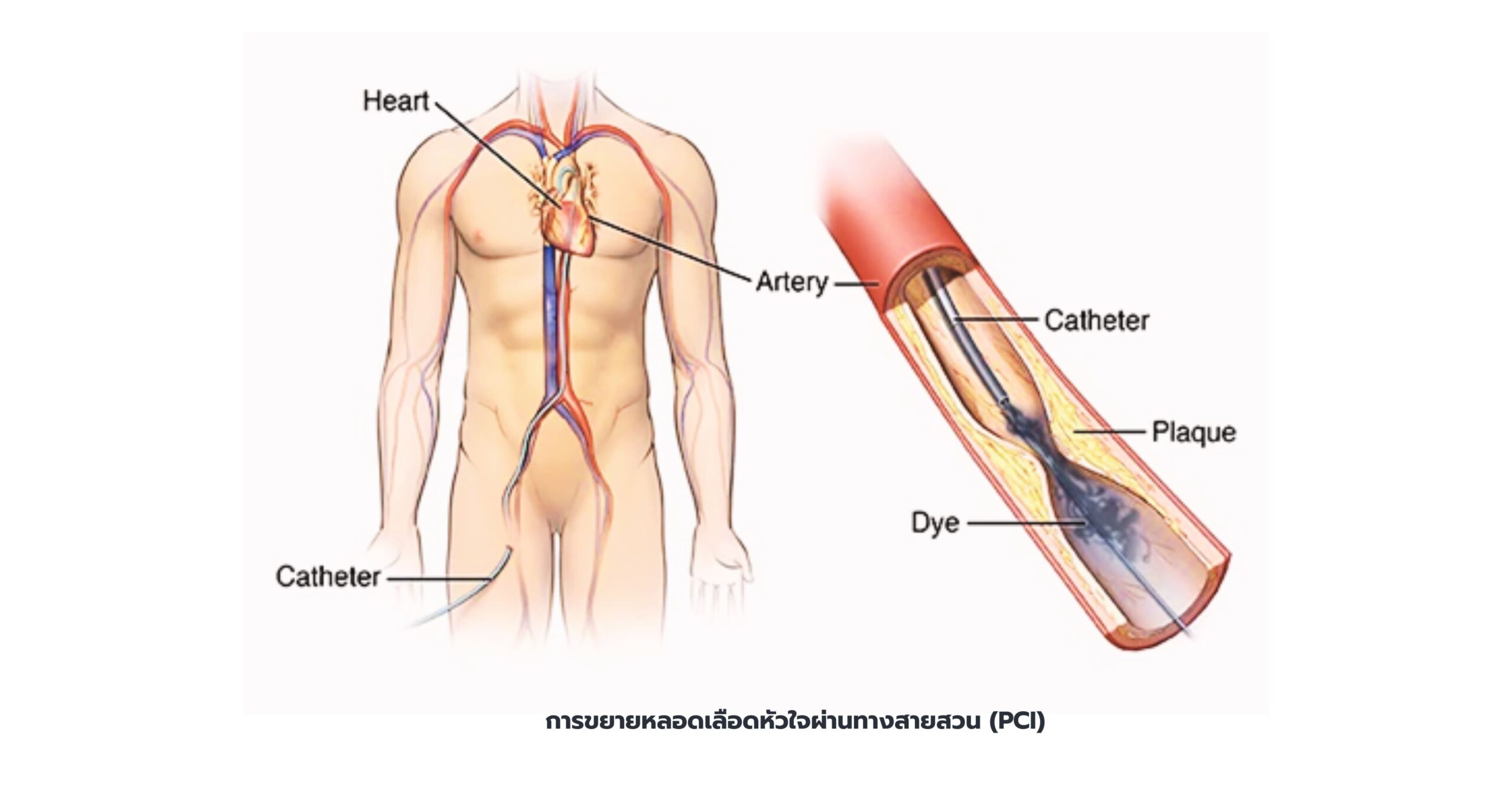
- Catheter-based coronary angioplasty (PCI) is less painful, with a small wound and a short hospital stay. However, in complex lesions and/or multivessel stenosis (Complex Coronary Artery Disease/Multivessel Disease) it may be unsuccessful, may not be able to address all lesions in a single session, and has a higher-than-usual risk of complications.
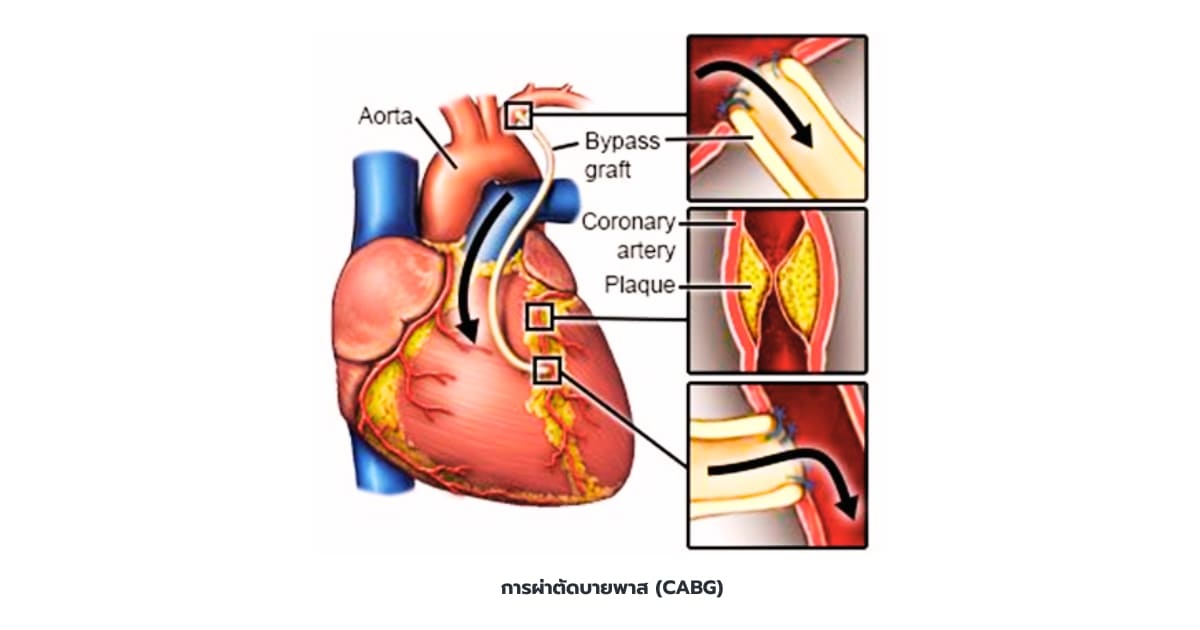
- Bypass surgery (CABG) although it is more painful, requires a longer hospital stay, and takes longer to recover, it can address all lesions, including correcting heart valve abnormalities (if necessary) in a single operation. It provides greater benefit in patients with diabetes or weakened heart function.
- What is catheter-based treatment for coronary artery stenosis (PCI) ?
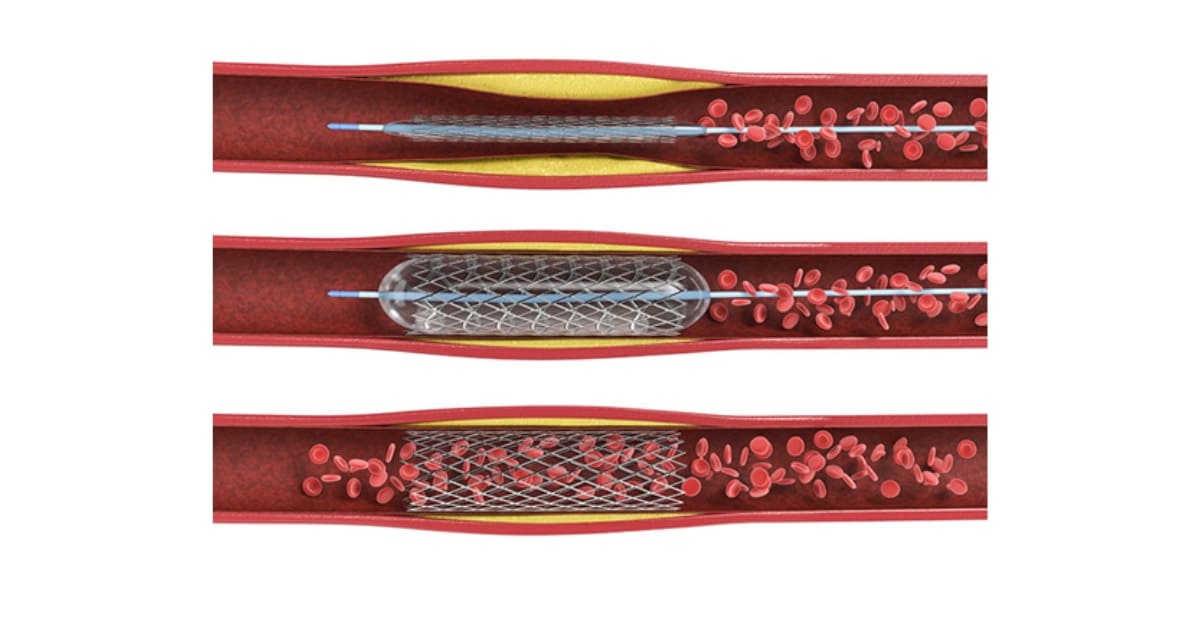
Catheter-based treatment for coronary artery stenosis (PCI) is a treatment for coronary artery stenosis without surgery. The process involves puncturing a blood vessel at the wrist or in the groin area, inserting a catheter through the artery from that site up to the arteries arising from the heart, then injecting contrast medium with X-Ray imaging to assess abnormalities of both the left and right coronary arteries. When an abnormal site is found, it is treated by advancing a guidewire and a balloon catheter into the narrowed segment and dilating the vessel. After adequate dilation, a supporting stent (Stent) is inserted as a scaffold to prevent the vessel wall from collapsing. This process is considered the standard procedure for catheter-based coronary treatment.
What are the limitations of catheter-based treatment for coronary artery stenosis (PCI) ?
A major obstacle that makes catheter-based coronary angioplasty (PCI) unsuccessful or high-risk is the presence of complex coronary artery lesions (Complex Coronary Artery Lesion) including:
- Stenosis of the left main coronary artery (Left Main Disease)
- Chronic total occlusion of a coronary artery (Chronic Total Occlusion: CTO)
- Bifurcation stenosis (Bifurcation)
- Stenosis with heavy calcification (Heavy Calcification)
- In-stent restenosis (In – Stent Restenosis: ISR) or bypass graft stenosis
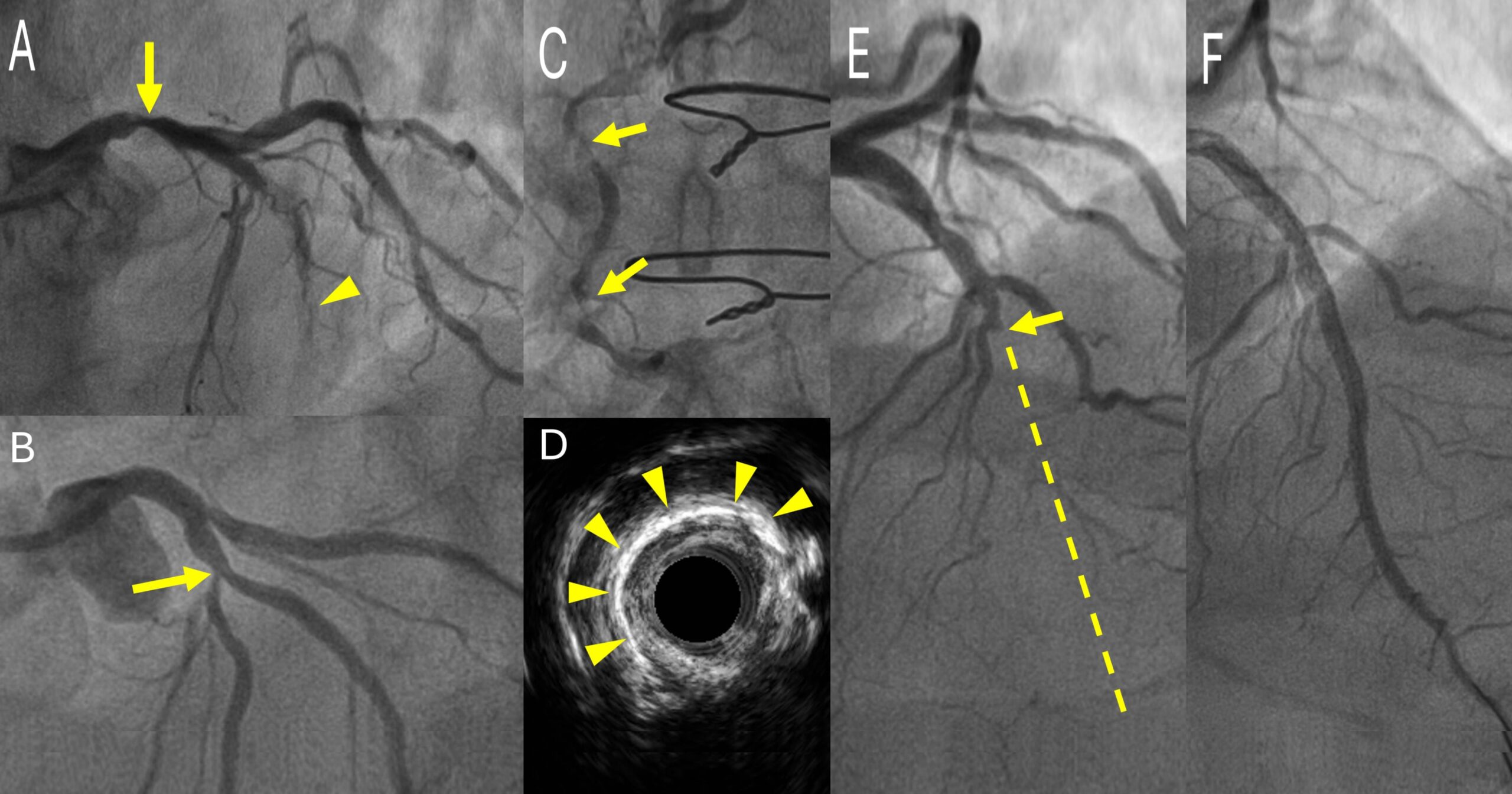
- Stenosis in the left main artery (Left Main) (arrow) and stent occlusion (arrowhead)
- Bifurcation lesion (Bifurcation Lesion)
- Calcified lesion (Calcified Lesion)
- Intravascular Ultrasound image showing the location and amount of calcification within the vessel (arrowhead)
- Chronic total occlusion (Chronic Total Occlusion) The arrow indicates the occluded point; the dashed line indicates the expected course of the vessel
- Occlusive lesion in image E after successful recanalization
In the past, such patients were referred for bypass surgery (CABG) or a second bypass operation (Redo – CABG) because technological and equipment limitations in angioplasty made catheter-based dilation in complex lesions (Complex PCI) difficult and risky.
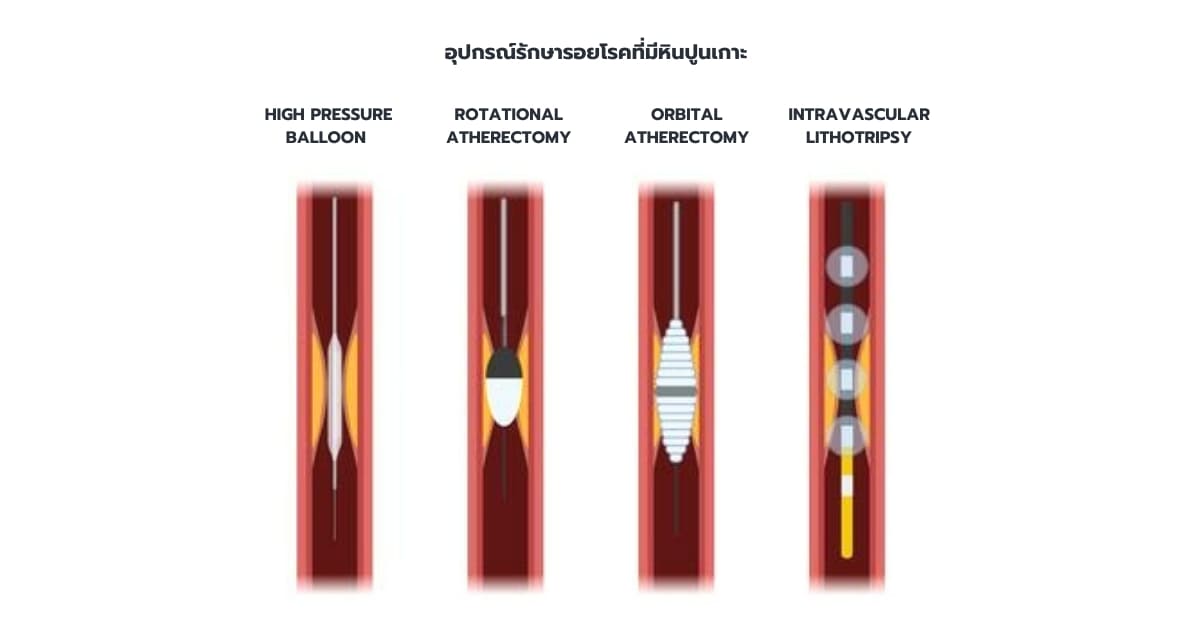
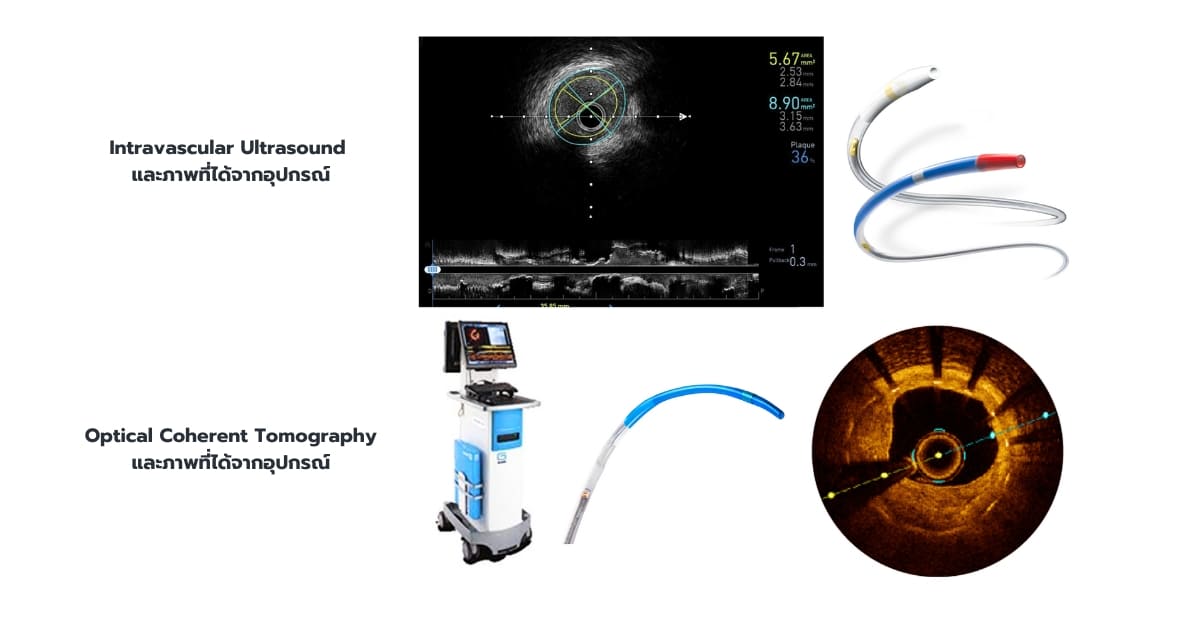
Today, new devices and technologies have been developed to increase treatment success and reduce the risks of angioplasty, including smaller catheter sizes; coronary guidewires (Coronary Guide Wire) with both stiffness and flexibility; guide extension catheters (Guide Extension) ; small balloons with the ability to pass through tortuous segments; distal embolic protection devices (Distal Protection Device) ; devices for calcified lesions such as cutting/scoring balloons (Cutting / Scoring Balloon) , intravascular lithotripsy balloons (Intravascular lithotripsy: IVL) , rotational atherectomy (Rotational Atherectomy and Orbital Atherectomy) , and new-generation drug-coated stents or balloons that help reduce the duration of antiplatelet therapy. This also includes assessing size, location, device type, and optimizing the angioplasty result (Optimization) using intravascular imaging (Intravascular Imaging: IVL) whether with sound waves (Intravascular Ultrasound: IVUS) or light (Optical Coherence Tomography: OCT) . Using these new devices and technologies together increases the success of catheter-based treatment for coronary artery stenosis (PCI) , reduces complications, and helps patients regain a good quality of life.
Hospital specialized in treating coronary artery stenosis
Bangkok Heart Hospital has a team of cardiology specialists with expertise in comprehensive treatment of coronary artery stenosis. With the team’s expertise and experience, together with advanced medical technology, we are ready to care for every heart-related problem with close attention—so you can have a strong heart again.
Physician specialized in treating coronary artery stenosis
Dr. Vira Luvira Cardiologist, specialist in catheter-based treatment of coronary artery stenosis, Bangkok Heart Hospital
You can click here to make an appointment yourself.