

Bangkok Hospital
Caret Right
Search
CTA Curve
Find doctors icon
Find doctors
Appointments icon
Appointments
Contact icon
Contact
Call undefined
Menu
  • Select Hospital

  • Language

Doctor not found
Doctor not found
Doctor not found
Doctor not found
Bangkok Hospital
Stay Connected
View on Google Maps
    Privacy Policy

    |

    Cookie Policy

    Copyright © 2026 Bangkok Hospital. All right reserved


    Network Hospitals Directory
    MEMBER OFBDMS logo

    Colorectal Cancer

    4 minute(s) read
    Information by
    Bangkok Cancer Hospital
    Updated on: 26 Jan 2026
    Recommended Packages
    Package Image
    Cancer Screening Packages
    Colorectal Cancer
    Bangkok Cancer Hospital
    Updated on: 26 Jan 2026
    Table of contents
    • Overview
    • Stages
    • Symptoms
    • Diagnosis
    • Surgery
    • Author

    Overview

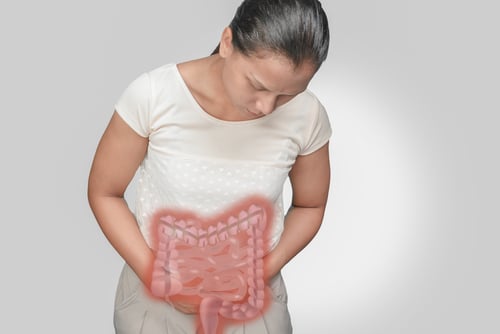
    The colon is responsible for converting waste into feces to be expelled from the body. Food will travel to the colon in process that takes approximately 3-8 hours after consumption. During this time nutrients will be assimilated into the body, what is left is waste.

    Colon cancer is the 3rd most common cancer found in both men and women. In the west approximately 105,000 cases are diagnosed every year, specifically in the United States. The chances of colon cancer increases in individuals aged over 50. Most cases of colon cancer begin as small, noncancerous (benign) clumps of cells called adenomatous polyps. Over time some of these polyps become colon cancers. In Thailand, this cancer is becoming more prevalent in both men and women.

    Groups with high risk factors are individuals with a family history of colon cancer, polyps in the colon area, congenital conditions, inflammatory bowel disease, and Crohn’s disease. People with these factors should seek medical diagnosis to detect cancer early on.

    Individuals with a family history of this condition such as father, mother, and siblings are at 2/3 higher risk than the average person. However, it is found that 80% of patients diagnosed with colorectal cancer did not show signs of risk factors.

    Research indicates that lifestyle habits can be a major contributor to colon cancer. These may include a high diet of fatty and red meats with little to no fruit and vegetables. Other factors include high energy foods, lack of exercise, and obesity. Smoking and alcohol consumption can also contribute to colon cancer.
    Stages

    • Stage 0 (pre-cancer) – Cancer is found on outer wall of colon
    • Stage I – Cancer is found in the 2nd and 3rd layer of the colon wall. However, it is not found in the outer wall. This stage is also referred to as Duke’s A.
    • Stage II- Cancer has spread to the colon wall but not to the lymph nodes. This staged is also referred to as Duke’s B
    • Stage III – Cancer has spread to colon wall and lymph nodes but has not spread to other organs. This stage is also called Duke’s C.
    • Stage IV – Cancer has spread to other organs such as liver and lungs. This stage is also called Duke’s D.

    Symptoms

    May include bleeding through the rectum, blood in feces, changes in feces (shape and size), and stomach pain. However, these symptoms may not be obvious at early stages.

    Symptoms of colon cancer include: feces accompanied by blood, constipation without cause, chances in feces size and shape, pain when flexing to poo, persistent abdominal discomfort, weakness or fatigue, and unexplained weight loss.

    Diagnosis

    Patients will receive diagnosis to determine stage and spread of cancer. This can be done with lower endoscopy, double contrast barium enema, blood tests to determine level of carcinoembryonic antigen (CEA), chest x-ray, CT scan of abdomen. To determine spread of cancer CT scans, MRI, and EUS may be used.

    Surgery

    Surgical treatment will be in accordance to location of cancer

    • Rt. Extended Hemicolectomy
    • Transverse colon, Transverse colectomy
    • Lt. Hemicolectomy
    • Sigmoidectomy
    • Sigmoidectomy with Hartman’s pouch

    In cases where the cancer is located in an area with large bone, it may provide difficulties for the surgeon to gain access; in this case an AP resection may be required.

    For patients with a tumor that is too large to be surgically removed, radiotherapy and chemotherapy will be used initially in a process referred to as ‘down staging’ to reduce the tumor size before surgical treatment can begin.

    • Patients in stage 0 and 1 will only require surgery
    • Patients in stages 2 and 3 are at risk of recurrence as such radiotherapy and chemotherapy will be utilized before and after the surgery

    Although most patients will be able to successfully remove the entire tumor the recurrence rate is at 50-60%.

    Chemotherapy to Reduce Chance of Recurrence

    Patients in the second stage who experience intestinal obstruction or radically abnormal cancer cells (from biopsy) are at risk of recurrence and will be treated with fluorouracil (5-FU) and leucovorin (LV). Both of which are medication that is administered over a period of 6 months. Patients in the second stage will be closely monitored and may not necessarily require chemotherapy. Patients in the 3rd stage will receive fluorouracil and leucovorin for 6 months. This method provides a higher survival rate compared to if surgery was the only method used.

    Patients in the 4th stage will be treated by surgical removal of tumor, as well as radiotherapy and/or chemotherapy.

    During surgery, some patients may require management to prevent the cancer spreading to nearby organs such as the liver or ovaries. To prevent spread of cancer the following medication is effective: fluorouracil, leucovorin, irinotecan (CPT-11 or Camptosar), or oxaliplatin (Eloxitin). Adding irinotecan and oxaliplatin to fluorouracil and leucovorin can help to improve effectiveness of treatment.

    Author

    Dr. Wutthi Sumetchotimaytha
    Surgical Oncologist

    Related Doctors

    See all doctors

    Packages & Promotions

    Cancer Screening PackagesCancer Screening Packages
    Cancer Screening Packages

    6,500 - 82,800 Baht

    Detail
    More packages

    Cancer Type

    See All

    Cancer Type

    Nasopharyngeal Carcinoma Image
    Nasopharyngeal Carcinoma
    Stomach and Esophagus Cancer Image
    Stomach and Esophagus Cancer
    Bone marrow  transplant Stem cell transplant Image
    Bone marrow transplant Stem cell transplant
    See All