
Bangkok Hospital
Caret Right
Search
CTA Curve
Find doctors icon
Find doctors
Appointments icon
Appointments
Contact icon
Contact
Call undefined
Menu
  • Select Hospital

  • Language & Currency

Doctor not found
Doctor not found
Doctor not found
Doctor not found
Bangkok Hospital
Stay Connected
View on Google Maps
    Privacy Policy

    |

    Cookie Policy

    Copyright © 2026 Bangkok Hospital. All right reserved


    Network Hospitals Directory
    MEMBER OFBDMS logo
    CHAT

    Breast Cancer

    7 minute(s) read
    Information by
    Bangkok Cancer Hospital
    Updated on: 09 Oct 2026
    Recommended Packages
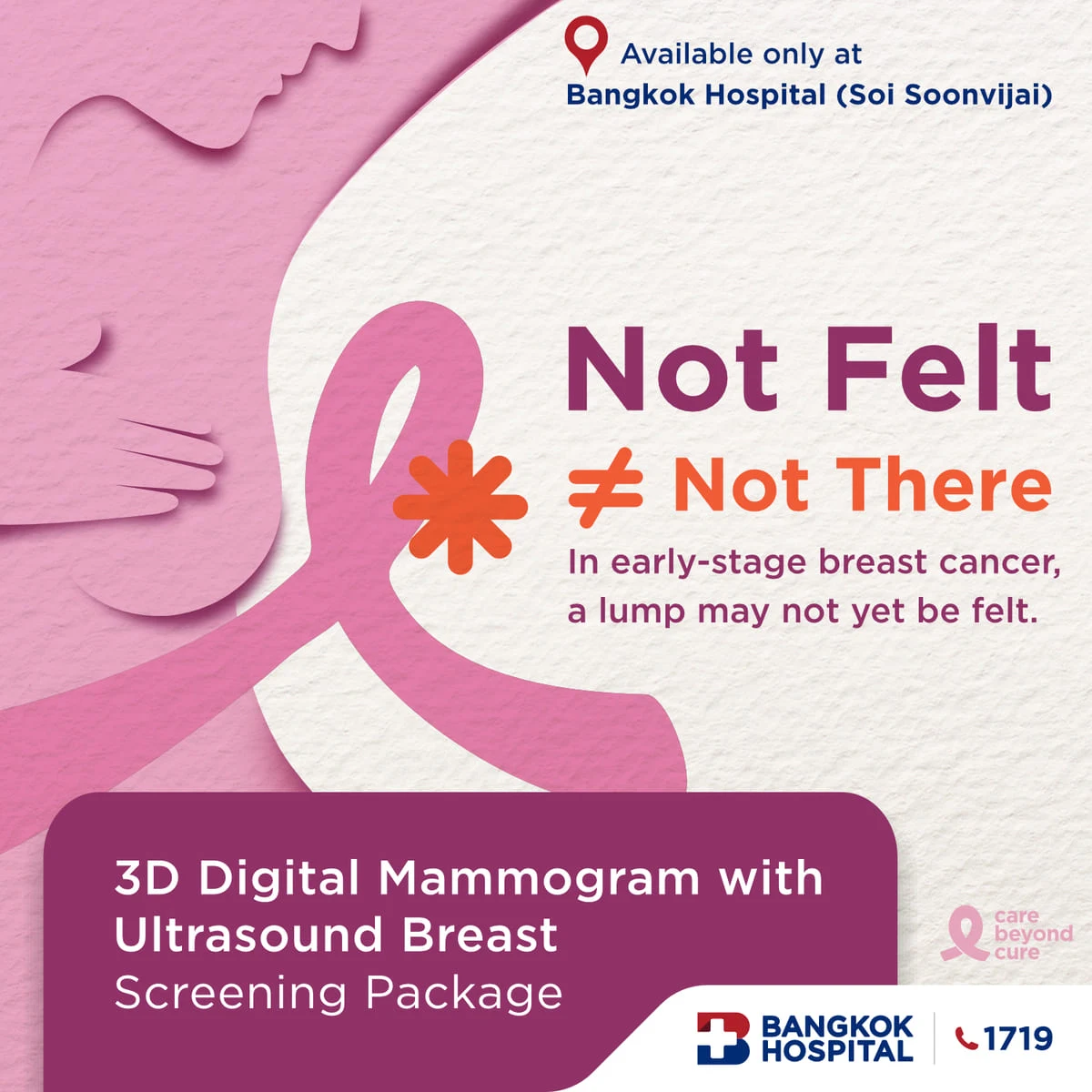
    3D Digital Mammogram with Ultrasound Breast Screening
    3D Digital Mammogram with Ultrasound Breast Screening
    Breast Cancer
    Bangkok Cancer Hospital
    Updated on: 09 Oct 2026
    Table of contents
    • What Is Breast Cancer? Risk Factors and Treatments
    • Causes and Types of Breast Cancer Cells
    • Breast Cancer Risk Factors Women Should Not Overlook
    • Stages of Breast Cancer
    • Warning Signs and Breast Cancer Symptoms at Each Stage
    • Potential Complications from Breast Cancer
    • Medical Diagnosis Methods for Breast Cancer
    • Current Breast Cancer Treatment Guidelines
    • Guidelines to Prevent and Reduce Breast Cancer Risk in Women
    • Why Consult and Treat Breast Cancer at Wattanosoth Cancer Hospital
    • Doctors Specializing in Breast Cancer Treatment
    • For More Information Breast Center, Wattanosoth Cancer Hospital
    • Frequently Asked Questions
  • See All

  • What Is Breast Cancer? Risk Factors and Treatments

    Breast cancer is a silent threat and the number one frequent cancer among Thai women. Statistics from the National Cancer Institute show that women account for up to 37 percent of all breast cancer cases, with the second highest mortality rate after lung cancer. Early detection while the tumor is localized in the breast and has not spread to the lymph nodes is crucial. This increases the chances of recovery compared to detecting it in an invasive stage. Understanding the risks and breast cancer treatment options is vital for all women.

    What Is Breast Cancer?

    Breast cancer occurs when cells within the breast become abnormal and grow uncontrollably. The breast consists of fat, connective tissue, and mammary glands with milk ducts opening to the nipple. To differentiate the severity, if these abnormal cells remain localized within the milk ducts, it is called non-invasive cancer. If the cells move outside the milk ducts into nearby tissues and spread to the lymph nodes in the armpit or other organs, it becomes invasive cancer.

    Causes and Types of Breast Cancer Cells

    Although the medical field has not found a clear cause of breast cancer, it is associated with the abnormal division of cells in the milk ducts or mammary glands, turning into a malignant tumor. It can be categorized by invasion as follows:

    • Ductal Carcinoma in Situ (DCIS): Cancer that occurs in the milk ducts and has not spread outside the lining. Early detection and treatment help prevent invasion.
    • Invasive Ductal Carcinoma (IDC): Cancer cells spread outside the milk ducts to adjacent tissues and may further spread to lymph nodes or other vital organs.

    Breast Cancer Risk Factors Women Should Not Overlook

    ปัจจัยเสี่ยงมะเร็งเต้านมในผู้หญิง Breast Cancer Treatment

    Factors that cause or increase the risk of breast cancer include both controllable and uncontrollable factors. All women should understand these to assess their own risks:

    • Family history: Individuals with a direct relative who has a history of breast cancer have a higher risk than the general population due to transmitted genetic factors.
    • Age and hormones: Women who start menstruating at a young age, enter menopause late, or have no children are affected by hormonal influences.
    • Lifestyle habits: Obesity, lack of physical exercise, smoking, or alcohol consumption all contribute to cellular abnormalities.
    • Personal health history: Those who have had certain types of breast tumors or received chest radiation therapy have an accumulated risk that may develop into breast cancer.

    At What Age Should Breast Cancer Screening Begin?

    Women should perform self-examinations monthly starting at age 20 to observe any potential breast cancer characteristics. When reaching 35-40 years old, they should undergo breast cancer screening with a digital mammogram by a specialized doctor at least once a year.

    Stages of Breast Cancer

    Understanding Severity and Spread Understanding the stages of breast cancer helps determine the treatment options and the likelihood of returning to normal. The medical stages of severity are as follows:

    • Early stage (Stages 0 to 1): Cancer cells are confined to the milk ducts or are very small, not exceeding 2 centimeters. Patients have up to a 98 percent chance of living beyond 5 years.
    • Locally invasive stage (Stages 2 to 3): The tumor is larger than 2 cm or has spread to the lymph nodes in the armpit. The chance of living beyond 5 years drops to 84 percent.
    • Metastatic stage (Stage 4): Cancer has spread to other organs such as the lungs, liver, bones, or brain. The chance of living beyond 5 years drops to 23 percent.

    Warning Signs and Breast Cancer Symptoms at Each Stage

    Regularly observing changes yourself helps find abnormal signs early. Breast cancer symptoms that require a doctor’s diagnosis include:

    • Abnormal lumps: Feeling a lump in the breast or under the armpit, which is a frequent initial symptom of breast cancer. The lump is usually hard with irregular edges.
    • Changes in breast shape: Deformed breast or inverted nipple, including a chronic rash around the nipple, which are external breast cancer characteristics.
    • Abnormal nipple discharge: Blood or non-milk fluid leaking from the nipple, or skin that is rough like an orange peel, red and swollen, or has chronic ulcers.
    • Symptoms during invasion: If breast cancer is in the metastatic stage, symptoms may include bone pain, rapid weight loss, or arm swelling due to lymph node obstruction.

    Potential Complications from Breast Cancer

    If breast cancer is allowed to spread without proper treatment, it can result in severe complications:

    • Spread to vital organs: Cancer cells can spread to other organs like bones, causing pain and fractures, or spread to the liver, lungs, and brain.
    • Lymphedema: Caused by cancer cells blocking the lymphatic pathways in the armpit, making the arm on that side prone to swelling and inflammation.
    • Physical condition: In severe stages, patients may experience loss of appetite, significant weight loss, and chronic fatigue as the body is threatened by cancer cells.

    Medical Diagnosis Methods for Breast Cancer

    วิธีตรวจวินิจฉัยโรคมะเร็งเต้านม Breast Cancer Thailand

    Upon finding abnormalities from palpation or initial screening, a doctor will use medical technology to confirm the diagnosis and identify the location and characteristics of the cancer cells clearly. The primary methods include:

    1. Digital Mammogram: A high-resolution radiological examination that can detect early-stage breast cancer even when the lump is too small to be felt, helping to pinpoint the abnormality.
    2. Ultrasound: Often used alongside a mammogram to distinguish between a solid lump and a cyst, as well as to guide tissue sample collection.
    3. Magnetic Resonance Imaging (MRI): In certain cases requiring in-depth details or for patients with high risks, a doctor may use this method to aid the diagnosis and evaluate the extent of the disease clearly before planning treatment.
    4. Biopsy: When a suspicious lump is found, a doctor will puncture or remove tissue for laboratory testing to confirm whether it is malignant, as well as to identify the type of cancer cells to choose an appropriate treatment.

    Current Breast Cancer Treatment Guidelines

    Breast cancer treatment depends on the stage of the disease, the type of cells, and the patient’s condition. Multiple methods are often used together.

    1. Surgery: This includes total mastectomy, breast-conserving breast cancer surgery, and breast reconstruction.
    2. Radiation Therapy: Using high-energy radiation to destroy cancer cells that may remain after surgery.
    3. Chemotherapy: Using medication to eliminate cancer cells throughout the body, prevent spreading, and reduce the tumor size.
    4. Hormonal Therapy: Used when cancer cells respond to hormones to inhibit factors that stimulate cancer growth.

    Guidelines to Prevent and Reduce Breast Cancer Risk in Women

    Changing behaviors and proactive health care can significantly reduce the chances of developing breast cancer. Basic lifestyle adjustments include:

    • Adjust diet: Choose nutritious foods, focusing on fruits and vegetables, and avoid high-fat foods.
    • Exercise: Regular physical activity helps maintain hormonal balance and keeps weight within limits.
    • Reduce risk factors: Stop smoking and limit alcohol consumption, which directly affect cellular abnormalities.
    • Regular check-ups: Continuously observe abnormalities and breast cancer symptoms to detect the disease early.

    Why Consult and Treat Breast Cancer at Wattanosoth Cancer Hospital

    The Breast Center at Wattanosoth Cancer Hospital specializes in caring for breast cancer patients. Medical professionals plan individualized treatments using targeted diagnostic technology to provide proper care so patients can return to a sustainable quality of life. For individuals seeking care for breast cancer in Thailand, this facility offers dedicated services tailored to patient needs.

    • Find a doctor: https://www.bangkokhospital.com/en/bangkok/doctor
    • Make an appointment: https://www.bangkokhospital.com/en/bangkok/appointment/step1
    • Contact us: https://www.bangkokhospital.com/en/bangkok/contact

    Doctors Specializing in Breast Cancer Treatment

    Dr. Satit Srimontayamas, Director of the Breast Center, Wattanosoth Cancer Hospital 

    Click here to make an appointment

    For More Information Breast Center, Wattanosoth Cancer Hospital

    3rd Floor, Wattanosoth Cancer Hospital 

    Tel. 00 2755 1188 (Cancer Hotline 8:00 AM to 8:00 PM) 

    0 2310 3000 (After 8:00 PM) 

    02 310 3016 

    1719

    Frequently Asked Questions 

    Is feeling a lump in the breast always cancer?

    Not necessarily. A majority are benign lumps or cysts. However, early-stage cancer often presents without pain. If you feel an abnormality, you should see a doctor for a detailed diagnosis because early detection increases the chance of recovery.

    Can men get breast cancer? 

    There is a possibility, although it is much rarer than in women. It is usually found in men aged 60 and over, or those with genetic abnormalities. A primary warning sign is feeling a hard lump behind the nipple or having breast skin abnormalities.

    Do deodorants or underwire bras increase cancer risk?

    Currently, there is no medical evidence confirming that using deodorants or wearing underwire bras is related to developing breast cancer. This belief has not been proven to be a direct cause of the disease.

    Can people with silicone breast implants get a mammogram?

    Yes, they can. However, you must inform the staff in advance so they can use special techniques to push the silicone aside and image the breast tissue clearly, adjusting the machine’s compression appropriately for the protection of the silicone.

    If a BRCA gene mutation is detected, is a mastectomy required immediately?

    Immediate surgery is not necessary. A doctor will recommend options to reduce risk, such as increasing screening frequency, using preventive medication, or preventive surgery, depending on a joint decision between the doctor and patient based on individual suitability.

    Save time finding a doctor

    Let AI check your symptoms and find a proper doctor for you

    AI Doctor Finder

    Consult a Specialist Doctor

    See all doctors

    Packages & Promotions

    3D Digital Mammogram with Ultrasound Breast Screening3D Digital Mammogram with Ultrasound Breast Screening
    3D Digital Mammogram with Ultrasound Breast Screening

    4,900 Baht

    7,170 Baht

    Detail
    Stereo guided Vacuum Assisted mammotome x 1 Under LA (OPD Case)Stereo guided Vacuum Assisted mammotome x 1 Under LA (OPD Case)
    Stereo guided Vacuum Assisted mammotome x 1 Under LA (OPD Case)

    57,000 Baht

    64,000 Baht

    Detail
    Absolute early Cancer detection MaleAbsolute early Cancer detection Male
    Absolute early Cancer detection Male

    46,200 Baht

    79,620 Baht

    Detail
    More packages

    Cancer Type

    See All

    Cancer Type

    Pancreatic Cancer Image
    Pancreatic Cancer
    Multiple myeloma Image
    Multiple myeloma
    Thyroid Cancer Image
    Thyroid Cancer
    See All