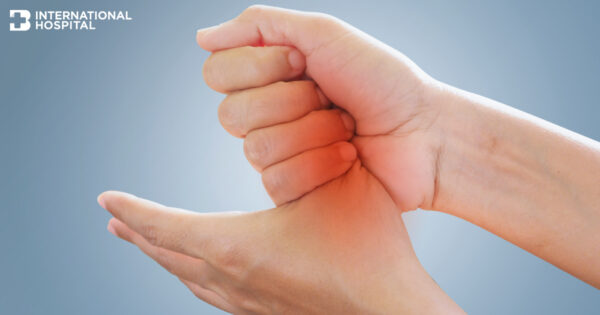

Trigger finger can occur in people of all genders and ages, and is often caused by multiple factors such as repetitive use , age , etc. Heavy hand use continuously for a long time can cause pain at the base of the finger when moving, bending, or straightening the finger until it becomes trigger finger. It is more commonly found in women than men, especially among people whose jobs require using their hands all day with hardly any rest.
What is trigger finger?
Trigger finger (Trigger Finger) is a condition caused by inflammation of the tendon and the tendon sheath in the palm at the base of the finger. When the surface of the tendon is injured and becomes inflamed and swollen, it makes finger movement difficult and painful. If left for a period of time, the body will form fibrous tissue and scar tissue to replace the injured tissue.
These scars narrow the space inside the tendon sheath, causing severe friction when moving the finger, eventually leading to locking. This condition can occur in any finger and may occur in both hands at the same time.
How important are the hand and fingers?
The hand is a complex organ and is used for movement constantly. Each finger plays a different important role in grasping.
- Thumb is the most important finger because it works with the other fingers to grasp objects, accounting for up to 40% of hand use.
- Index and middle fingers help with gripping at about 20%.
- Ring and little fingers help with making a fist and providing stability at about 10%.
Therefore, even pain or trigger finger at the base of just one finger can greatly affect work performance and daily life.
What is the function of the tendon sheath?
The tendon sheath is like a tunnel attached to each finger bone, allowing the tendon to pass through and move smoothly as we make a fist or open the hand.
To visualize it clearly, the tendon functions like a train, while the tendon sheath is the tunnel the train must pass through. When inflammation or swelling occurs within this space, the tunnel becomes narrower so the train cannot pass smoothly, causing friction and sticking—leading to catching and pain when moving the finger.
What causes trigger finger symptoms?
The main cause of trigger finger symptoms is usually related to daily hand-use behaviors, as well as other health factors that affect tendon flexibility.
- Heavy hand use: Work that requires tight gripping or repetitive finger movements for long periods, such as housework, gardening, carrying heavy items, or prolonged use of smartphones and computers.
- Certain underlying diseases: Associated with patients with diabetes, rheumatoid arthritis, or gout, which can make tissues and tendons more prone to inflammation.
- Physical and age-related factors: Commonly found in those aged 40–60 and older, and more common in females than males.
The 4 severity stages of trigger finger
The severity of trigger finger can be divided into 4 stages based on the symptoms shown, enabling doctors to assess treatment effectively, as follows:
- Stage 1: Pain at the base of the finger, but there may not yet be clear catching or locking when moving the finger.
- Stage 2: Catching begins when moving, bending, or straightening the finger, but the finger can still be straightened by oneself.
- Stage 3: The finger starts to lock; after making a fist, it cannot be straightened by oneself and requires the other hand to release it.
- Stage 4: The finger remains rigidly locked for a long time, leading to joint contracture spreading to the middle joint of the finger, making it impossible to straighten the finger even with help from the other hand.
What are trigger finger symptoms like?
Warning signs indicating you may be experiencing trigger finger vary by disease stage. Common symptoms include:
- Pain at the base of the finger
- Catching when moving, bending, and straightening the finger
- Unable to bend the finger; unable to straighten it; must use the other hand to release it
- Pain when moving the finger, pain when gripping anything, pain even when moving the finger quickly
- Trigger finger can occur along with hand numbness from nerve issues
- Symptoms may be only pain at the finger base or may occur together with finger locking, especially after waking up
What are the treatment options for trigger finger?
Trigger finger treatment is divided into 3 types:
- Oral medication used to treat early-stage trigger finger. The doctor will prescribe pain relievers and anti-inflammatory drugs, along with adjustments to daily hand-use behaviors.
- Local steroid injection by a specialist used to treat trigger finger in patients with severe pain where oral medication is not effective.
- Tendon sheath release (sheath expansion) used to treat trigger finger when bending/straightening is not possible. Trigger finger surgery is suitable for those whose symptoms recur many times after injections.

Tendon sheath release to unlock trigger finger
Tendon sheath release is performed by surgically widening the tendon sheath at the base of the finger and inserting a special instrument to cut the sheath open so the tendon can glide more easily, reducing pain and improving movement. It uses local anesthesia injection; general anesthesia is not necessary. The surgery takes about 1 hour. The incision is small, about 1 cm. No hospital stay is required. No fasting from food or water is required before surgery. After surgery, the hand can move normally, but heavy lifting and strenuous exercise are prohibited. After 1 week, the doctor will schedule suture removal. After 2 weeks or more, the hand can be used as normal.
How to prevent trigger finger
Behavior modification is the key to staying away from trigger finger, especially for those who must use their hands heavily throughout the day. Recommended guidelines are as follows:
- Take breaks from hand use regularly: When using hands continuously for a long time, such as typing or using a smartphone, rest your hands every 30–45 minutes to reduce tendon fatigue.
- Avoid lifting or carrying heavy items: Do not carry excessively heavy items. If necessary, use a cart, or place a cloth under the handle to distribute weight and avoid excessive pressure on the finger base.
- Avoid behaviors that harm the tendons: Such as forcefully wringing cloth, gripping objects too tightly with the wrist, and avoid cracking or flicking your fingers for fun, as these can easily irritate and inflame the tendon sheath.
- Exercise and stretch hand muscles regularly: Practice gently making a fist and opening the hand to stretch the tendons, or spread the fingers and hold for 5–10 seconds then relax to improve tendon flexibility.
Warm-water soaking therapy: If you start to feel morning stiffness, soak your hand in warm water for about 5–10 minutes while gently opening and closing your hand in the water. This helps improve blood circulation and can reduce early inflammation.
Physician experienced in treating trigger finger
M.D. Nathapon Chantaraseno Orthopedic Surgeon Bangkok Hospital International
Hospital specializing in trigger finger treatment
Bangkok Hospital International is ready to care for and treat trigger finger with a team of specialized expert physicians and a multidisciplinary medical team with specific expertise, as well as minimally invasive surgical technology. We are ready to support patients of all ages to assess, care for, and rehabilitate them so they can return to normal hand use again.
Article summary
Although trigger finger may seem minor at first, if left until the stage where the finger becomes rigidly locked, it may adversely affect long-term hand function. Observing early symptoms and getting examined and diagnosed early will make treatment easier and more effective. At Bangkok Hospital International, we have a team of specialist hand and wrist surgeons ready to provide consultation and treatment with effective technology to restore freedom of movement to your hand again.
Proper care and treatment help you return to life confidently without worrying about the suffering from locking. If you are experiencing trigger finger or chronic pain at the base of the finger, you can make an appointment for an assessment at the Bone and Joint Center, Bangkok Hospital, which is committed to providing treatment standards focused on safety and effectiveness for every patient.
- Find a doctor: https://www.bangkokhospital.com/th/bangkok-bone-brain/doctor
- Make an appointment: https://www.bangkokhospital.com/th/bangkok-bone-brain/appointment/step1
- Contact us: https://www.bangkokhospital.com/th/bangkok-bone-brain/contact
FAQs: Frequently asked questions about trigger finger
1. What vitamin deficiency causes trigger finger?
Trigger finger is mainly caused by inflammation of the tendon and tendon sheath from heavy hand use, not directly from vitamin deficiency. However, taking vitamins B1, B6, and B12 may help nourish the nervous system and reduce numbness in cases with accompanying fingertip numbness.
2. If left untreated for a long time, will the finger become permanently stiff?
If trigger finger progresses to stage 4 without treatment, it may cause finger joints to become adhered and stiff, making it impossible to straighten the finger normally. This makes treatment more complex and may require longer physical therapy than usual.
3. After tendon sheath release surgery, can it recur in the same finger?
Normally, after tendon sheath release surgery, the chance of recurrence in the same finger is very low because the thickened sheath has already been released. However, patients still risk developing it in other fingers if they continue the same heavy repetitive hand-use behaviors.
4. Does soaking in warm water really help reduce trigger finger symptoms?
Soaking in warm water can help reduce stiffness and improve blood circulation, relieving pain well in the early stage—especially in the morning after waking when triggering and catching are clearly present. But if the finger is locked and cannot move, you should see a doctor for appropriate treatment.
5. What causes trigger toe?
Trigger toe is often caused by wearing narrow-toe shoes that compress the toes too much, or activities that repeatedly tense the toes, causing inflammation of the tendon sheath around the toe in the same way as in the fingers.
6. Are there side effects of steroid injections for treating trigger finger?
Steroid injections for treating trigger finger are local steroid injections, meaning the steroid stays only in that area and does not enter the body. After injection, it helps relieve pain, reduce inflammation, and reduce swelling, allowing the nerve to relax better. Numbness will gradually improve as the nerve recovers. The medication dissolves completely in about 2 weeks.