



Chronic back pain that radiates down the leg or makes movement difficult is not something that should be ignored. Although initial treatment is often conservative, in cases where symptoms are severe enough to affect daily life, spine surgery has become an important option today. With medical technology making surgery far less intimidating than in the past, it can help patients recover faster and return to the activities they love again. Today, we will explain how many surgical methods there are, along with the necessary treatment steps you should know.
What is spine surgery?
Spine surgery (Spine Surgery) is a treatment to remove the root cause of nerve compression, whether it is a fragment of a herniated disc or stabilizing a loose, unstable spinal joint back to strength and stability. Today, surgery focuses not only on treating the disease but also on preserving the body’s original structure with as little tissue trauma as possible.
Who should undergo spine surgery, and when is surgery necessary?

Not every patient with back pain ends up in the operating room. Typically, doctors consider spine surgery as a last option when the following indications are present:
- Conservative treatment is ineffective: Physical therapy or medication has been tried for 6–12 weeks without improvement.
- Muscle weakness: Muscle wasting or weakness begins, making it difficult to walk or to grasp objects.
- Abnormal bowel/bladder function: Loss of control over urination or bowel movements, which is a critical warning sign.
- Severe acute pain: Severe radiating pain that prevents normal daily activities.
5 spine surgery techniques commonly used today
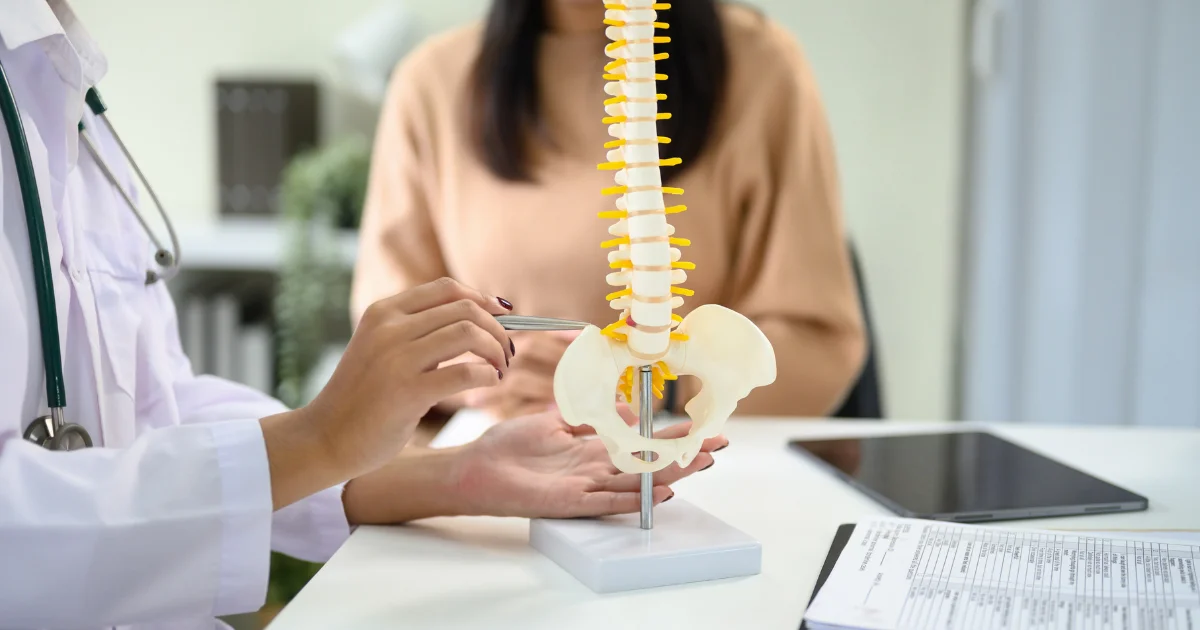
Medical advances have made spine surgery more precise. The main techniques used today are as follows:
1. Microscope-assisted surgery (Microscope)
This technique is the standard for surgery to treat disc herniation compressing nerves. The surgeon uses a high-magnification microscope to remove the disc portion compressing the nerve with precision. The doctor will decide between a small incision or muscle opening depending on disease severity, reducing injury to surrounding tissues better than traditional open surgery.
2. Endoscopic Surgery
This is a minimally invasive technique using an endoscope inserted through an incision as small as 8 millimeters. The lens at the tip provides a clear view of the nerves. The surgeon can remove only the compressing portion without stripping healthy muscle, allowing shorter recovery time and enabling movement according to the doctor’s post-operative recommendations.
3. Spinal Fusion
This method is used to relieve severe pain from vertebral slippage or abnormal joint motion. The surgeon uses metal screws and an artificial disc spacer to secure the spinal joint so the bones fuse into one solid unit, improving core stability. It is often used for patients with spondylolisthesis causing nerve compression and spinal deformity/scoliosis.
4. Minimally invasive percutaneous spinal fusion (MIS Spine Surgery)
This is an advancement of fusion surgery to increase effectiveness and reduce tissue trauma. It is divided into specific techniques based on the approach to the pathology, as follows:
- MIS TLIF: Minimally invasive lumbar fusion via a posterior-lateral percutaneous approach, using 3D imaging (O-arm) and a navigation system for accurate localization, to remove the collapsed or displaced disc and insert an interbody spacer, along with percutaneous placement of fixation hardware through small skin punctures.
- OLIF: Spinal fusion through a side approach toward the front of the body, without stripping the back muscles, resulting in less back-wound pain and a higher fusion rate than conventional methods.
- ALIF: Disc augmentation from an anterior approach without going through the back muscles.
5. Vertebral Augmentation (bone cement injection)
This technique is designed especially for elderly patients with vertebral fractures or compression due to osteoporosis. The doctor injects medical bone cement to reinforce the inside of the collapsed vertebra, supporting the spinal structure and helping relieve pain rapidly.
Advantages of minimally invasive spine surgery (MIS SPINE)

At Bangkok Hospital International Bone & Brain, we emphasize treatment with minimally invasive spine surgery (Minimally Invasive Spine Surgery), which has the following highlights:
- Very small surgical incision: By inserting a camera and instruments through only a few millimeters of skin, the incision is very small, reducing large scars and helping the wound heal neatly.
- Shorter recovery time: Most patients can stand up or begin light walking within 24 hours after surgery, helping them return to daily life or work sooner.
- Less post-operative pain: This technique reduces damage to muscles and tissues around the spine, resulting in much less pain compared with traditional open surgery.
- Less blood loss and reduced risk: Because access to the lesion is precise and the incision is small, it reduces intraoperative blood loss and has a very low rate of post-operative infection.
- Preserves the original spinal structure: Focuses on correcting only the problem area, allowing the natural spinal structure to be preserved as much as possible.
- High precision: Using 3D imaging (O-arm) together with a navigation system helps the surgeon place screws and devices with the highest accuracy, reducing risk to nearby nerves.
However, spine patients should consult a specialist to thoroughly consider spine surgery and plan the operation appropriately, follow the doctor’s recommendations, and prepare before spine surgery, as well as post-spine surgery care correctly, so that the surgical outcome aligns with the appropriate treatment approach.
Preparation before and after spine surgery that should be followed
To achieve the best outcome from spine surgery, patients should prepare as follows:
- Before surgery: Stop medications that affect blood clotting (such as aspirin) at least 7 days prior, get adequate rest, and fast from food and water for 6–8 hours.
- After surgery: During the first week, take light walks and avoid sitting longer than 20–30 minutes. Also avoid lifting heavy objects during the first 3 months, as advised by the doctor.
Standard steps in spine surgery, from the start through the recovery room
Modern spine surgery involves a meticulous process with safety as the main focus. Whether minimally invasive or traditional, the main sequence of steps is generally similar, as follows:
1. Preparation before entering the operating room
When the patient arrives at the hospital, the nursing team will review the medical history, check vital signs, and clean the skin at the surgical site. The anesthesiologist will discuss and select the most appropriate anesthesia method (such as general anesthesia) so the patient feels no pain throughout the procedure.
2. Positioning and anesthesia
In the operating room, the patient receives general anesthesia and is positioned appropriately, most often prone on a special operating table to allow the surgeon the easiest access to the spine, with support devices used to prevent pressure on other parts of the body.
3. Accessing the lesion and using technology
The surgeon makes the incision according to the planned technique. This step often involves 3D imaging and a navigation system to identify the exact location of the disc or problematic joint as accurately as possible.
4. Treatment and correction of abnormalities
Once the problem area is reached, the doctor removes the portion compressing the nerve, such as a herniated disc fragment or abnormal bone overgrowth. If there is joint instability, the doctor inserts an interbody spacer and secures it with metal screws to fuse and strengthen the joint as appropriate.
5. Final inspection and wound closure
Before finishing, the surgeon checks that nerve decompression has been achieved and confirms the implanted devices are properly in place. Then bleeding is controlled and the wound is closed with an aesthetic technique to promote faster healing and reduce the chance of scar tissue formation.
6. Post-operative care in the recovery room
After the procedure, the patient is moved to the recovery room for close monitoring for about 1–2 hours. Once recovery is adequate and vital signs are stable, the patient is transferred to a regular inpatient room to begin initial physical therapy.
Safe spine surgery with Bangkok Hospital International
Spine Center, Bangkok Hospital International is ready to care for spinal conditions with a team of specialist physicians with expertise in specific fields such as spine, hip-knee, and pediatric care, along with a multidisciplinary team providing close consultation, and tools and technology for treatment and spine surgery—so you can return to moving comfortably every day. We are ready to provide rehabilitation services and bone health assessments for patients of all ages at the Bangkok Hospital International building daily from 07:00–20:00.
- Find a doctor: https://www.bangkokhospital.com/th/bangkok-bone-brain/doctor
- Make an appointment: https://www.bangkokhospital.com/th/bangkok-bone-brain/appointment/step1
- Contact us: https://www.bangkokhospital.com/th/bangkok-bone-brain/contact
Physician specializing in spine surgery
Dr. Chaidej Sasomboon, Spine Surgeon, Bangkok Hospital International, Bone & Brain Hospital
You can click here to make an appointment yourself.
Frequently asked questions about spine surgery
Is spine surgery dangerous? Is there a risk of paralysis?
Today, surgery is highly safe thanks to intraoperative neuromonitoring (Intraoperative Neuromonitoring) and computer navigation systems that improve the accuracy of device placement, making the risk of serious complications much lower than in the past.
How is minimally invasive surgery (MIS SPINE) different from traditional surgery?
The key difference is “tissue trauma.” Traditional surgery requires a long incision and extensive muscle dissection, while minimally invasive surgery uses a scope or instruments through an incision only a few millimeters wide, resulting in less blood loss, less pain, a lower infection rate, and enabling patients to get up and walk sooner—within 24 hours after surgery.
After spine surgery, how long is recovery before returning to work?
Recovery time depends on the technique used and the patient’s physical condition. With minimally invasive surgery, hospital stay is usually only a few days, and patients can return to desk work within 2–4 weeks. For jobs involving heavy lifting or activities requiring frequent bending, doctors often recommend waiting about 3–5 months for complete bone and muscle healing.
If surgery is indicated but I try to avoid it, what are the dangers?
If surgery is indicated but left untreated, it may lead to permanent nerve damage, causing leg weakness, muscle wasting, or loss of bowel and bladder control. If it reaches that stage, later surgery may not be able to fully restore nerve function.
After spine surgery, is there a chance the condition will recur?
Recurrence can occur if patients continue the same behaviors, such as lifting heavy objects incorrectly, sitting at work for many consecutive hours, or due to age-related degeneration in other joints. The best prevention is physical therapy to strengthen the core muscles and strictly adjust posture and body mechanics according to the doctor’s recommendations.