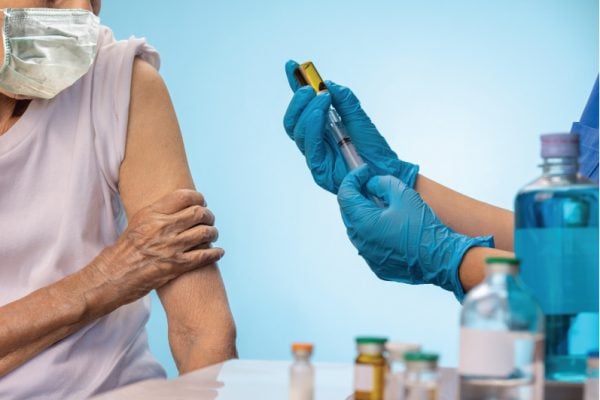
Is the 4th and 5th COVID-19 Vaccine Dose Important?
Currently, COVID-19 has continued to evolve, becoming more severe compared to earlier stages—particularly in terms of faster transmission and higher infection rates. As a result, the number of daily infections remains high.
The groups at highest risk are older adults and individuals with seven chronic medical conditions, as they tend to have lower immunity and are more likely to experience severe complications compared to the general population.
Today, Bangkok Hospital Rayong has compiled essential information highlighting the importance of COVID-19 vaccination for older adults, to support informed decision-making and safer health protection.
Related Topics
- The importance of the 4th COVID-19 vaccine dose for older adults
- Which type of COVID-19 vaccine is recommended for the elderly
- Common concerns or barriers that prevent older adults from getting vaccinated
- Summary and considerations for receiving mRNA vaccines in older age
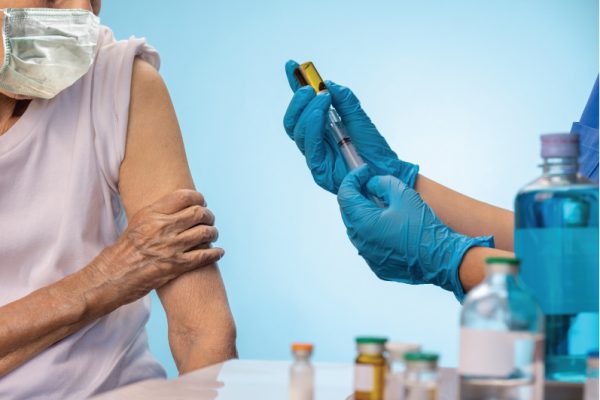
How Important Is the 4th COVID-19 Vaccine Dose for Older Adults?
Older adults are strongly recommended to receive the 4th dose of the COVID-19 vaccine, preferably an mRNA vaccine. Research evidence supports that the 4th mRNA booster dose significantly reduces severe infection and mortality rates among the elderly, compared to receiving only three doses.
Even older adults without underlying medical conditions are still considered a high-risk group for COVID-19 infection due to age-related decline in immune function.
Why Is the 4th Dose Necessary?
Currently, there is no second-generation COVID-19 vaccine specifically designed for the Omicron variant. As a result, vaccine effectiveness against Omicron is lower than against previous variants, and the duration of protection against symptomatic infection is also shorter.
Therefore, a 4th booster dose is recommended at least 4 months after the 3rd dose, preferably using an mRNA vaccine.
Research findings indicate that:
-
Protection against symptomatic infection reaches up to 71% during the first 2 months
-
Effectiveness decreases to approximately 54% between days 61–143
Note: The recommended vaccination interval is based on the latest guidelines from the Department of Disease Control, Ministry of Public Health, Thailand.
Which COVID-19 Vaccine Should Older Adults Receive?
Current recommendations suggest that:
-
The 4th dose should be an mRNA vaccine, administered at least 4 months after the 3rd dose
-
If receiving the 3rd dose, an interval of at least 3 months is advised
These recommendations are based on current epidemiological data and available research.
“What we clearly observe is that regardless of the vaccine type or regimen, immunity tends to decline within 3–4 months after vaccination,”
stated Dr. Wicharn, emphasizing that the primary goal is to prevent severe illness and death among high-risk groups, including older adults and those with chronic diseases.
National Vaccine Effectiveness Data
Recent data released by the Ministry of Public Health showed that:
-
In January 2022, vaccine effectiveness against infection in high-risk groups was 56% after the 3rd dose
-
This increased to 84.7% after receiving the 4th dose
Current booster effectiveness studies also indicate that:
-
Inactivated vaccines provide the lowest and shortest-lasting immunity (sometimes less than one month)
-
Viral vector vaccines, such as AstraZeneca and Johnson & Johnson (Janssen), provide moderate immunity
-
mRNA vaccines offer the strongest and most sustained immune response

Barriers and Concerns That Prevent Older Adults from Receiving COVID-19 Vaccination
Several concerns may cause older adults to hesitate or decide not to receive COVID-19 vaccines or booster doses:
-
Fear of vaccine side effects
Exposure to news or information about potential side effects may lead to anxiety and fear, discouraging vaccination. -
Perception of low personal risk
Some older adults believe they are not at risk because they stay at home, rarely go out, and feel capable of taking care of themselves—therefore assuming booster doses are unnecessary. -
Previous COVID-19 infection
Some individuals feel vaccination is no longer needed after having been infected. However, infection with the Omicron variant generally produces limited immunity and does not provide sufficient protection against other or future variants. -
Misunderstanding about booster necessity
There is a common misconception that receiving three doses is sufficient and that no further boosters are required.
In fact, the U.S. Centers for Disease Control and Prevention (CDC) recommends that adults aged 50 years and older receive a total of up to five COVID-19 vaccine doses, depending on health status and risk factors. -
Underestimating the severity of the Omicron variant
Some believe that Omicron causes only mild illness and is not dangerous, leading to the assumption that booster vaccination is unnecessary. In reality, older adults remain at high risk for severe illness, complications, and death, even with Omicron infection.

Summary: Receiving mRNA COVID-19 Vaccines in Older Adults
At present, second-generation COVID-19 vaccines are not yet available, while the virus continues to mutate and develop stronger immune evasion. As a natural consequence of viral evolution, the effectiveness of first-generation vaccines against infection decreases over time.
With current vaccine technology, protection against severe disease and mortality is effective but time-limited. Therefore, booster vaccinations are necessary in accordance with recommendations from global health organizations and Thailand’s public health authorities.
The interval between doses, number of doses, and vaccine dosage may vary depending on age groups and underlying medical conditions. However, the overall recommendation is consistent:
mRNA vaccines are recommended as booster doses, provided there are no contraindications or prior severe allergic reactions, as they represent the most advanced and effective vaccine technology currently available.
For individualized guidance, older adults are encouraged to consult healthcare professionals.