


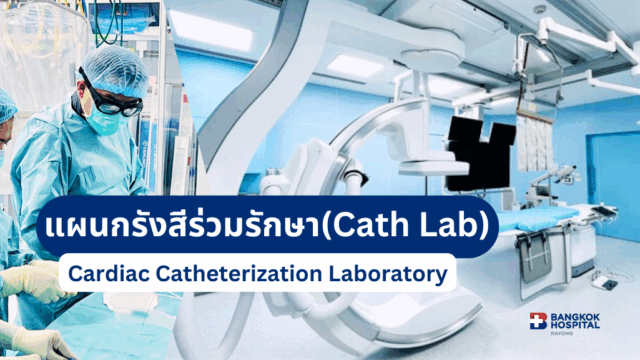
What Is a Cardiac Catheterization Lab (Cath Lab)?
A Cardiac Catheterization Laboratory, commonly known as a Cath Lab, is a specialized medical facility used for cardiac catheterization and coronary angiography to assess heart function. It is equipped with advanced imaging systems that visualize coronary arteries and other blood vessels in the body.
Images are displayed in real time on digital monitors and recorded in a high-resolution system that allows rotation from multiple angles. This enables physicians to review images in detail, view the heart and blood vessels from all perspectives, and make more accurate diagnoses.
What Can Be Examined at the Cath Lab at Bangkok Hospital Rayong?
The Cath Lab can evaluate:
-
The location and severity of coronary artery stenosis or blockage
-
Heart muscle function, including contraction and areas of myocardial damage
-
Blood pressure within different chambers of the heart
-
Heart valve abnormalities
If abnormalities are detected, physicians can immediately perform treatments such as:
-
Balloon angioplasty
-
Coronary stent placement
In addition, the Cath Lab can be used to diagnose and treat cerebrovascular diseases, such as ischemic stroke or cerebral artery occlusion, by injecting contrast dye into cerebral vessels. This method provides more precise results than conventional X-ray imaging.
The Cath Lab is also used for vascular interventions in peripheral arteries, including arteries in the arms, legs, hands, and feet, to treat narrowing, blockage, or blood clots.
Cath Lab Examination Procedure
The physician administers local anesthesia at the groin or wrist, then inserts a sterile catheter approximately 2 millimeters in diameter through an artery. Contrast dye is injected to visualize blood flow and detect blockages.
Images are displayed on a digital monitor via a specialized X-ray system. The procedure typically takes about 20 minutes. If abnormalities are found, interventional treatment such as stent placement may be performed immediately.
After the procedure, the catheter is removed, and a compression device is applied to the insertion site for bleeding control.
This minimally invasive approach allows patients to recover quickly, avoids major surgery, carries lower risk, and enables most patients to return to daily activities soon after.
Preparation Before Cardiac Catheterization
-
Patients undergo physical assessments such as blood tests, chest X-ray, and ECG
-
Admission to the hospital one day prior to the procedure and signing a consent form
-
Showering and cleansing the body; the groin area on both sides will be shaved for catheter insertion
-
Fasting (no food or water) for approximately 4–6 hours before the procedure
Post-Procedure Care
-
Patients are advised to lie flat initially, with the head elevated 30–45 degrees, before gradually resuming light sitting or walking
-
Avoid heavy lifting and strenuous exercise
-
Compression devices or sandbags are applied to the wrist or groin for 2–4 hours
-
Patients may move fingers, toes, and change positions gently
Seek immediate medical attention if experiencing:
-
Shortness of breath, chest pain, palpitations
-
Dizziness or faintness
-
Excessive bleeding at the insertion site
-
Rash, cold extremities, numbness, or tingling in hands or feet
-
Keep the wound dry; if not fully healed, clean with alcohol and apply a sterile dressing
-
Unless fluid intake is restricted, drink at least 2,000 ml of water per day to help flush contrast dye from the kidneys
-
Avoid alcohol, tea, coffee, soft drinks, and smoking
-
Eat a balanced diet and avoid overly sweet, fatty, or salty foods to reduce cardiac workload
Why Choose the Cath Lab at Bangkok Hospital Rayong?
The Interventional Radiology (Cath Lab) Department at Bangkok Hospital Rayong is equipped with advanced medical technology and staffed by experienced specialist physicians, ensuring precise diagnosis, effective treatment, faster recovery, and improved quality of life for patients.
Summary: Interventional Radiology (Cath Lab)
The Cath Lab is a specialized facility for cardiac catheterization and angiographic imaging of coronary and other blood vessels, enabling both diagnosis and treatment using advanced technology.
At Bangkok Hospital Rayong, the Cath Lab supports high diagnostic accuracy and effective treatment, significantly improving patient outcomes and long-term quality of life.