

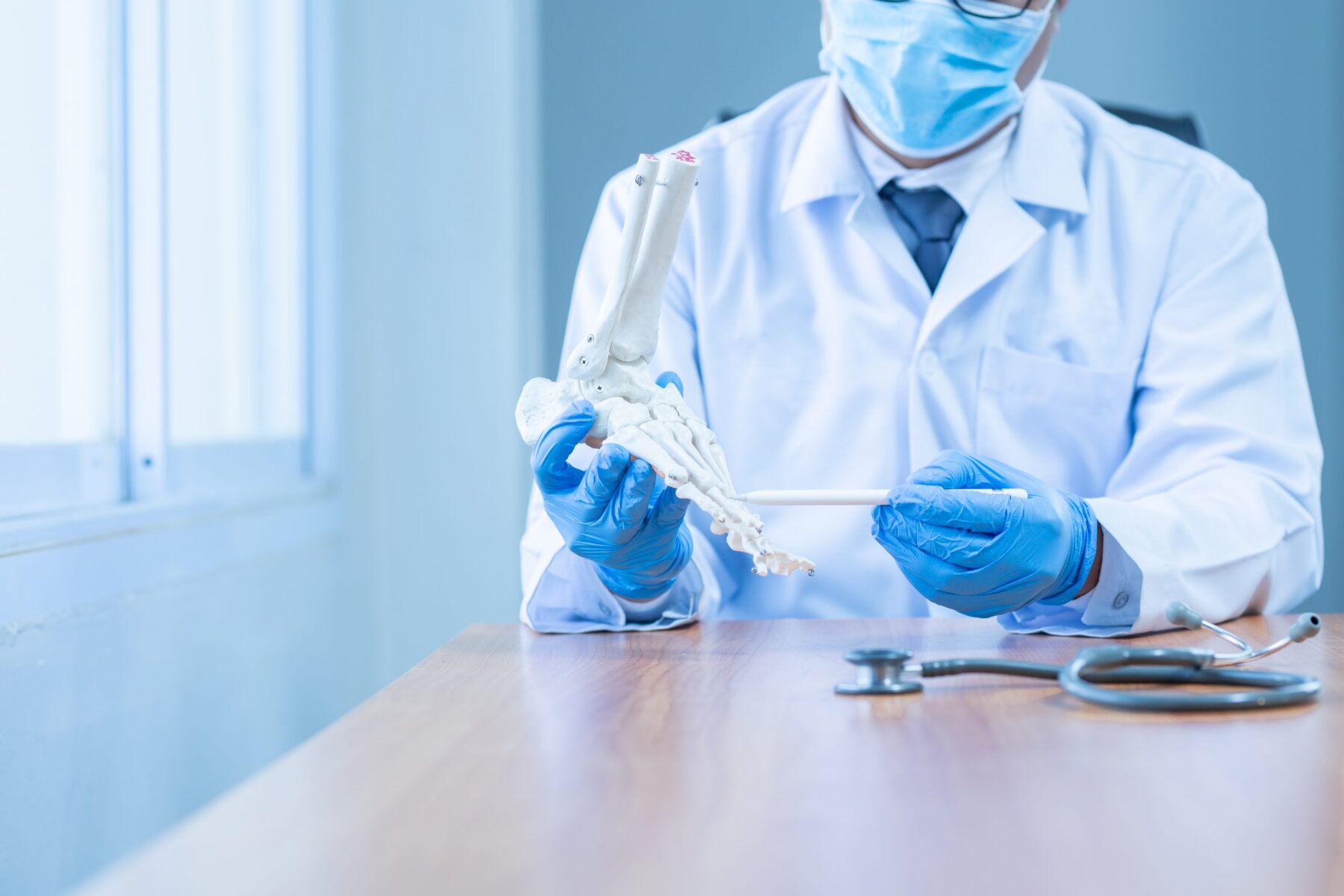
Bone and Joint Center, Bangkok Rayong Hospital provides comprehensive consultation, treatment, and care for all conditions related to bones, joints, and muscles. Services are delivered by a multidisciplinary team to ensure holistic and patient-centered care.
The center offers a full range of surgical and non-surgical treatment options, adhering to international standards, with the goal of achieving the highest level of patient satisfaction, including the following services:
Diagnostic Examinations
1. X-Ray Examination
X-ray imaging uses electromagnetic radiation to diagnose preliminary abnormalities, such as:
-
Bone fractures
-
Bone infections
-
Joint inflammation
-
Bone tumors or cancers
X-ray examinations enable physicians to make rapid and accurate assessments, especially in emergency situations.
2. Computed Tomography (CT Scan)
CT scan uses high-sensitivity radiation technology and provides more detailed images than conventional X-rays. It is used for:
-
Bone disease screening
-
Evaluation of deep bone injuries
-
Detection of complex lesions or infections
3. Magnetic Resonance Imaging (MRI)
MRI utilizes magnetic fields and radio waves to generate 3D images of bones and surrounding soft tissues. It is suitable for:
-
Patients with bone pain but no abnormalities detected on X-ray
-
Diagnosis of occult or hard-to-detect fractures
-
Evaluation of ligaments, muscles, and nerves
4. Bone Densitometry
This examination assesses bone strength and evaluates the risk of osteoporosis, especially for:
-
Elderly patients
-
Individuals at high risk of osteoporosis
The use of appropriate diagnostic tools allows physicians to make accurate diagnoses and effective treatment plans, reduce complications, and improve patients’ quality of life. Patients experiencing bone pain or suspected abnormalities are advised to consult a physician for appropriate diagnostic evaluation.
Surgical Treatments and Advanced Technologies
Orthopedic treatment has advanced significantly, particularly in surgical techniques that emphasize precision and faster recovery. These treatments help restore quality of life for patients with knee or hip problems, or ligament injuries.
1. Total Hip Replacement
Total hip replacement surgery is recommended for patients with:
-
Osteoarthritis of the hip
-
Hip fractures or traumatic injuries
-
Chronic inflammatory hip conditions (Rheumatoid Arthritis)
Benefits of hip replacement surgery include:
-
Pain relief
-
Restoration of mobility
-
Reduced risk of long-term complications
2. Robotic-Assisted Knee Replacement
Robotic-assisted technology enhances precision in knee replacement surgery and minimizes damage to surrounding tissues. It is suitable for:
-
Patients with severe knee osteoarthritis
-
Knee injuries requiring surgical intervention
Advantages of robotic-assisted surgery:
-
Faster recovery
-
Reduced risk of implant loosening
-
Improved accuracy of joint alignment
-
Shorter rehabilitation time and less postoperative pain
3. Arthroscopic Anterior Cruciate Ligament (ACL) Reconstruction
Injuries to the Anterior Cruciate Ligament (ACL) are common among athletes and individuals with severe knee trauma. Arthroscopic surgery improves safety and reduces postoperative discomfort.
Benefits of arthroscopic surgery:
-
Smaller incisions and faster recovery
-
Lower risk of infection
-
Suitable for patients aiming to return to sports
Why Choose Surgical Treatment at Our Orthopedic Center
-
Utilization of advanced technologies, including robotics and arthroscopy
-
Care provided by specialist orthopedic surgeons
-
Efficient and effective rehabilitation programs