


Self-care for patients receiving radiation therapy to the chest
Radiation therapy to the chest is one of the cancer treatment methods that a doctor may choose depending on the type of disease, the location and size of the tumor, and an individualized treatment plan. Although radiation therapy is planned so that the radiation affects cancer cells as much as possible, nearby normal tissues may be affected and may cause side effects.
Each patient may experience different symptoms, depending on the area receiving radiation, the radiation dose, the duration of treatment, and other treatments received together, such as chemotherapy. Therefore, if you have abnormal symptoms or worsening/severe symptoms, you should inform your doctor or care team for evaluation and appropriate care.
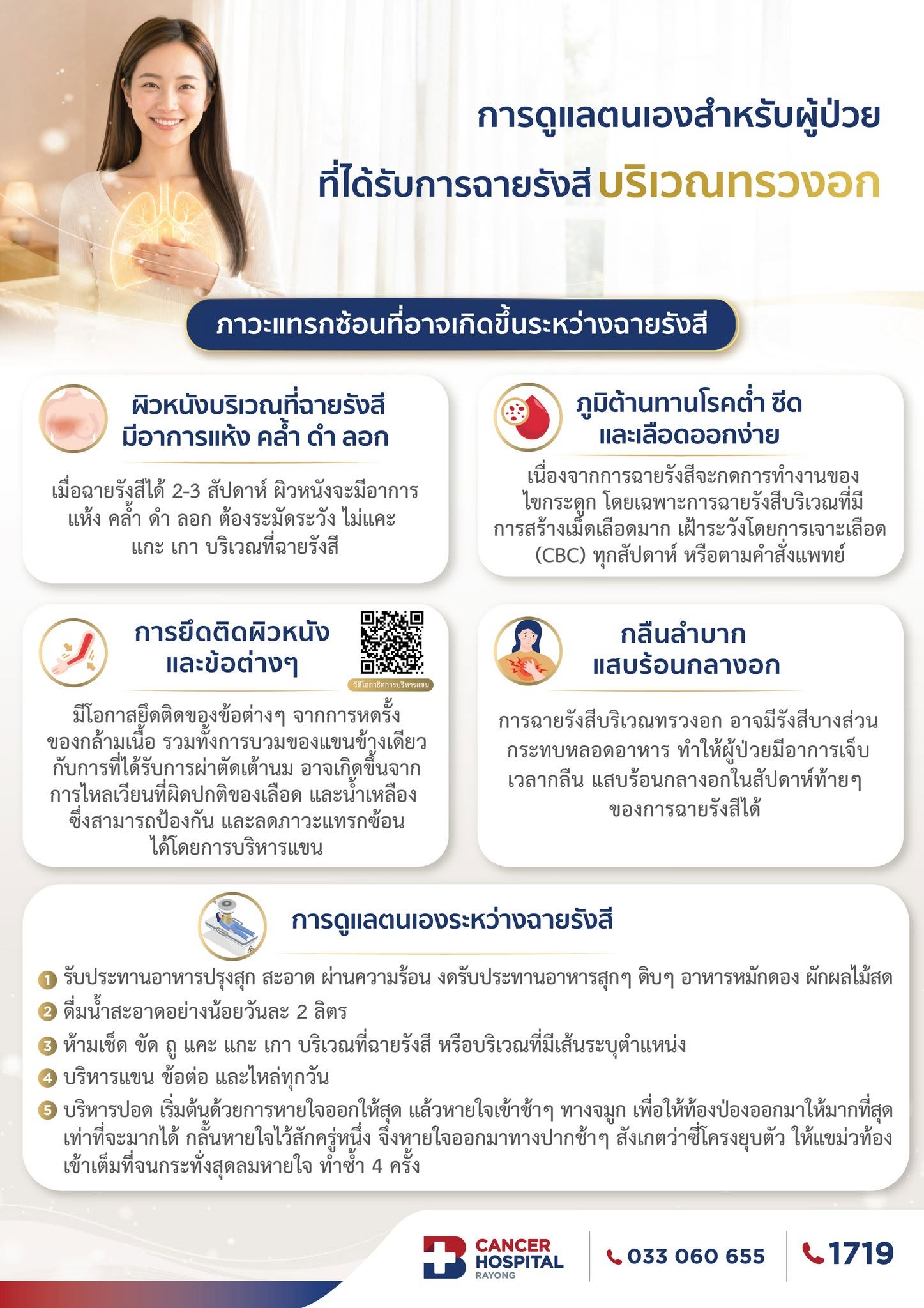
Possible side effects during radiation therapy to the chest
1. Dry, darkened, red, or irritated skin in the radiation area
The skin in the area receiving radiation may change, and symptoms may begin after you have received radiation for some time, such as:
- Dry skin
- Redness or darkening of the skin
- Itching or irritation
- Skin that looks like sunburn
- In some cases, peeling or blistering skin
Skin symptoms usually occur only in the area that receives radiation and generally gradually improve after treatment ends. However, in some cases, the skin color in that area may remain darker or continue to change for a period of time.
Skin care during radiation therapy
- Gently wash the skin in the radiation area
- Avoid scrubbing, rubbing, scratching, or picking at the skin
- Avoid tight clothing or clothing that rubs against the radiation area
- Avoid applying heat or extreme cold to the radiation area
- If you want to use a cream or skin-care product, ask the care team first
- If the skin develops wounds, severe peeling, or abnormal symptoms, inform the care team
2. Fatigue, easily tired
Fatigue is a common side effect in patients receiving radiation therapy. Patients may feel easily tired, lack energy, or need more rest than usual.
Fatigue may occur during treatment and can continue for some time after radiation therapy ends, with severity varying from person to person.
Self-care recommendations
- Get enough rest
- Break activities into periods and do not push your body
- If you are able, do light activities such as slow walking
- Eat enough food
- Drink an appropriate amount of water
- Ask family members for help when you feel very tired
If you have unusual fatigue, rapidly worsening fatigue, or difficulty breathing, inform your doctor or care team for further evaluation.
3. Low blood cell counts, anemia, or easy bleeding
Radiation therapy may affect blood cell production, especially when the bone marrow area where blood cells are produced receives a high radiation dose. However, effects on blood cells do not occur in all patients and depend on the radiation field, radiation dose, and other concurrent treatments.
If the doctor considers there to be a risk, blood tests such as a Complete Blood Count (CBC) may be performed to monitor blood cell levels as appropriate.
Patients should inform their doctor if they have symptoms such as:
- Easy tiredness or unusual fatigue
- Dizziness/lightheadedness
- Fever
- Bruising or unusual/easy bleeding
4. Difficulty swallowing or burning in the center of the chest when swallowing
Radiation therapy to the chest may cause the esophagus to become irritated or inflamed, especially when the esophagus is within the radiation field. Patients may feel pain, burning, or have increased difficulty swallowing food and water.
Symptoms may feel like heartburn in the center of the chest or food getting stuck when swallowing, and in some cases may worsen toward the end of treatment or for a period after treatment ends before gradually improving.
Self-care methods
- Eat soft, easy-to-chew foods
- Take small bites and eat slowly
- Drink enough water
- Avoid strongly flavored/spicy foods or foods that irritate the throat
- If swallowing becomes very difficult, inform your doctor or care team
The doctor may recommend dietary adjustments, medications, or seeing a dietitian to help ensure the patient receives adequate energy and nutrients during treatment.
Self-care during radiation therapy to the chest
In addition to monitoring side effects, patients should take care of their overall health to help the body receive adequate nutrition and fluids and to continue treatment without interruption.
1. Eat a complete and appropriate diet
Choose clean, freshly cooked foods with complete nutrients. If you have loss of appetite or difficulty swallowing, you may divide meals into several smaller meals and choose foods that are easy to chew and swallow.
If you are eating very little, losing weight, or have swallowing problems, inform the care team to consider consulting a dietitian or the nutrition team.
2. Drink enough water
Drink an appropriate amount of water throughout the day unless your doctor advises limiting fluids due to another disease or health condition.
3. Care for the skin in the radiation area
Avoid scratching, scrubbing, rubbing, or picking at the skin in the radiation area, and follow guidance from the radiation therapy team regarding which products can be used on that skin.
4. Move your body and exercise your arms as appropriate
If there are no contraindications from your doctor, you should move your body and exercise your arms or shoulder joints as advised by the care team, especially for patients also receiving surgery in the chest or breast area.
Do not force yourself to exercise if you feel very tired, have pain, or have limitations from treatment.
5. Practice breathing exercises as advised by the care team
Some patients may receive guidance on breathing training or lung exercises from a doctor, physical therapist, or care team. The training method and suitability depend on each individual’s disease and treatment plan.
If you have coughing, difficulty breathing, or unusual fatigue, inform the care team. Do not attempt breathing practice or heavy exercise on your own.
What symptoms should be reported to a doctor immediately?
Patients receiving radiation therapy to the chest should inform the care team if they have abnormal symptoms, especially:
- Increasing difficulty swallowing food or water
- Eating or drinking so little that there is a risk of malnutrition or dehydration
- Difficulty breathing or worsening shortness of breath
- Unusually severe coughing
- Fever
- Unusual bleeding or bruising
- Wounds, peeling, or severe pain on the skin in the radiation area
- Unusually severe fatigue
Radiation therapy to the chest can cause coughing and difficulty breathing due to effects on lung tissue, and in some cases radiation pneumonitis may occur, which requires evaluation by a doctor.
Will side effects from radiation therapy go away?
Side effects of radiation therapy include both short-term and long-term side effects, and they do not occur the same way in every patient.
Many side effects, such as skin irritation, fatigue, or swallowing problems, can gradually improve after treatment ends. However, some side effects may occur months or years after treatment, depending on the area treated, the radiation dose, and other concurrent treatments.
Therefore, patients should attend follow-up appointments as scheduled and inform their doctor when there are new symptoms or changes in symptoms.
Frequently asked questions about radiation therapy to the chest
What side effects can occur with radiation therapy to the chest?
Possible side effects include skin changes in the radiation area, fatigue, difficulty swallowing, coughing, pain or burning in the center of the chest, loss of appetite, and difficulty breathing. Symptoms and severity vary from person to person.
Why is it difficult to swallow after radiation therapy?
Because the esophagus is located in the chest and may receive radiation, the esophageal lining can become irritated or inflamed, causing pain or difficulty swallowing.
What should I eat during radiation therapy?
Eat clean, cooked foods with complete nutrients. If you have difficulty swallowing, choose soft, easy-to-chew foods, eat smaller amounts more frequently, and drink enough water. If you are eating little or losing weight, consult the care team or a dietitian.
How should I care for the skin in the radiation area?
Care for the skin gently; avoid scrubbing, rubbing, scratching, or friction, and avoid tight clothing over the radiation area. If you want to use any products on the skin, ask the care team first.
Is it dangerous to have difficulty breathing after radiation therapy to the chest?
Coughing or difficulty breathing can occur after radiation therapy to the chest because lung tissue may be affected. However, if breathing difficulty worsens, there is unusual shortness of breath, or symptoms do not improve, you should inform your doctor promptly for evaluation of the cause.
Consultation and further information
If you are undergoing radiation therapy to the chest or have questions about side effects and self-care, you can consult a doctor and the multidisciplinary team at Bangkok Rayong Cancer Hospital to receive advice appropriate to each individual’s condition and treatment plan.
Bangkok Rayong Cancer Hospital
📞 Tel. 033-060-655