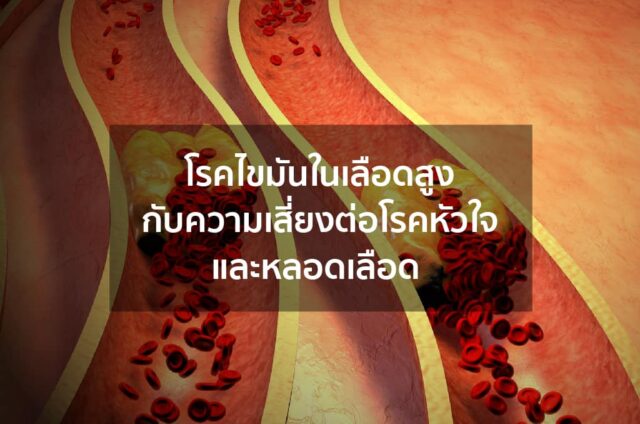
Hyperlipidemia or Dyslipidemia is a disorder in which the lipid profile is higher than the set value, can be obtained by collecting statistical data on blood lipid levels distribution among the general population. Generally, our body has two types of fat which are:
- Cholesterol includes:
- Low-density lipoprotein (LDL) or rancid fats, it is the cholesterol that accumulates on the inner walls of arteries, inducing the arteries constriction and becoming more rigid, which are the factors of coronary artery disease and ischemic stroke.
- High-density lipoprotein (HDL) or good fats, it is a sort of cholesterol that advantages of eliminating hazardous fats from the bloodstream, as well as reduces the risk of coronary artery disease.
- Triglyceride also categorized as fat, which may accumulate on the artery walls if it elevates. However, triglyceride retains less significance on cardiovascular disease than cholesterol.
Diagnosis of Dyslipidemia.
It is accomplished by drawing the blood to assess the lipid profile. Besides, to receive precise values, refraining from all varieties of diet and fluid before 8 – 10 hours are needed.
Who should initiate specifying Dyslipidemia?
- People aged over 40 years or more than 35 years for those with a metropolitan lifestyle.
- Women who have premature menopause or premature ovarian insufficiency arises before the age of 40 years.
- People who possess indication or suspicions of angina, regardless of which organs,
- People who possess risks of developing cardiovascular diseases such as smoking, high blood pressure, and diabetes.
- People who possess a history of parents or relatives with coronary artery disease. By male relatives, age of onset before 55 years, and female relatives before 65 years of age.
- Metabolic disorder patient with a BMI over 30.
- People with certain underlying chronic diseases that heighten the risk of coronary artery disease, such as Rheumatoid Arthritis, SLE Psoriasis.
- Patient with kidney failure with a glomerular filtration rate number less than 60
- People with household members conserve a hyperlipidemia history.
Guidelines for the management of Dyslipidemia.
- Adjusting consumption behavior.
- Should consume less of:
- Should consume less of:
- All types of sugary treats, high-sugar fruits, and processed fruit. Moreover, sweet drinks, soft drinks, energy drinks, fried nourishment, coconut milk curries, diet containing trans fat such as butter or margarine
- Foods that contain saturated fat or cholesterol, such as lean meat, offal, hard-shelled animals, such as oysters, crabs, squid, coconut oil, coconut milk.
- Should consume less of:
- A multitude of vegetables in each meal, concentrating on leafy green vegetables.
- Foods that contain unsaturated fats, including grains, nuts, and low-fat essences such as fish.
- Priority on boiling and steaming recipes rather than using oil. In the case of oils are required, should lower or avoid consuming tropical plant oils such as palm oil and coconut oil to reduce saturated fat intake.
- Should consume less of:
- Adapting lifestyle behavior.
- Workout regularly by jogging, brisk walking, or biking to decrease the quantity of lipid profile and enhance the level of HDL. Activities should be done continuously at least 20-30 minutes per time, 3-4 times per week.
- Avoiding alcoholic beverages.
- Smoking cessation.
- Standardize the bodyweight to prevent metabolic syndrome.