

Bangkok Hospital
Caret Right
Search
CTA Curve
Find doctors icon
Find doctors
Appointments icon
Appointments
Contact icon
Contact
Call undefined
Menu
  • Select Hospital

  • Language

Doctor not found
Doctor not found
Doctor not found
Doctor not found
Bangkok Hospital
Contact us
View on Google Maps
    Privacy Policy

    |

    Cookie Policy

    Copyright © 2026 Bangkok Hospital. All right reserved


    Network Hospitals Directory
    MEMBER OFBDMS logo

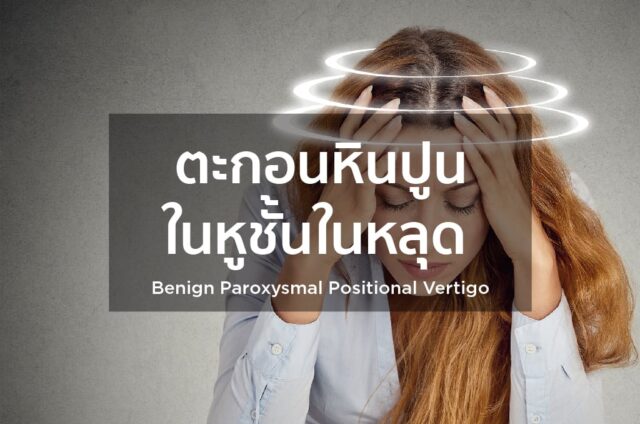
    Benign Paroxysmal Positional Vertigo: BPPV

    1 minute(s) read
    Information by
    Package Image
    Dr. Tidarat Watanyuta

    Bangkok Hospital Phuket

    Updated on: 17 Nov 2025
    Dr. Tidarat Watanyuta
    Dr. Tidarat Watanyuta
    Bangkok Hospital Phuket
    Recommended Packages
    Package Image
    MRI Knee & Shoulder
    Benign Paroxysmal Positional Vertigo: BPPV
    Bangkok Hospital Phuket
    Updated on: 17 Nov 2025

    It is the most common disease that causes dizziness and brief attacks of vertigo, which is associated with abnormalities of calcium deposits in the inner ear. Generally, our inner ear involves snail-shaped organs that responsible for maintaining balance, including utricle, saccule, semicircular canals. Utricle consists of calcium carbonate crystals called otoconia that responsible for sensing the direction of the head movement by moving back and forth within the canal lumen. Nevertheless, as a result of vibration, they fall out of place into the semicircular canal, they will transmit signals to the central nervous system and stimulate benign paroxysmal positional vertigo.

    Incident.

    • Age 30-70 years, common in older adults> 60 years.
    • Female: Male 1.5-2: 1.
    • Usually, experience in ear (left or right). 15 percent of occurrence in both ears.

    Factors.

    • Degenerative over aging.
    • Accidents, particularly traumas around the head.
    • Maladies in the inner ear.
    • Middle ear or inner ear surgery.
    • Infection.
    • Lengthy immobilization due to post-major surgery.
    • Repetitive head movements, such as acting in front of a computer screen or cleansing that require massive head action.
    • Idiopathic.

    Signs and Symptoms

    • Disorientation, a sense of the room spinning, loss of balance during the rapid change in head movement.
    • Nausea, and vomiting.
    • The symptoms usually last for seconds to minutes.
    • With no tinnitus or whooshing sound in one or both ears. The recurrence can be developed within months or years.

    Treatment

    • Managing anti-nausea/vomiting prescription to relieve the dizziness.
    • Physical therapy, change positions of the head and neck by using gravity to shift the otoconia back into place
    • Management and practicing to balance the nervous system.

    Information by

    Doctor Image

    Dr. Tidarat Watanyuta

    Otolaryngology

    Dr. Tidarat Watanyuta

    Otolaryngology

    Doctor profileDoctor profile

    For more information, please contact

    Ear Nose Throat Center

    2nd Floor

    Open daily from 8.00 am to 5.00 pm.

    +66 7625 4425 ext. 7445

    [email protected]

    @phukethospital

    Related Doctors

    See all doctors

    Packages & Promotions

    MRI Knee & ShoulderMRI Knee & Shoulder
    MRI Knee & Shoulder

    10,500 - 10,560 Baht

    Detail
    Affordable Spinal MRI Scan Program Discount 35%Affordable Spinal MRI Scan Program Discount 35%
    Affordable Spinal MRI Scan Program Discount 35%

    10,560 - 17,445 Baht

    Detail
    Affordable Spinal MRI Scan Program After-Hours ServiceAffordable Spinal MRI Scan Program After-Hours Service
    Affordable Spinal MRI Scan Program After-Hours Service

    4,900 Baht

    Detail
    More packages

    Health Info

    More health info

    Health Info

    Allergies Image
    Allergies
    Otitis Media Image
    Otitis Media
    More health info