

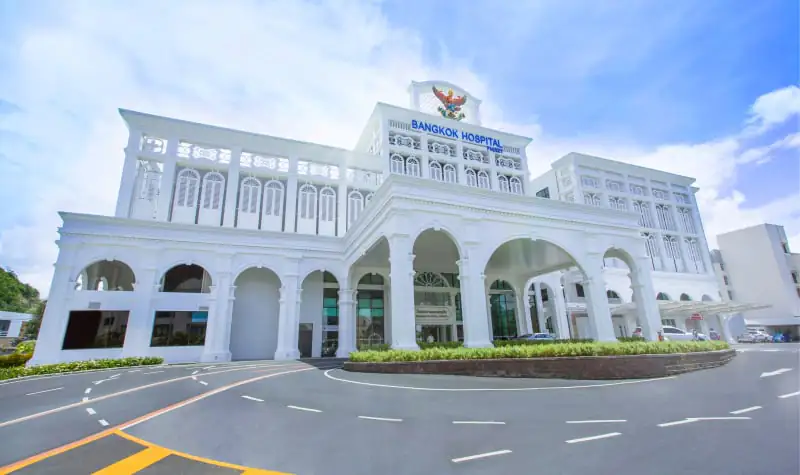
Bangkok Hospital Phuket is recognized as one of Asia’s leading private hospitals.
Located on Phuket Island in southern Thailand, the hospital is situated near Patong Beach—one of the island’s most renowned tourist destinations—making it a preferred healthcare provider for both local and international patients.
Construction of Bangkok Hospital Phuket began in July 1993, and the hospital officially opened on 22 May 1995. It was established as a joint venture between Bangkok Dusit Medical Services Public Company Limited (BDMS), Anuphas Co., Ltd., and local investors, with a total investment value of 800 million THB.
Guided by a vision to deliver quality healthcare for all, regardless of race or religion, the hospital has consistently promoted preventive healthcare and wellness for more than two decades. A wide range of health check-up programs has been developed to meet diverse patient needs, including executive-level packages and essential health screenings for the general public. Diagnostic services cover comprehensive medical examinations such as blood testing, ultrasound, X-ray, MRI, CT scan, treadmill stress testing, pulmonary function testing, electrocardiograms, dental examinations, and vision screening.
The hospital’s medical staff are well regarded both nationally and internationally for their clinical expertise and leadership in diagnosis and treatment across all age groups. Recognizing that continuous education is fundamental to sustainable growth and medical excellence, the hospital invests heavily in ongoing professional training to ensure the highest standards of care and patient safety.
Bangkok Hospital Phuket is fully equipped with modern facilities, supporting up to 1,000 outpatient visits per day and accommodating 200 inpatient beds. The hospital comprises 23 specialized medical centers, five operating rooms, 11 intensive care units, and eight cardiac care units, ensuring comprehensive and advanced medical services throughout a patient’s stay.
To further enhance accessibility and continuity of care, the hospital collaborates closely with leading hotels and resorts across Phuket and has expanded its services through a network of satellite clinics. Currently, 15 clinics operate within Phuket and nearby provinces, reinforcing the hospital’s commitment to delivering trusted, high-quality healthcare across the region.
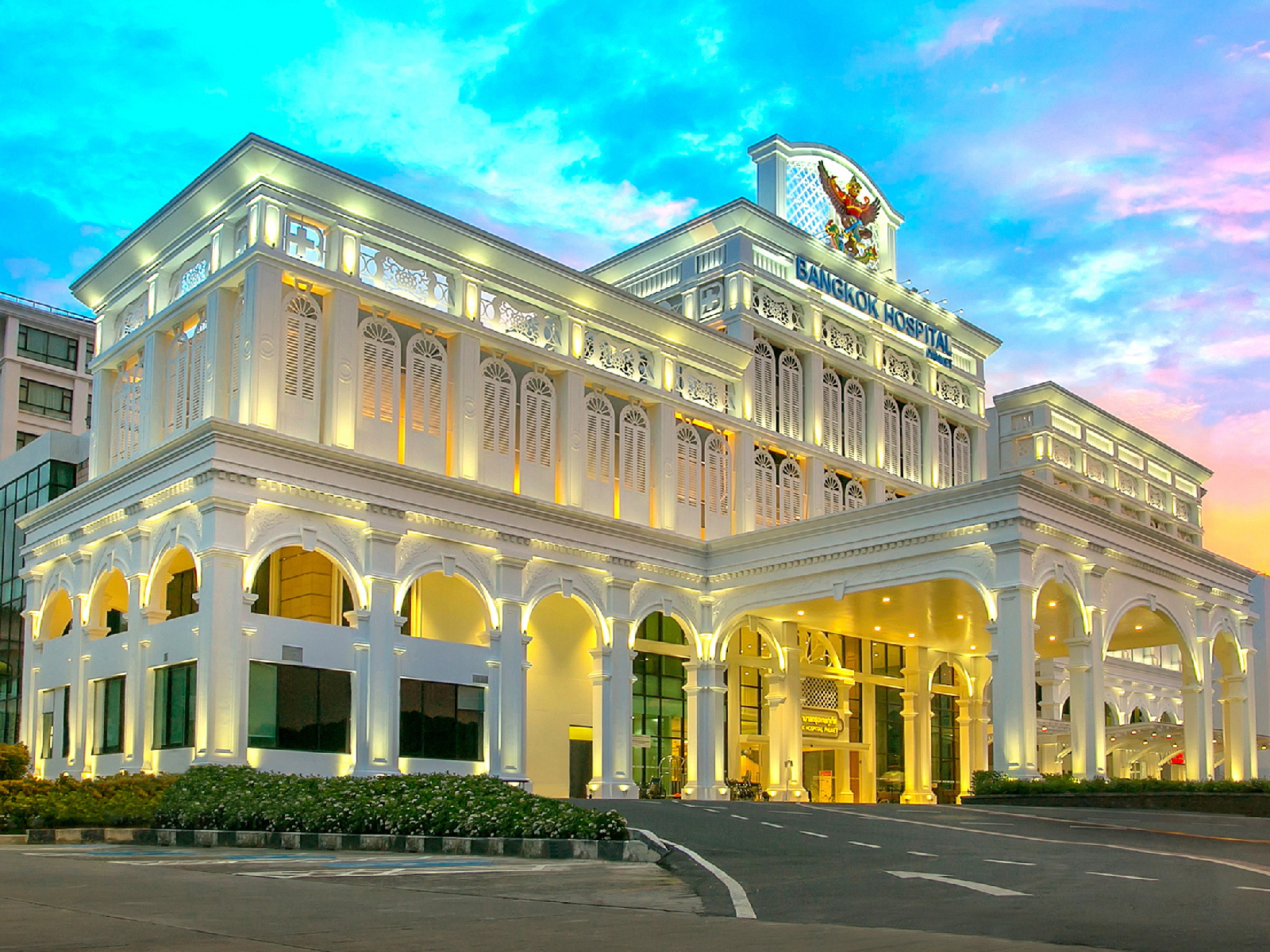
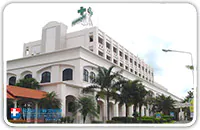
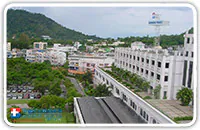
Exterior view of Bangkok Hospital Phuket
The architectural design concept of Bangkok Hospital Phuket
is inspired by the fusion of Western colonial architecture and traditional Chinese architectural influences that emerged from the coexistence of Chinese immigrants and local communities in Phuket. The architectural team conducted extensive research on historical buildings in Phuket Old Town, Penang in Malaysia, and Singapore, adapting these influences to harmonize with the hospital’s original structure. In the early development of Phuket, architecture strongly reflected Chinese design due to the influx of Chinese settlers. Between approximately 1901 and 1931, Western colonial expansion and the boom in tin mining intensified trade with Western nations, while many local families sent their children to study abroad—particularly in Penang, Malacca, and Singapore—where Sino-Colonial architecture was prevalent. This cultural and architectural exchange led to the widespread adoption of a blended Chinese–Western architectural style in Phuket.
In alignment with the hospital management’s policy to strengthen relationships with the local community, the renovation and visual transformation of the hospital buildings became a key initiative. The architects compiled detailed architectural elements of Sino-Colonial buildings from Phuket, Penang, Singapore, and Malaysia to establish a cohesive design concept for the entire façade of Bangkok Hospital Phuket.
Externally, the building is designed to appear as a three-story structure. The lower level features solid columns and European-style arches, providing both structural balance and suitability for Phuket’s hot and humid climate. The middle section incorporates traditional wooden louvered windows that enhance natural ventilation, along with floral-shaped ventilation openings—distinctive elements commonly found in Sino-Colonial architecture. The upper section is adorned with large decorative ventilation panels known as Ta Mangorn, embellished with traditional ornamental patterns.
Above the arched doors and windows, relief stucco artworks featuring the B+ emblem are displayed on all 24 openings. Traditionally, such decorative elements represent family crests or motifs of personal significance, symbolizing identity and heritage.
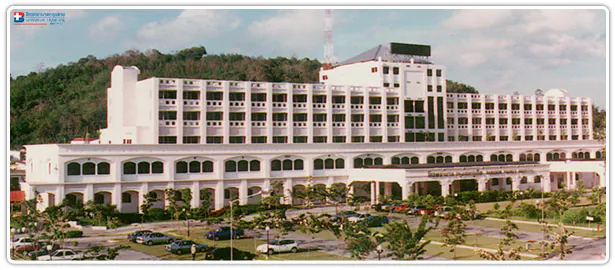
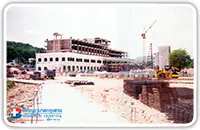
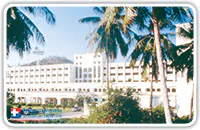
Exterior view of Bangkok Hospital Phuket building in the past
 |
 |
 |
 |
 |
 |